
मनोजवं मारुततुल्यवेगं जितेन्द्रियं बुद्धिमतां वरिष्ठम् | वातात्मजं वानरयूथमुख्यं श्रीरामदूतं शरणं प्रपद्ये
Hanuman Puja (Manojavam)
Manojavam Maruta-tulya-vegam, Jitendriyam buddhimatam varishtham | Vatatmajam vanara-yutha-mukhyam, Shri Ramadutam sharanam prapadye
Listen & Chant Along
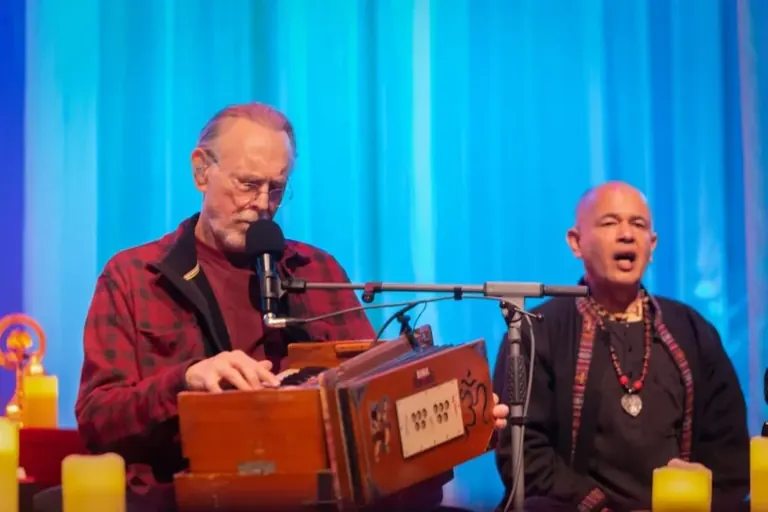
Listen & chant along — performed by Krishna Das
"Traditional Sanskrit verses of praise to Hanuman, recited as an opening invocation"
Meaning & Translation
Sanskrit
मनोजवं मारुततुल्यवेगं जितेन्द्रियं बुद्धिमतां वरिष्ठम् | वातात्मजं वानरयूथमुख्यं श्रीरामदूतं शरणं प्रपद्ये
Transliteration
Manojavam Maruta-tulya-vegam, Jitendriyam buddhimatam varishtham | Vatatmajam vanara-yutha-mukhyam, Shri Ramadutam sharanam prapadye
Pronunciation
mah-no-JAH-vam MAH-roo-tah TOOL-yah VAY-gam, jee-TEN-dree-yam bood-dhee-mah-TAHM vah-RISH-tam
Deity / Quality Invoked
Hanuman
Full Translation
The Hanuman Puja is a garland of traditional Sanskrit verses honoring Hanuman: swift as thought, fast as the wind, master of the senses, wisest of the wise, son of the Wind, leader of the monkey hosts, and messenger of Ram. The closing line — "sharanam prapadye" — is a full-hearted taking of refuge: "In you I take shelter." It gathers Hanuman's whole story into a single bow of devotion.
Spiritual Significance
These verses are chanted before undertaking practice or performance as a request for Hanuman's protection and inner strength. Hanuman is described by devotees as the "Breath of Ram" — the living flow of grace between God and devotee — so invoking him is understood to open that flow. Krishna Das traditionally opens his concerts with this puja.
Cultural Context & History
The verses come from classical Sanskrit sources honoring Hanuman, including invocations recited before the Hanuman Chalisa. In the lineage of Neem Karoli Baba — the guru of Krishna Das and Ram Dass — Hanuman worship is the heart of practice, and this puja carried those temple invocations directly into Western Kirtan halls.
Terms in the Glossary
Words from this page, explained in our A–Z reference.