Instruments of Kirtan

A guide to the drums, drones, and melody-makers behind the chant — what each one is, where it comes from, and the role it plays in the music.

Melody

The instrument that carries the tune the group sings back.

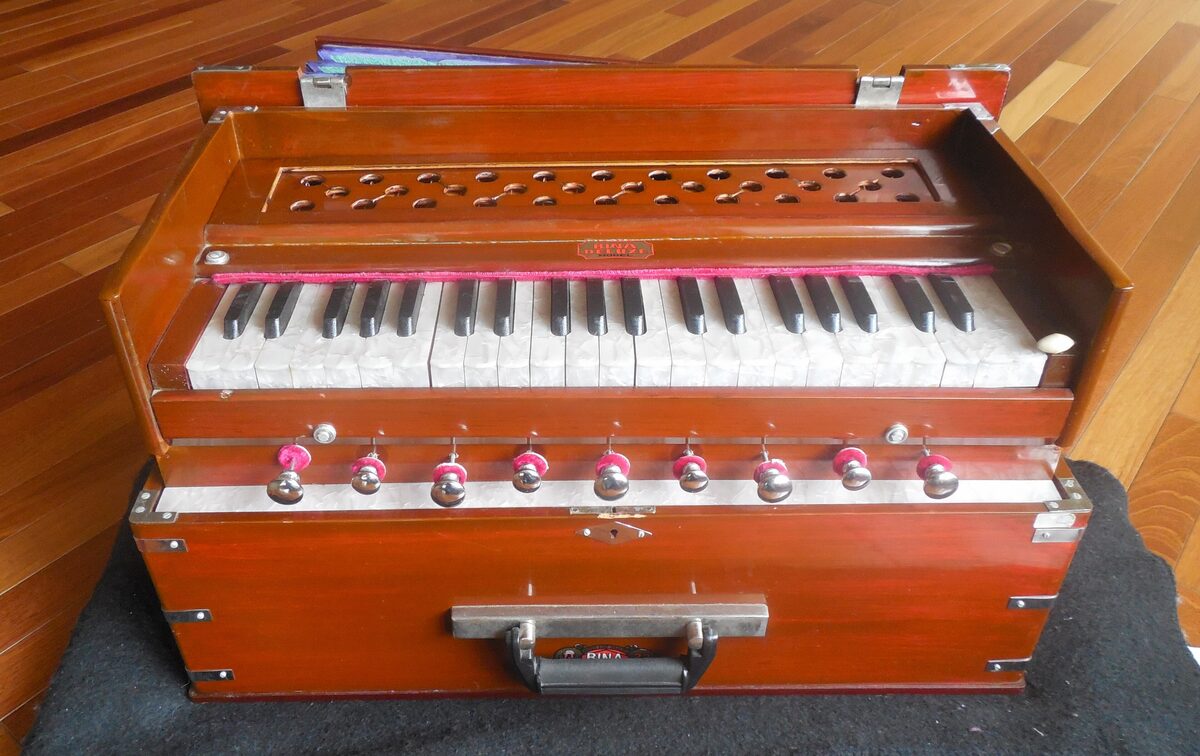
Harmonium

Harmonium

also: Peti, Samvadini

Europe, adapted in India (19th c.)

The hand-pumped reed organ that carries the melody of nearly every Kirtan.

The harmonium is a small, portable reed organ played sitting on the floor. One hand pumps a bellows at the back to push air across metal reeds while the other plays the keyboard, producing a warm, sustained, accordion-like tone. Though it arrived in India with European missionaries in the 19th century, it was quickly adapted to Indian music and has become the melodic heart of Kirtan. In a chant the harmonium leads the tune that the group sings back, and its built-in drone stops let a single player hold a steady tonal base while singing. Its forgiving, ever-present sound is a large part of why it became the signature instrument of both Indian and Western Kirtan.

Read the full guide
Rabab

Rabab

also: Rubab, Rebab, Seni rabab, Firandia rabab

Central & South Asia; Sikh Punjab

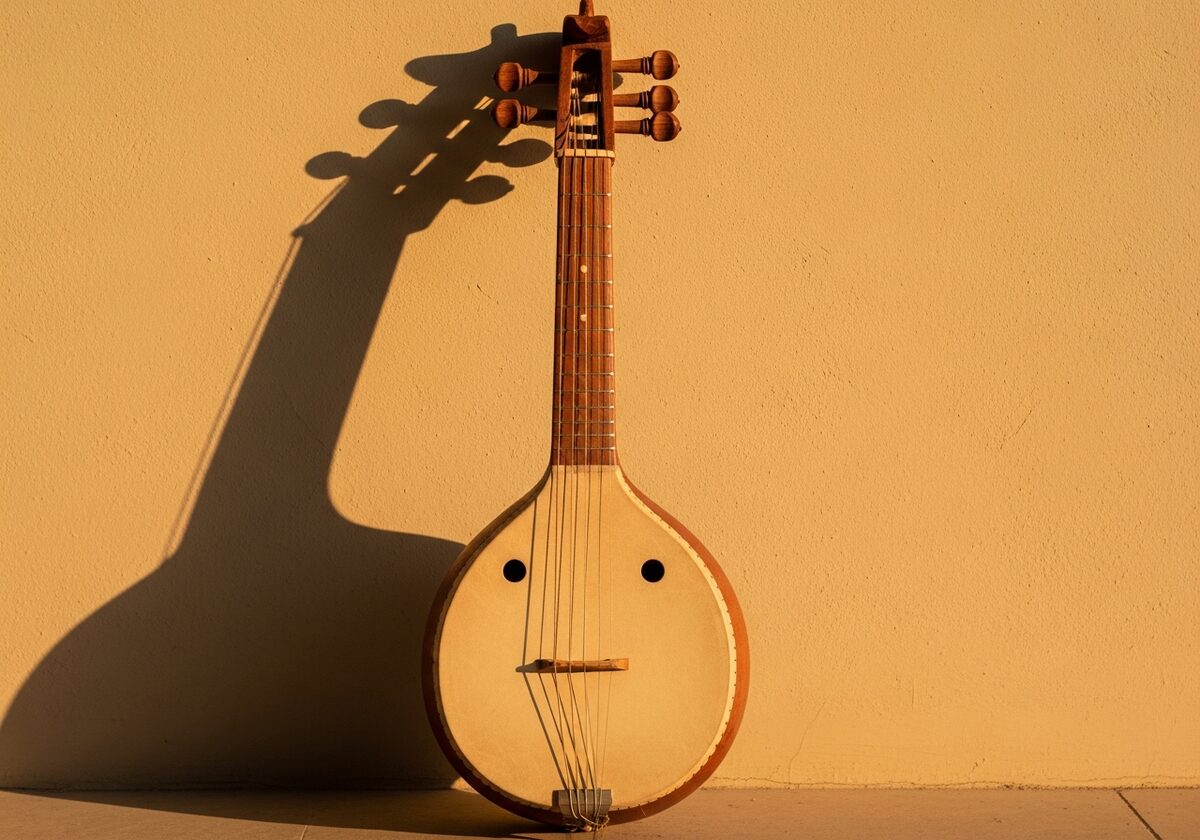
The plucked lute Bhai Mardana played for Guru Nanak — the first instrument of Sikh kirtan.

The rabab is a plucked lute with a hollow wooden body, a stretched-skin soundboard, and gut strings — part of an instrument family that traveled with musicians across Central and South Asia for centuries. In Sikh memory it is the first instrument of the tradition: when Guru Nanak sang his revelations, his lifelong companion Bhai Mardana accompanied him on the rabab through more than two decades of travels. Janamsakhi tradition holds that Mardana's rabab was crafted by the instrument maker Bhai Firanda — which is why the Sikh form is also remembered as the firandia rabab. Played with a wooden plectrum, its strings speak with a deep, warm, percussive voice quite unlike the sustained tone of a reed or bowed instrument: each note blooms and decays quickly, so the player weaves running patterns of notes beneath the singer's line.

Read the full guide
Dilruba

Dilruba

also: Esraj (eastern cousin), Taus (peacock-bodied ancestor)

Sikh Punjab, North India

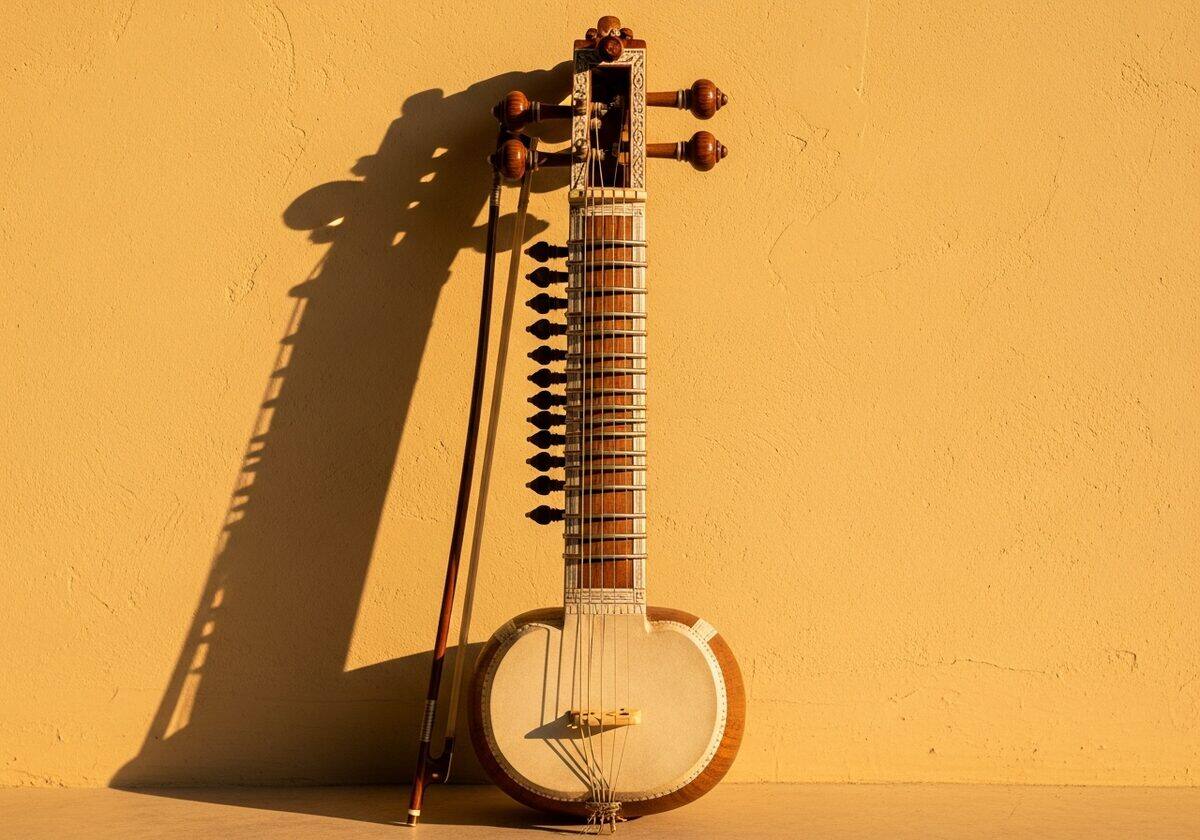
The bowed "heart-stealer" of Sikh kirtan — a sitar-like fretted neck over a chorus of shimmering sympathetic strings, born as a portable successor to the peacock-bodied taus.

The dilruba — Persian for "heart-stealer" — is a bowed string instrument that pairs a sitar-like fretted neck with a small skin-topped body played upright with a bow (gaz). Four main strings carry the melody while a dozen or more sympathetic strings ring along untouched, wrapping every phrase in a silvery halo. Because the strings are bowed rather than plucked, the dilruba can sustain and bend notes the way a singer does, gliding between pitches with the meend that gives Indian sacred music its vocal quality. Sikh tradition attributes the instrument to Guru Gobind Singh, who is said to have re-shaped the larger taus — the peacock-bodied bowed instrument of Guru Hargobind's era whose name is Persian for "peacock" — into a lighter form his soldiers could carry on horseback. The dilruba later reached Western ears in 1967, when George Harrison featured it on The Beatles' "Within You Without You" on Sgt. Pepper's Lonely Hearts Club Band.

Read the full guide

Drone

The steady tonal base that everything else rests upon.

Shruti Box

Shruti Box

also: Sur peti

India

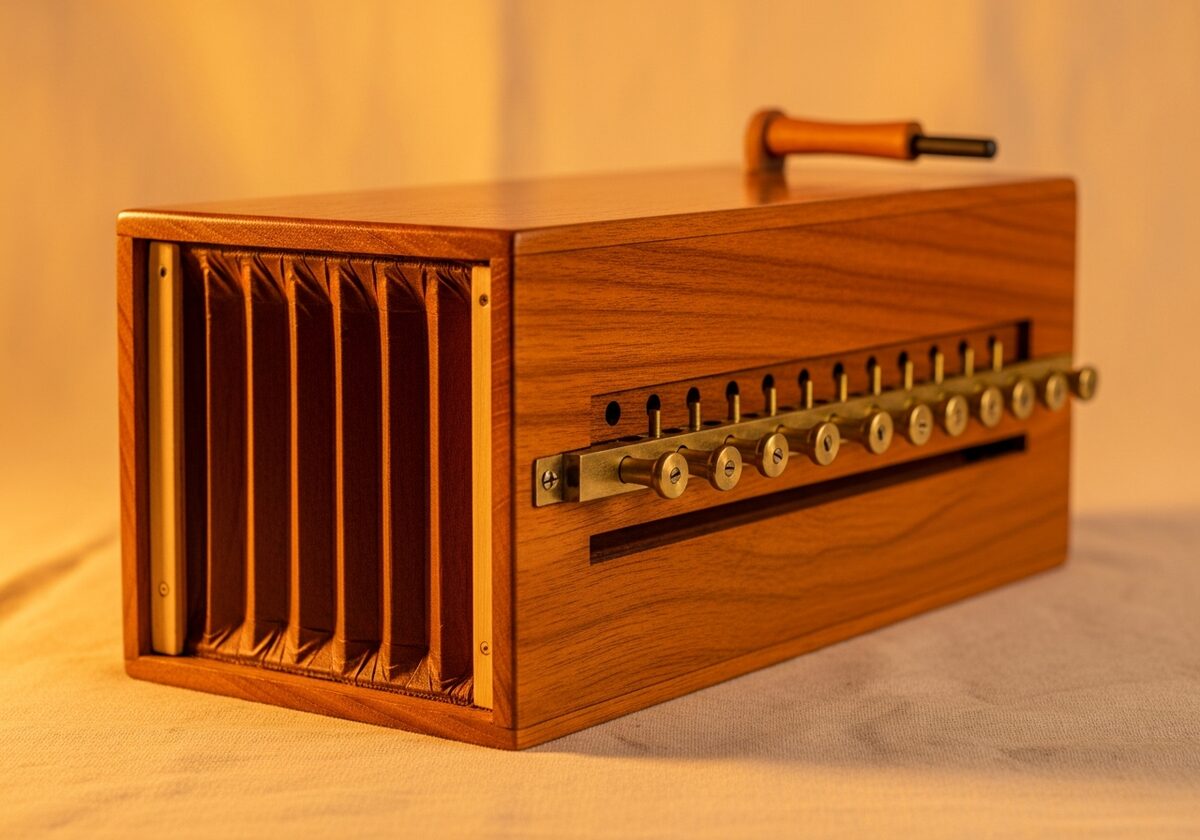
A bellows-driven drone box that holds a steady tonal base under the chant.

A shruti box is essentially a harmonium reduced to its drone: a wooden box with a hand-pumped bellows and a row of reeds, but no keyboard. The player opens stops for the chosen notes (commonly the tonic and fifth) and gently pumps to produce a continuous, breathing drone. Because it needs almost no technique, it is a favorite of Kirtan leaders and singers who want a constant tonal anchor while keeping both their attention and voice free for the mantra. It is light, portable, and widely used in Western Kirtan.

Read the full guide
Tanpura

Tanpura

also: Tambura, Tanpuri

India

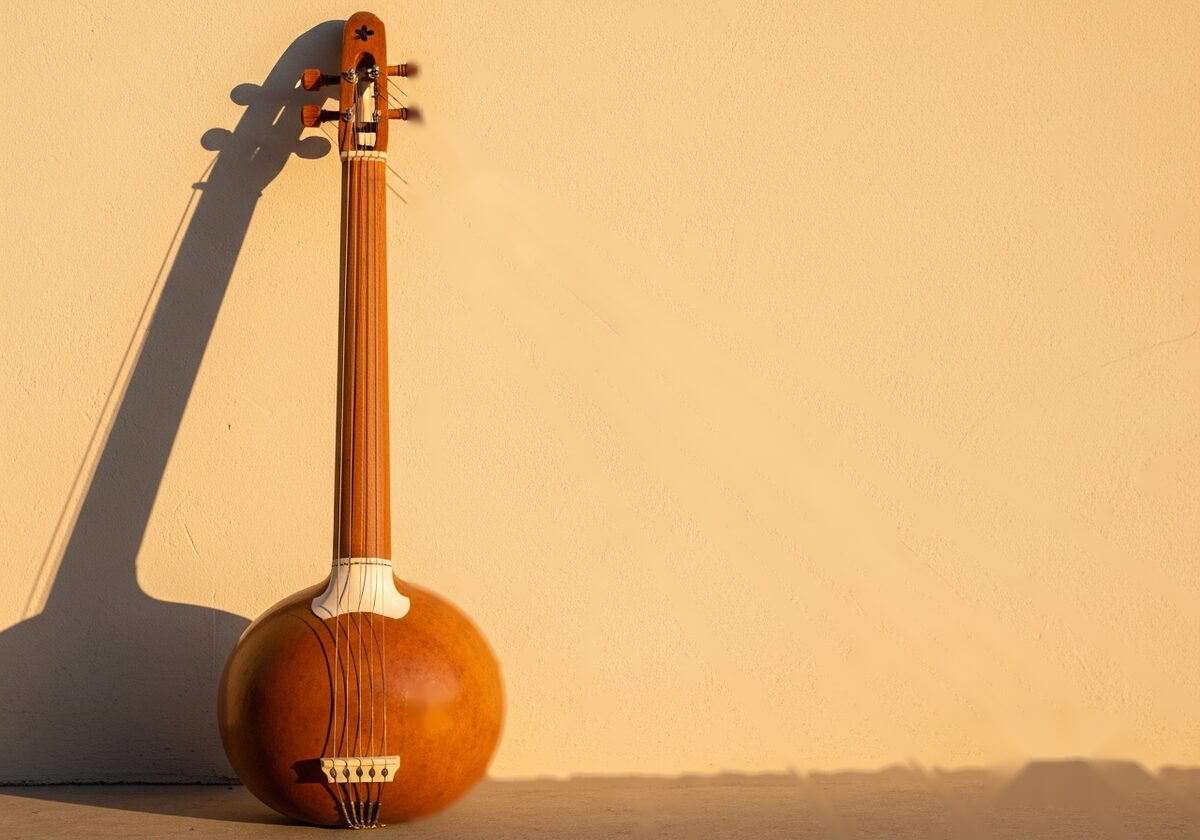
A long-necked lute whose shimmering strings create the classic Indian drone.

The tanpura is a long-necked, fretless lute with four to six strings that are plucked in a slow, continuous cycle. It plays no melody and no rhythm — its sole purpose is to lay down a rich, resonant drone whose overtones fill the space and give singers a reference pitch. Highly valued in Indian classical music and traditional Kirtan, its sound is increasingly recreated by electronic tanpura boxes and apps in modern settings. The tanpura's shimmering harmonic 'cloud' is what gives much Indian devotional music its meditative depth.

Read the full guide
Ektara

Ektara

also: Gopichand, Gopiyantra, Iktara

Bengal (folk)

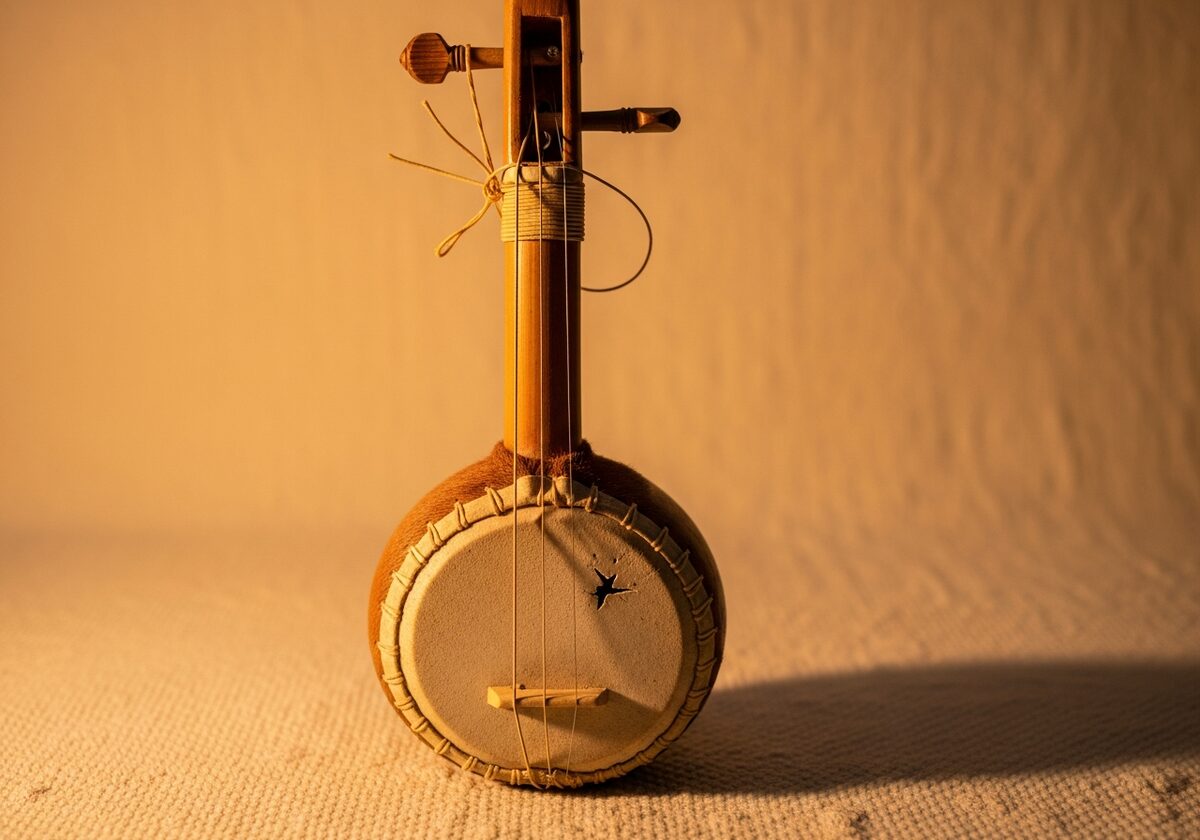
A one-stringed folk instrument long associated with wandering devotional singers.

The ektara ('one string') is among the simplest of instruments: a single string stretched over a gourd or wooden resonator, plucked with one finger to sound a single droning note. Squeezing the split bamboo neck bends the pitch, giving it its characteristic 'boing'. It is the iconic instrument of the Bauls — the wandering mystic minstrels of Bengal — and of folk devotional singing across India. More a folk and solo instrument than a group-Kirtan staple, its humble, hypnotic drone embodies the Bhakti spirit of devotion stripped to its essence.

Read the full guide

Percussion

The rhythm that gives the chant its pulse and momentum.

Mridanga

Mridanga

also: Khol, Mridangam

Bengal / Gaudiya Vaishnava tradition

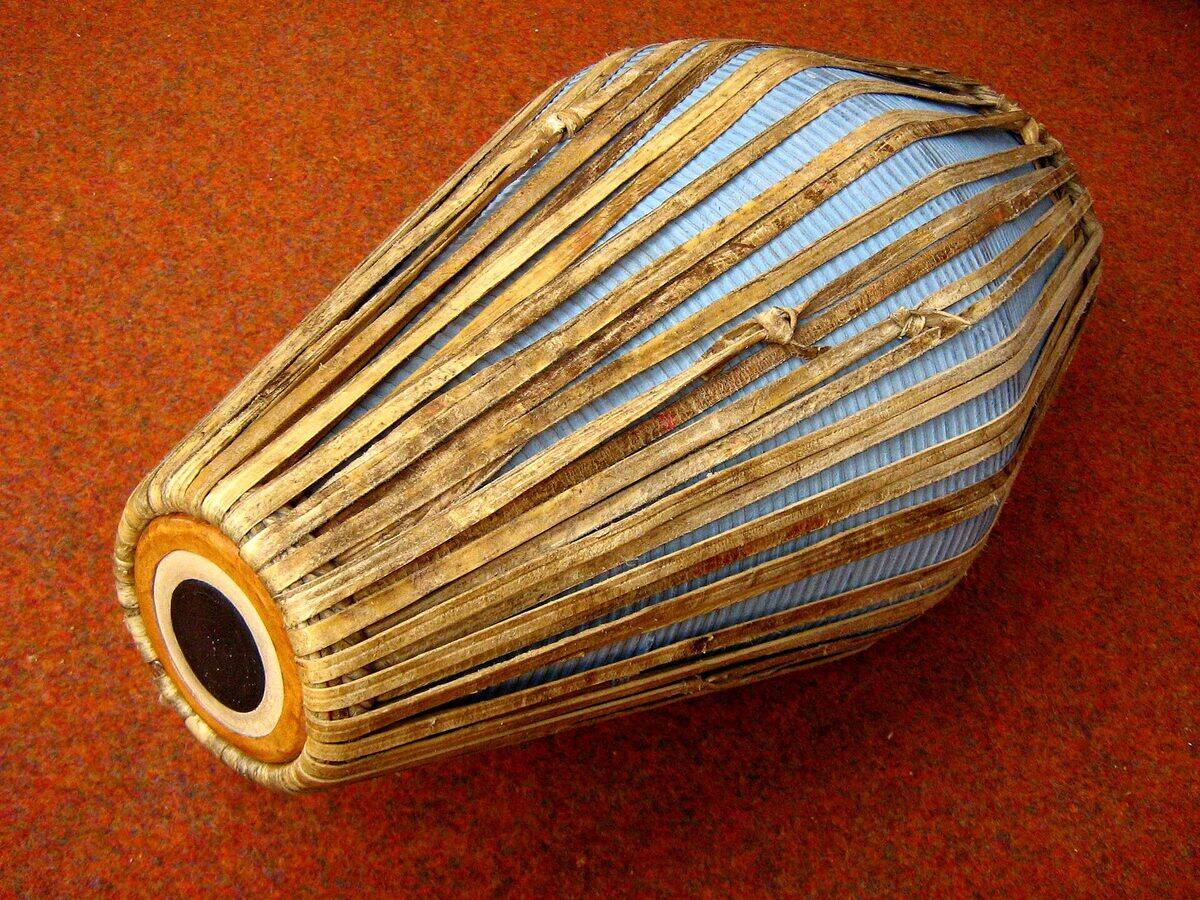
The two-headed clay drum at the rhythmic core of traditional Vaishnava Kirtan.

The mridanga (in its Bengali form, the khol) is a double-headed drum with a body of baked clay and two heads of differing size, giving a deep bass on one side and a sharp, high crack on the other. It is the classic drum of Gaudiya Vaishnava Kirtan — the tradition of Chaitanya Mahaprabhu and, later, ISKCON — and drives the rolling, danceable rhythms of congregational chanting. The South Indian mridangam is a related wooden cousin used in Carnatic music. Played hanging from a strap so the musician can dance while drumming, the mridanga's heartbeat is inseparable from Hare Krishna Kirtan.

Read the full guide
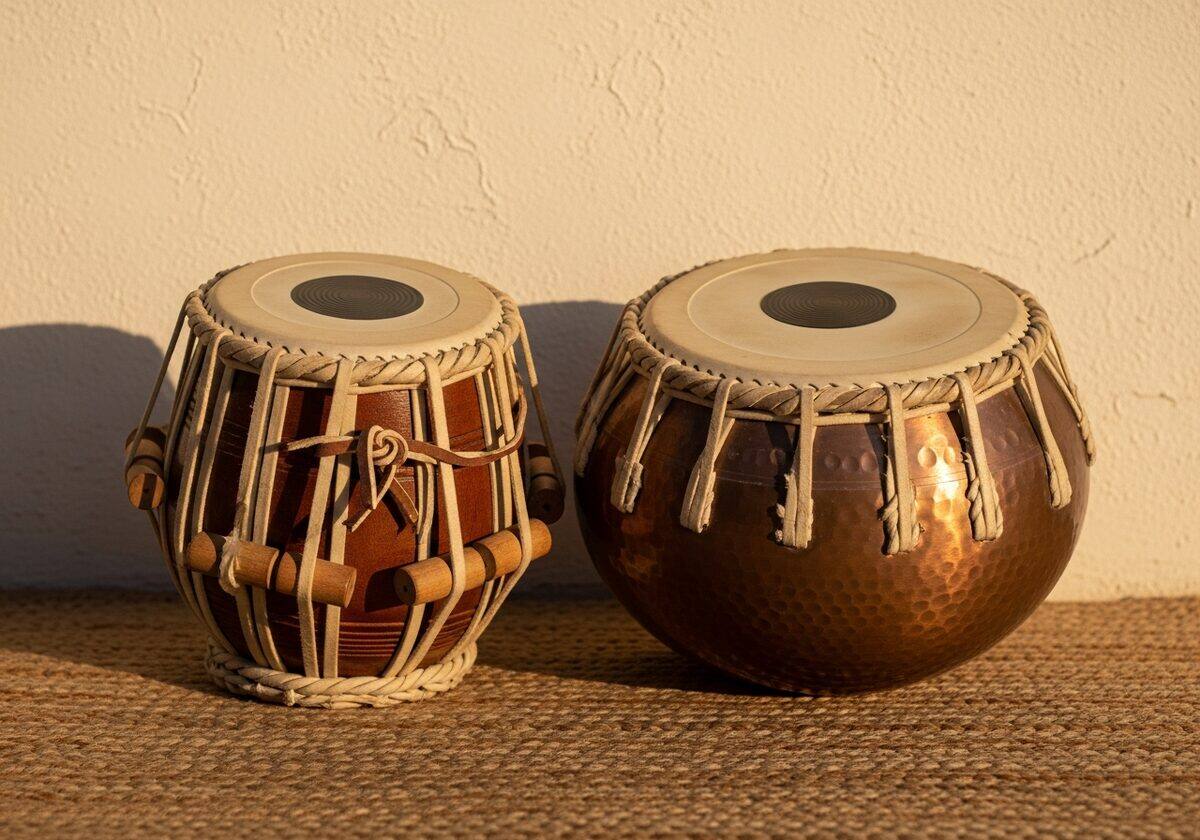
Tabla

Tabla

North India

The pair of tuned hand drums that anchor North Indian rhythm.

The tabla is a pair of small hand drums: the smaller wooden dayan (right hand), tuned to a specific pitch, and the larger metal bayan (left hand) that supplies the bass. A black tuning paste at the center of each head gives the tabla its distinctive ringing, pitched tone. The dominant percussion of North Indian (Hindustani) classical music, the tabla brings subtlety and intricate rhythmic cycles (tala) to Kirtan and bhajan, and it is one of the most common drums heard in Western Kirtan alongside the harmonium.

Read the full guide
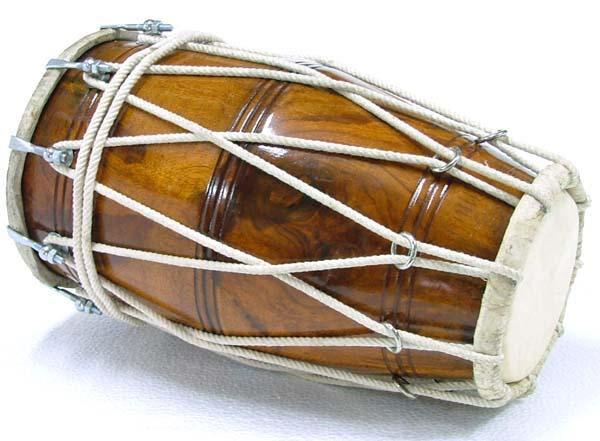
Dholak

Dholak

North India (folk)

A barrel-shaped folk drum that gives Kirtan its driving, celebratory groove.

The dholak is a two-headed, barrel-shaped folk drum played with both hands. One head produces a high, tight slap and the other a deep bass, and the two are linked by rope or metal tensioners. Lighter and more relaxed than the tabla, it is the everyday drum of folk songs, weddings, and group bhajan, and it brings an earthy, celebratory swing to Kirtan. Its simplicity makes it a welcoming entry point for newcomers who want to keep the beat.

Read the full guide
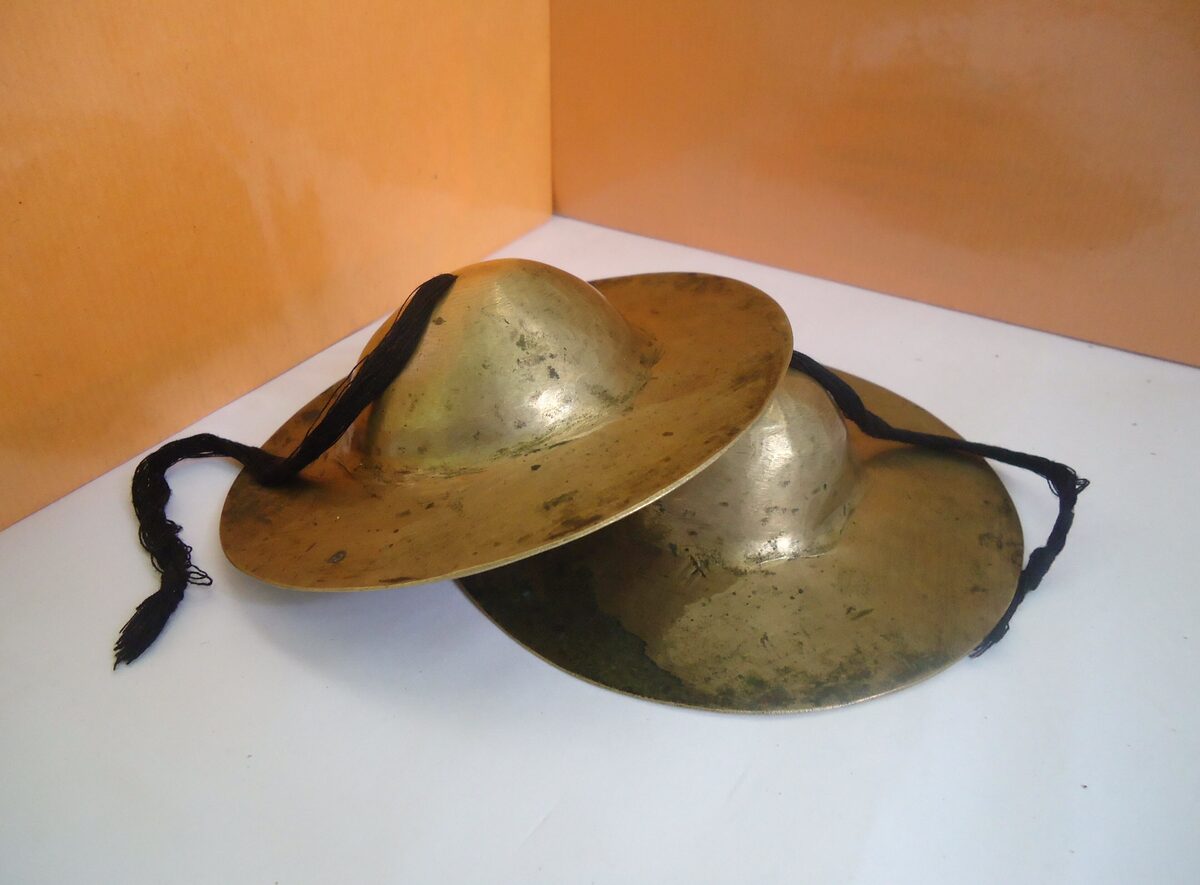
Kartals

Kartals

also: Karatals, Kartal, hand cymbals

India / Gaudiya tradition

Hand cymbals that keep time and add a bright, ringing pulse to the chant.

Kartals are hand cymbals used to mark the rhythm of Kirtan. In the Gaudiya Vaishnava tradition they are a pair of brass discs (karatals) joined by a cord and struck together to produce a bright, ringing 'ching'. A related folk form is a pair of wooden clappers fitted with small jingling discs. Easy to pick up and hard to play badly, kartals are often the first instrument a newcomer is handed at a Kirtan — a simple way to join the rhythm and feel part of the music.

Read the full guide
Keep Exploring

Continue Your Journey

All resources