
See & Hear the Harmonium
About the Harmonium
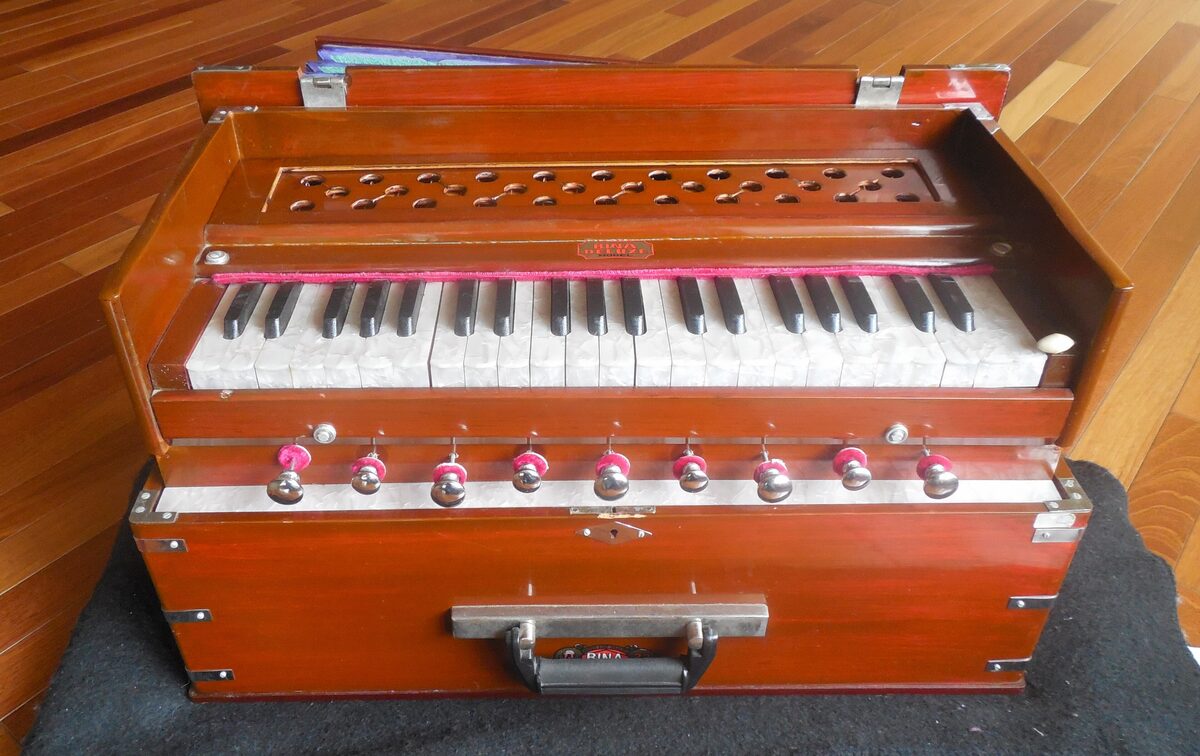
The harmonium is a small, portable reed organ played sitting on the floor. One hand pumps a bellows at the back to push air across metal reeds while the other plays the keyboard, producing a warm, sustained, accordion-like tone. Though it arrived in India with European missionaries in the 19th century, it was quickly adapted to Indian music and has become the melodic heart of Kirtan. In a chant the harmonium leads the tune that the group sings back, and its built-in drone stops let a single player hold a steady tonal base while singing. Its forgiving, ever-present sound is a large part of why it became the signature instrument of both Indian and Western Kirtan.
Its Role in Kirtan
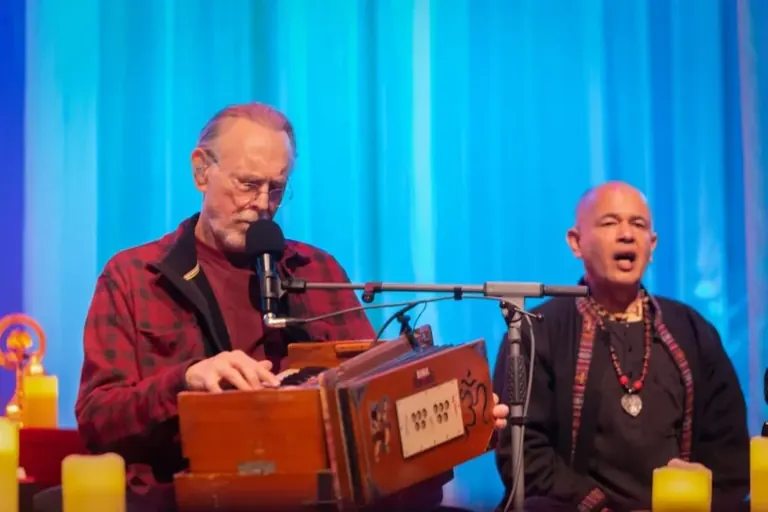
In a Kirtan the harmonium is the leader's chair: the person guiding the chant sits behind it, plays the melody line for the group to sing back, and opens a drone stop or two so the whole room shares one tonal home. It earned that role against real resistance — purists argued its fixed keys could not bend notes the way Indian vocal music demands, and All India Radio famously banned it from broadcast from 1940 until 1971. Devotional singing embraced it anyway: it spread through bhajan halls and Sikh gurdwaras in the late nineteenth century, and when Kirtan traveled West it came along as the signature instrument — picture nearly any Western chant leader, from Krishna Das to Snatam Kaur, and you picture a harmonium. Its steady reeds flatter untrained voices and never need tuning on the road, which is exactly what call-and-response singing asks of an instrument.
Mantras Sung with the Harmonium
Chants traditionally accompanied by the harmonium in kirtan and practice.
Play Mantras on the Harmonium
These chants have verified chord charts with a harmonium-ready view — pick a key, follow the chart, and lead.
Hare Krishna Maha Mantra
Chord chart with guitar & harmonium views
Jaya Ganesha
Chord chart with guitar & harmonium views
Om Namah Shivaya
Chord chart with guitar & harmonium views
Sita Ram
Chord chart with guitar & harmonium views
Want the full songbook? Browse every mantra with a chord chart →
Hear It in Practice
Terms in the Glossary
Words from this page, explained in our A–Z reference.
Keep Exploring