
Harmonium Basics for Kirtan
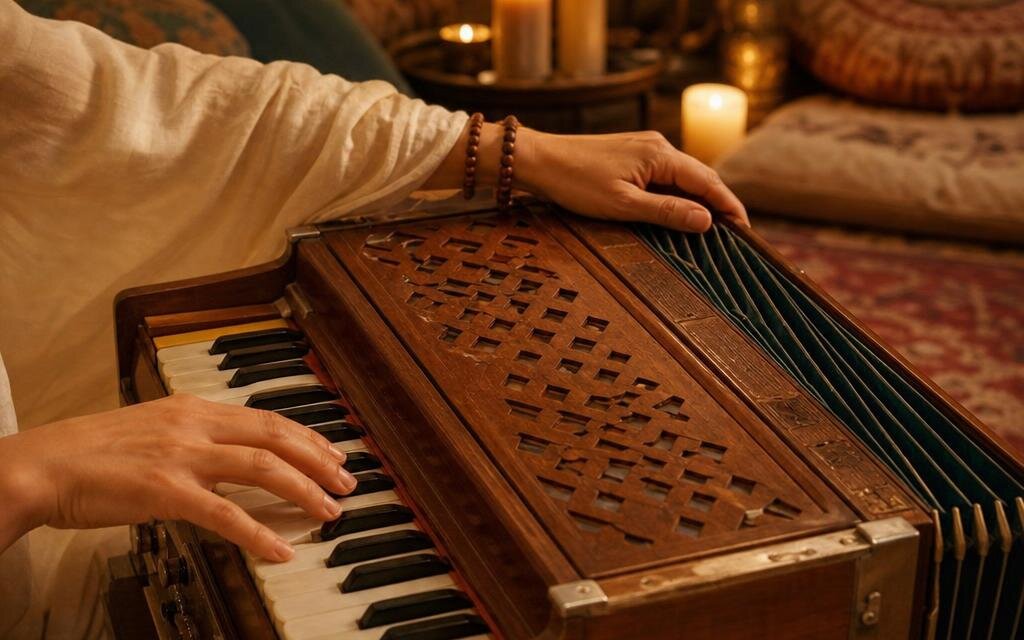
Almost every kirtan you have ever heard was led from behind a harmonium. There is a reason: no other instrument makes accompanying a chant this forgiving. The reeds hold every note as long as you keep air moving, the drone does half the musical work, and nothing ever goes out of tune on the road. If you can pump a bellows and press three keys, you can hold a room.
Getting seated
Set the harmonium on the floor and sit behind it, cross-legged or kneeling — whatever your body can sustain for half an hour. Unlatch the bellows. Your non-dominant hand (the left, for most players) works the bellows at the back; your dominant hand takes the keyboard. Resist the urge to pump hard: the harmonium rewards long, even strokes, not force. Steady air beats loud air.
Spend your first ten minutes doing nothing but pumping while holding one key down. Feel how the note swells and fades with the air. That connection — breath-like, vocal — is the whole character of the instrument.
The drone is your friend
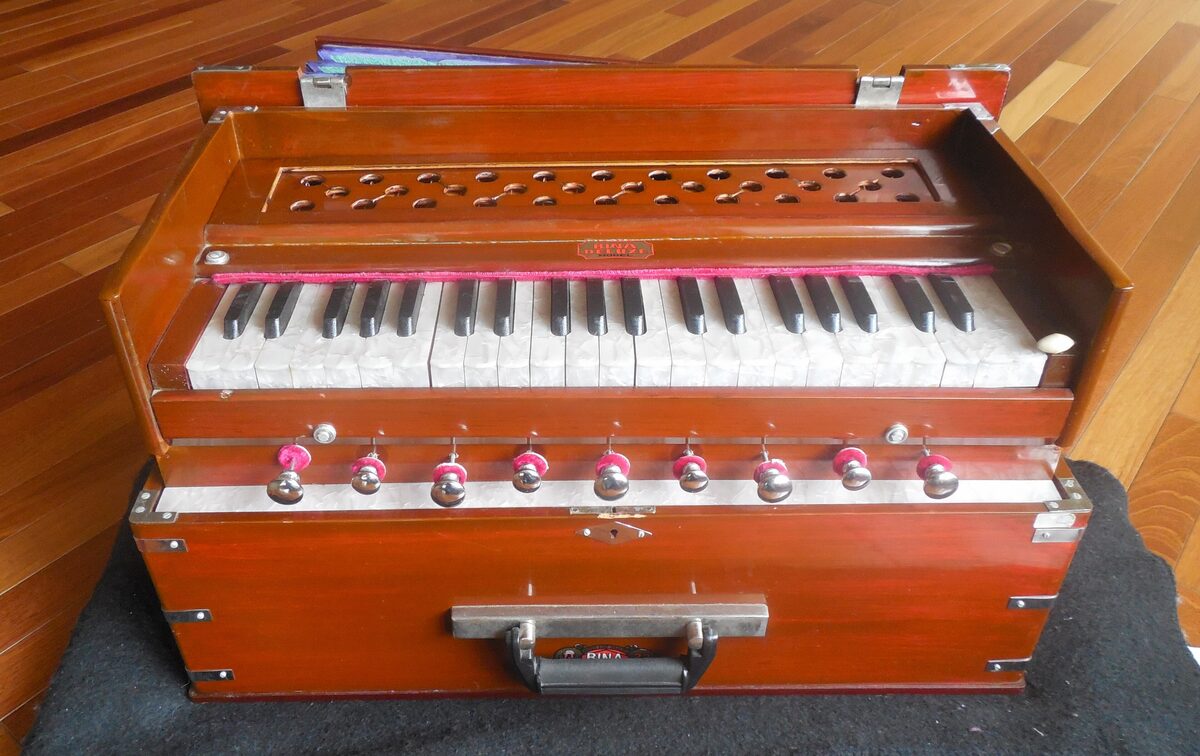
Most harmoniums have a row of drone stops: small knobs that open a reed permanently so a note sounds continuously while you play. Find the drone that matches your key's home note — the root — and open it. If your instrument has a second drone a fifth above, open that too.
This is exactly what the harmonium view on our chord charts suggests: every chart on the site shows the drone pair for your selected key. Open a chart — say Om Namah Shivaya — switch to the harmonium view, and it will tell you which notes to drone and which notes each chord wants under your right hand.
Simple right-hand voicings
You do not need full chords. Kirtan harmonium playing is closer to singing than to piano playing: the melody line, doubled at a comfortable octave, plus the root when you want weight. When a chart says Am, the notes A–C–E are available to you — but A alone, or A with E, is already enough. Add the third when your hands are ready.
Two habits worth building early:
- Play the melody you sing. The instrument's job in call-and-response is to teach the room the tune. If your fingers trace what your voice does, the circle learns twice as fast.
- Let the bellows breathe with the phrase. Change stroke direction at the ends of lines, the way a singer breathes. It keeps the sound seamless where it matters — mid-phrase.
Singing while playing
This is the real skill, and it comes only one way: slowly. Pick a two-chord chant, loop it far below performance tempo, and let the hands become automatic before you add the voice. The Hare Krishna maha-mantra is a classic first choice — its melodies move stepwise and its harmony barely moves at all.
When you are ready to lead others, the craft of running a chant — setting keys and tempos, building a set, serving the room — is covered in How to Lead Kirtan.
Choosing a first instrument
A standard 2½-octave, single-reed harmonium is all a chant leader needs; double-reed instruments are louder and richer but heavier to pump. Fold-up travel models trade some tone for portability. Whatever you buy, test (or ask about) the bellows for leaks — air is everything. More buying guidance lives on our harmonium page.
Where to go next
Browse every chant with a verified chord chart on the Learn to Play Kirtan hub — each one transposes to the key that suits your voice and includes the harmonium drone-and-voicing view. If a guitar is closer at hand than a harmonium, the same charts have a guitar view too: see Kirtan on Guitar.
Terms in the Glossary
Words from this page, explained in our A–Z reference.
Join the Kirtans.com Community
Receive occasional updates — thoughtfully curated devotional music, upcoming gatherings, artist announcements, new resources, and inspiration to support your Bhakti practice.
From This Article
More Articles Like This
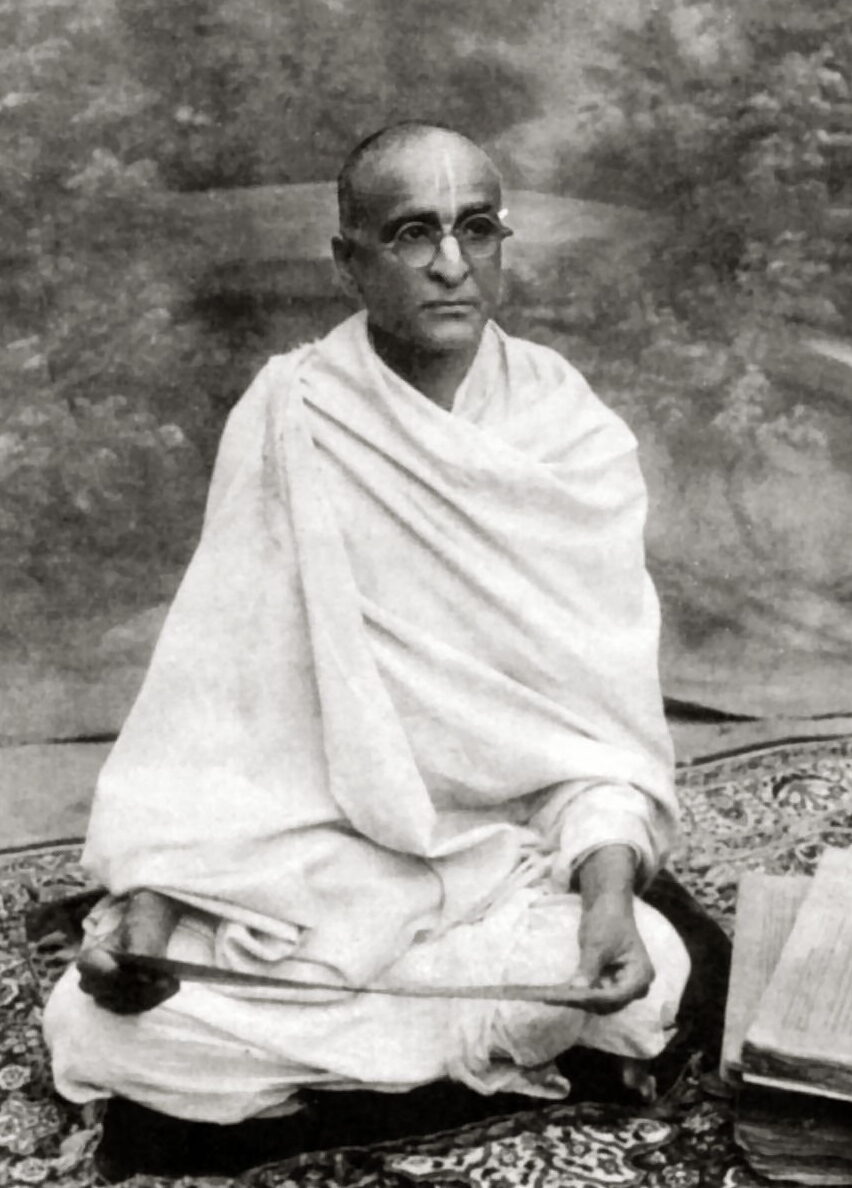
Bhaktisiddhanta Sarasvati: The Scholar-Monk Who Sent Kirtan West
He chanted a vow of a billion holy names, built sixty-four monasteries, and called the printing press "the great mridanga" — a drum that could be heard across oceans. And one afternoon in Calcutta in 1922, he told a young visitor to carry Chaitanya's chanting to the world in English.

How Srila Prabhupada Brought Kirtan to the West
In 1965, a 69-year-old swami crossed the Atlantic on a cargo ship with a suitcase, a pair of kartals, and about seven dollars. Within a year, the sound of the Hare Krishna mantra was ringing out under an elm tree in a New York City park — and Western Kirtan was born.
Continue Reading
Building a Kirtan Session Arc
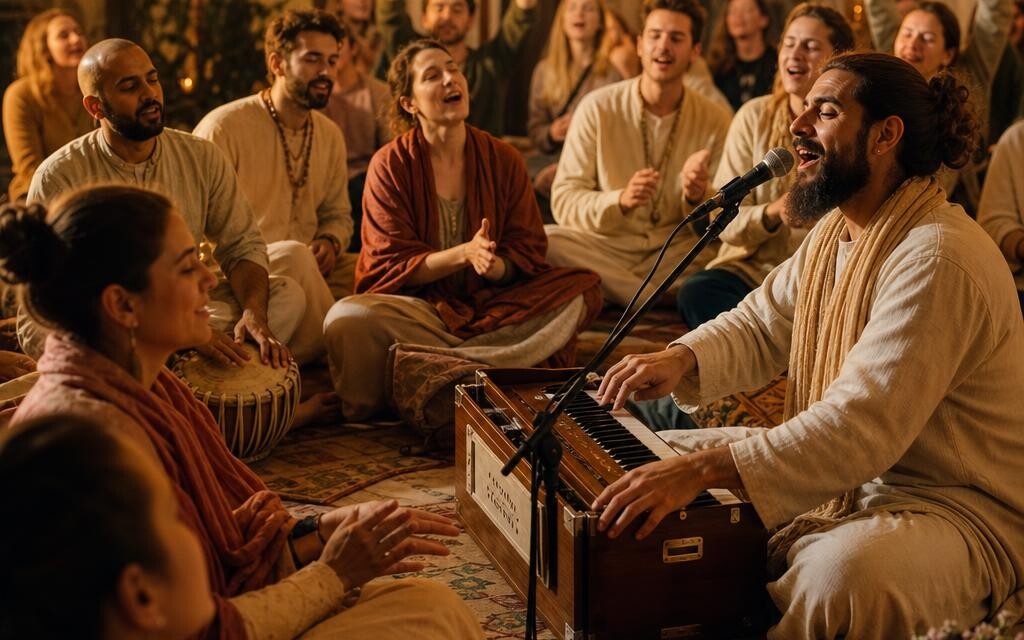
A kirtan session is one long breath: slow invocation, gradual build, a single true peak, and a soft landing. How to order your chants, move between keys without jolting the room, and sketch the whole arc in the setlist builder.

Kirtan on Guitar
You do not need a harmonium to lead a chant. With a handful of open chords, a capo, and a soft right hand, the guitar is a beautiful kirtan instrument — portable, familiar, and gentle under a singing room. Here is how to adapt what you already know.
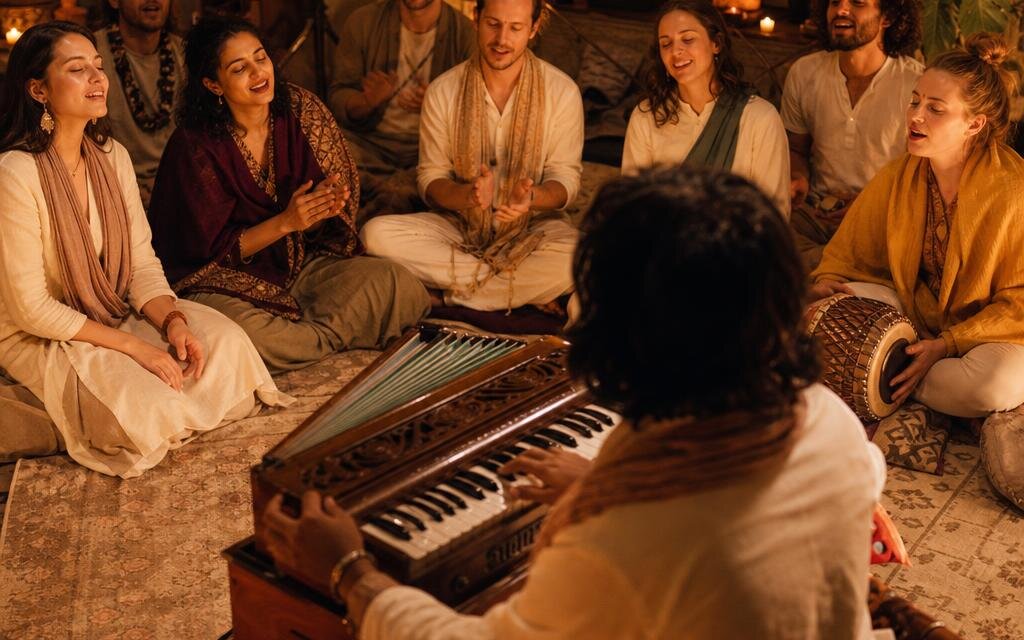
How to Lead Kirtan: Structure, Harmonium Basics, and Building a Set
A practical guide for anyone stepping into the leader's seat: how call-and-response actually works, what to do with your hands on the harmonium, and how to build a set that carries a room.