

Kirtan on Guitar
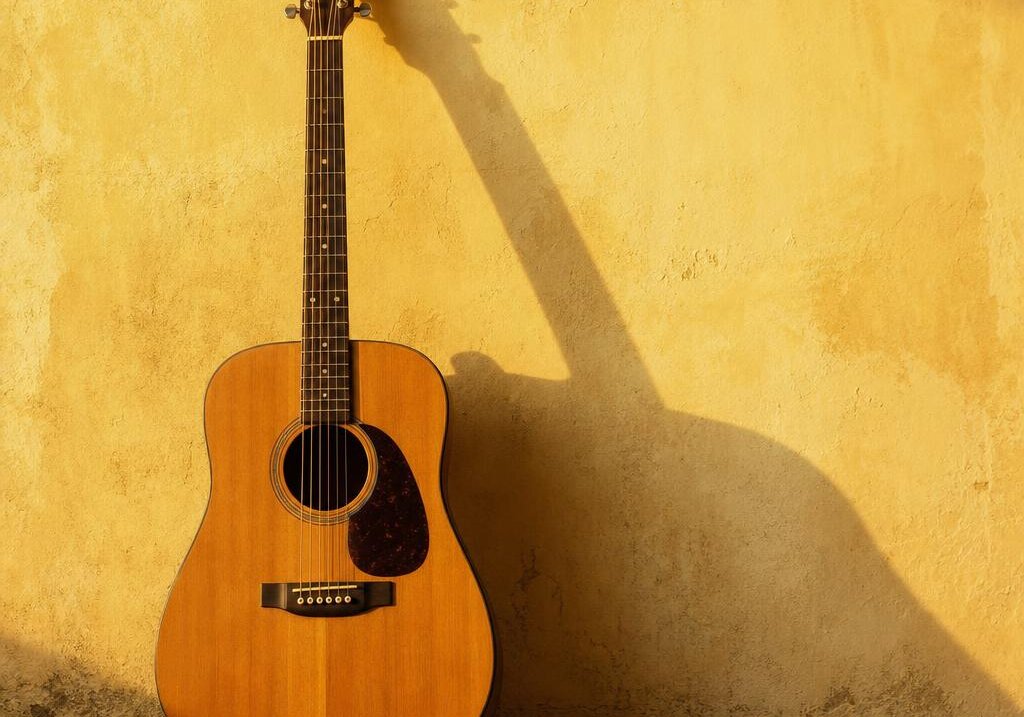
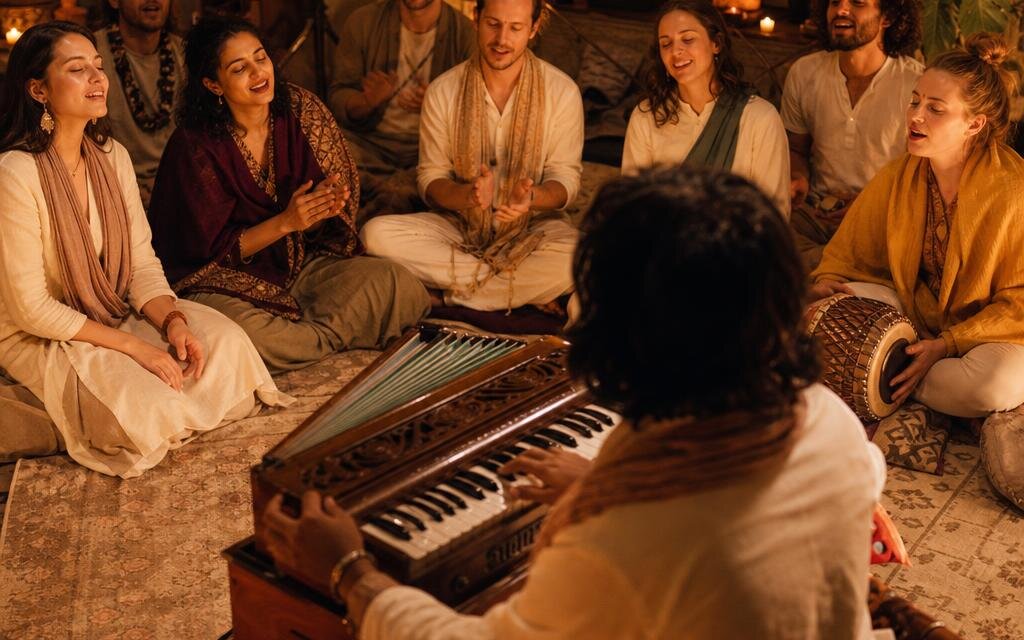
The harmonium may be kirtan's signature sound, but the guitar got there on its own merits: it travels anywhere, half the room already knows how it works, and its warmth sits beautifully under group singing. If you already strum a few open chords, you are most of the way to accompanying a chant.
Kirtan asks less of the guitar than songs do
Western songs move; kirtan circles. Most chants rest on two or three chords that repeat for ten or twenty minutes, so the guitarist's craft shifts from changing chords to sustaining a feeling. That changes what matters:
- Steadiness over flash. The circle leans on your pulse. A plain down-strum pattern kept perfectly steady serves the chant better than any fill.
- Dynamics are the instrument. Kirtan breathes — it starts soft, builds, peaks, and settles. Practice playing the same two chords at five different volumes; that arc is most of the art.
- Space is welcome. Let chords ring. Fingerpicked arpeggios or a bass note followed by a light strum leave room for the voices, which are the point.
Open shapes and the capo
Chant keys follow singers' voices, not guitarists' fingers — you will meet keys like B minor and E-flat. The capo is how the guitar meets them without barre-chord fatigue: clamp it so that the open shapes you know (Am, Em, C, D, G, E) sound in the chart's key.
Every chord chart on this site does that arithmetic for you. Open a chart — try Sita Ram — switch to the guitar view, and it shows shape diagrams for each chord plus a capo suggestion for the selected key. Transpose the chart to fit your voice and the capo advice follows.
Minor-key chants are kirtan's bread and butter, and the friendliest ones live in A minor and E minor: Om Namah Shivaya and the Hare Krishna maha-mantra are both classic first chants on guitar.
A right hand that serves singers
Start with one strum per beat, all downstrokes, softer than feels natural. When the chant builds, add an up-strum between beats rather than playing harder. If you fingerpick, keep the thumb on the root note steady like a drum — in a kirtan the guitar is at least half percussion.
The one discipline that matters: do not speed up as the energy rises. Rising tempo and rising intensity feel similar from behind an instrument, and chasing one with the other unravels a chant. If you can, practice with a metronome at chant tempos (60–90 bpm) until steadiness is boring.
Tuning, drones, and open strings
Standard tuning is fine. Some kirtan guitarists drop the low E to D for chants in D or use a partial capo to fake a drone — worth exploring later, not needed now. What is worth doing from day one: choose keys whose open strings ring sympathetically with the chant (E minor and A minor again), so the guitar hums a little drone of its own, the way a harmonium's drone stop does.
From accompanist to leader
Playing along is the apprenticeship; leading is the next room. When you are ready to call the chant yourself, How to Lead Kirtan covers structure, keys, tempo, and the etiquette of holding a circle.
Then pick your repertoire: the Learn to Play Kirtan hub lists every mantra with a verified chord chart — each with the guitar view, capo suggestions, and a printable practice sheet.
Terms in the Glossary
Words from this page, explained in our A–Z reference.
Join the Kirtans.com Community
Receive occasional updates — thoughtfully curated devotional music, upcoming gatherings, artist announcements, new resources, and inspiration to support your Bhakti practice.
From This Article
Continue Reading
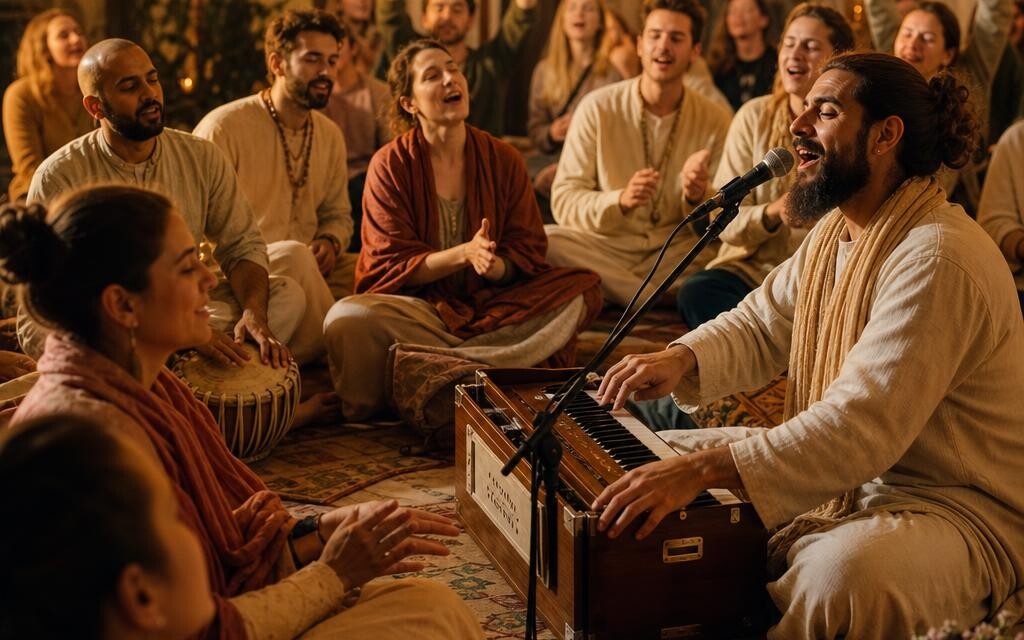
Building a Kirtan Session Arc
A kirtan session is one long breath: slow invocation, gradual build, a single true peak, and a soft landing. How to order your chants, move between keys without jolting the room, and sketch the whole arc in the setlist builder.
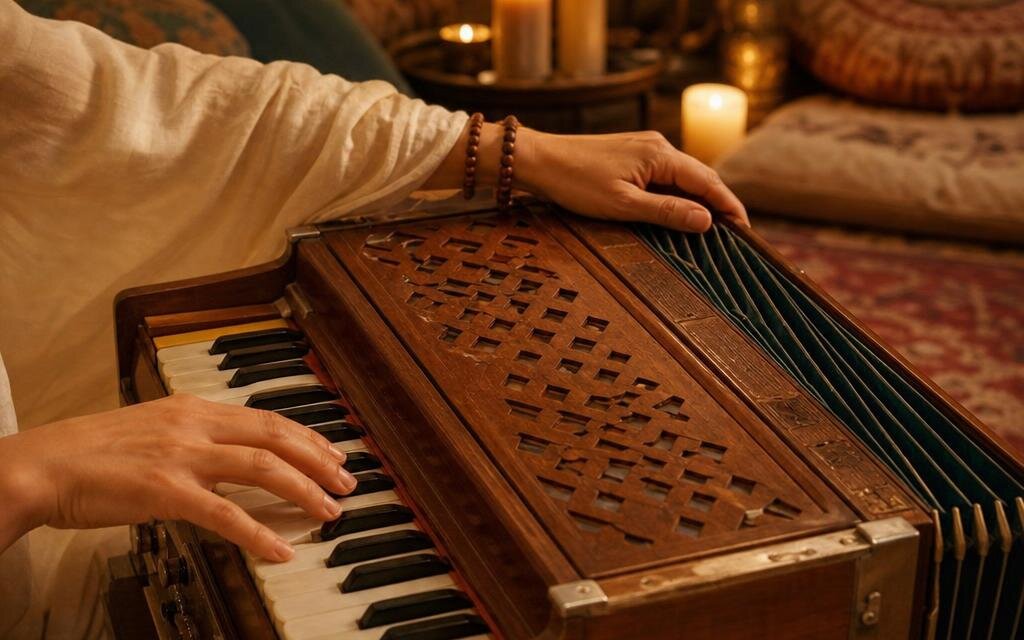
Harmonium Basics for Kirtan
The harmonium asks very little of a beginner: one hand pumps, the other plays, and a drone stop does half the work for you. This guide covers sitting down at the instrument for the first time — bellows, drone, simple right-hand voicings, and how to sing while you play.
How to Lead Kirtan: Structure, Harmonium Basics, and Building a Set
A practical guide for anyone stepping into the leader's seat: how call-and-response actually works, what to do with your hands on the harmonium, and how to build a set that carries a room.