
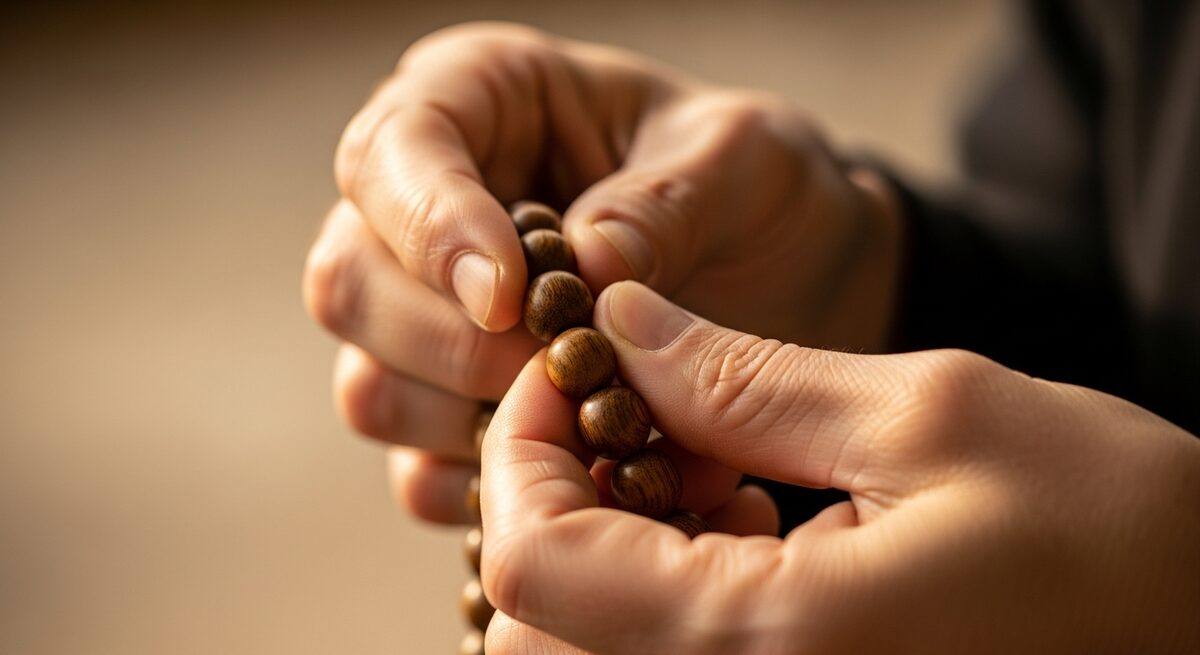
How to Start a Kirtan Practice at Home
Starting a home Kirtan practice is simpler than you might think. Choose one mantra to begin with — Om Namah Shivaya, the Hare Krishna Maha Mantra, or the Gayatri Mantra are all excellent starting points for beginners.
Find a comfortable seated position and a quiet time of day — early morning and evening are traditional, but any time that works for you is the right time. You can chant out loud, or quietly under your breath (this is called 'japa'), or simply sit with the mantra internally.
Even 10-15 minutes a day of mantra repetition can have a noticeable effect on your state of mind, emotional resilience, and sense of inner spaciousness over time. The key is consistency rather than intensity.
Chanting along with a recording is one of the easiest ways to build the habit. Gentle, acoustic recordings work beautifully at home: try Sam Garrett or Trevor Hall for a folk-rooted doorway into mantra, Lulu & Mischka for oceanic calm, or Brenda McMorrow for warm, open-hearted chant you can sing with from the first listen.
Terms in the Glossary
Words from this page, explained in our A–Z reference.
Join the Kirtans.com Community
Receive occasional updates — thoughtfully curated devotional music, upcoming gatherings, artist announcements, new resources, and inspiration to support your Bhakti practice.

Continue Reading
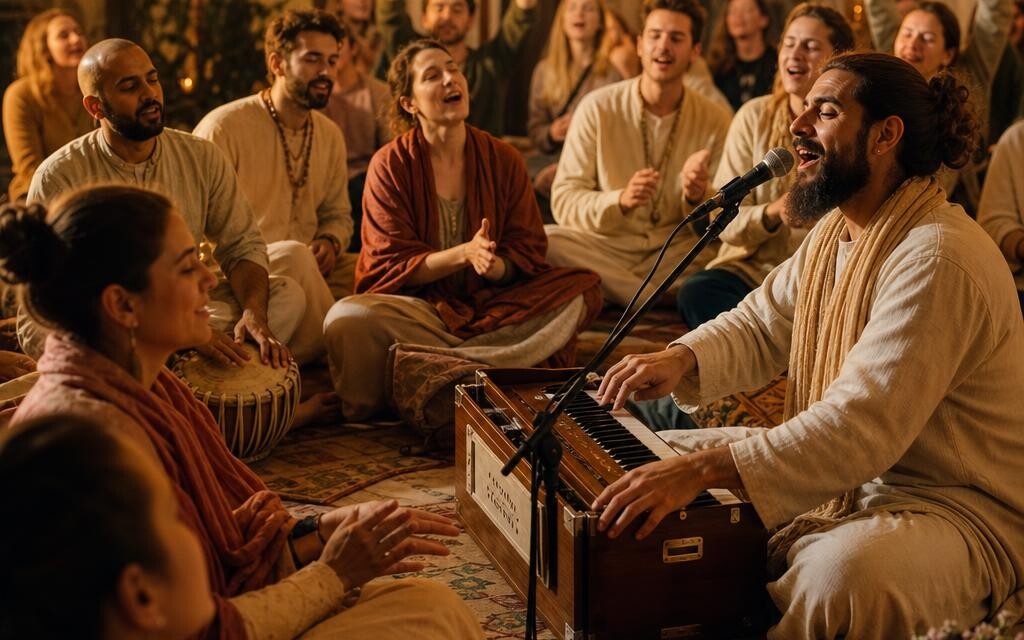
Building a Kirtan Session Arc
A kirtan session is one long breath: slow invocation, gradual build, a single true peak, and a soft landing. How to order your chants, move between keys without jolting the room, and sketch the whole arc in the setlist builder.
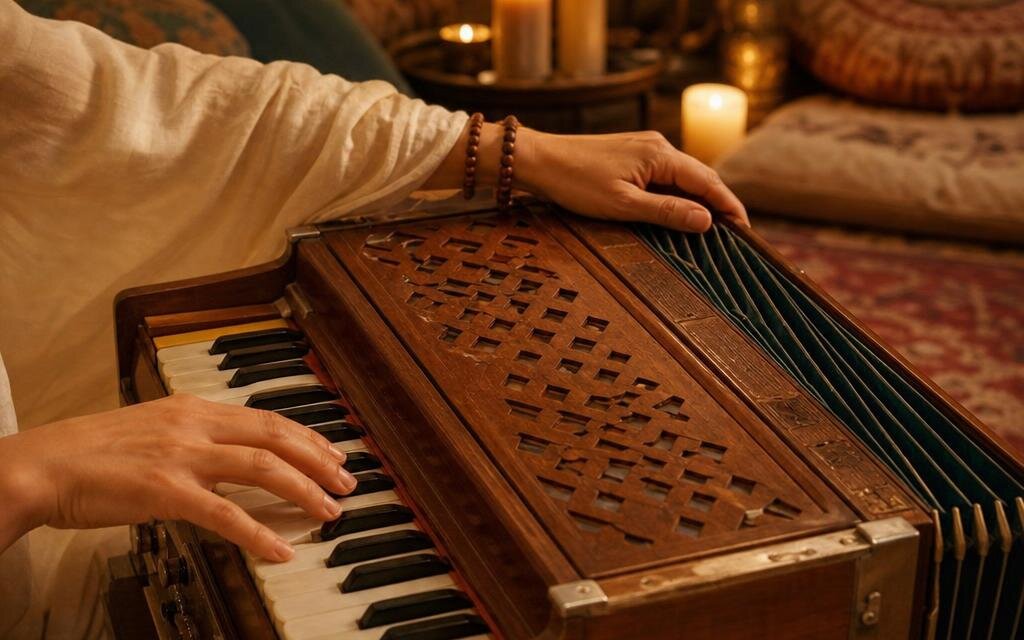
Harmonium Basics for Kirtan
The harmonium asks very little of a beginner: one hand pumps, the other plays, and a drone stop does half the work for you. This guide covers sitting down at the instrument for the first time — bellows, drone, simple right-hand voicings, and how to sing while you play.
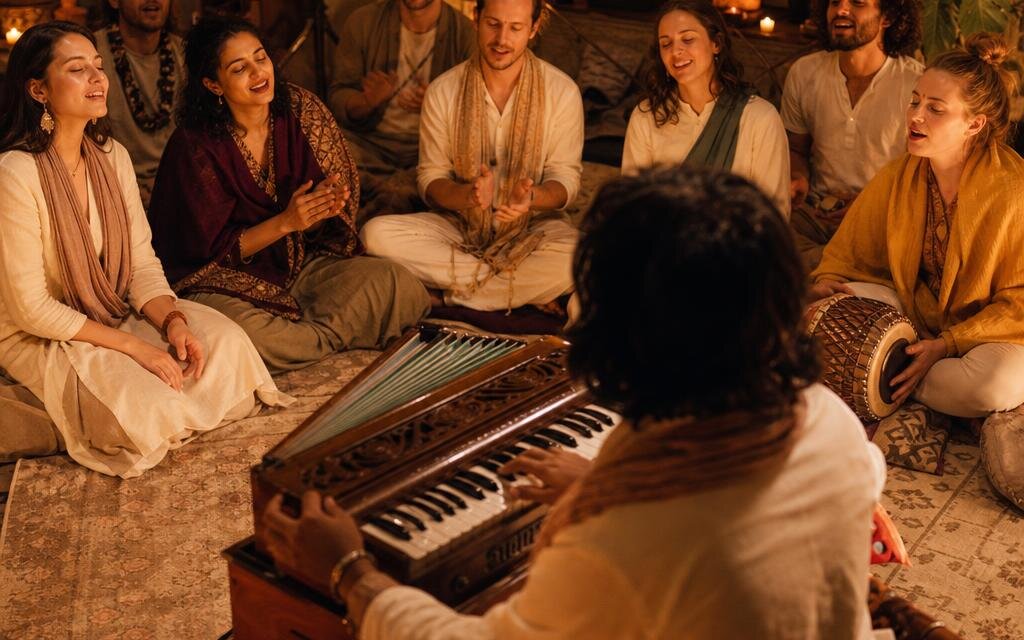
How to Lead Kirtan: Structure, Harmonium Basics, and Building a Set
A practical guide for anyone stepping into the leader's seat: how call-and-response actually works, what to do with your hands on the harmonium, and how to build a set that carries a room.