
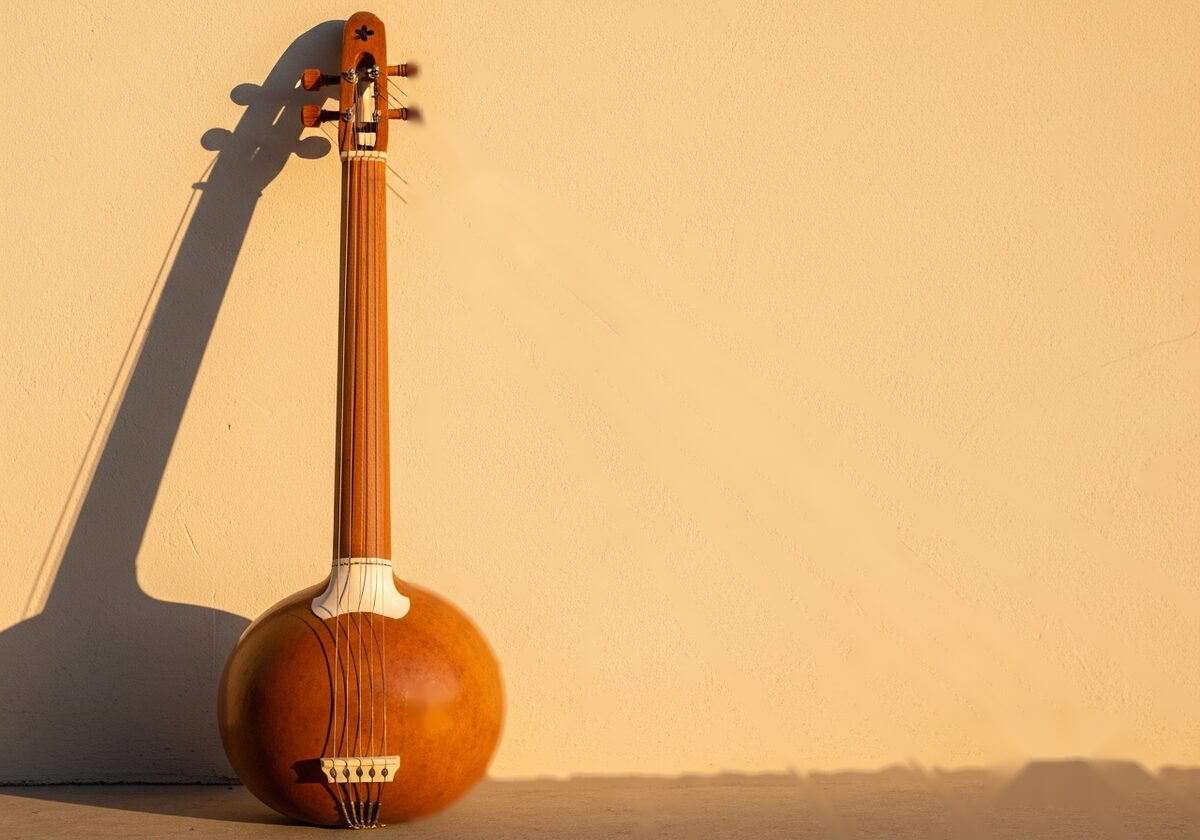
See & Hear the Tanpura
About the Tanpura
The tanpura is a long-necked, fretless lute with four to six strings that are plucked in a slow, continuous cycle. It plays no melody and no rhythm — its sole purpose is to lay down a rich, resonant drone whose overtones fill the space and give singers a reference pitch. Highly valued in Indian classical music and traditional Kirtan, its sound is increasingly recreated by electronic tanpura boxes and apps in modern settings. The tanpura's shimmering harmonic 'cloud' is what gives much Indian devotional music its meditative depth.
Its Role in Kirtan
The tanpura's role in Kirtan is the oldest one in Indian music: to hold the sound the singing lives inside. Traditional Kirtan and bhajan singers sit behind a tanpura for the same reason classical vocalists do — its slowly cycling strings establish sa, the home pitch, so the voice always has somewhere to return, and its cloud of overtones gives the chant a meditative depth no keyboard drone quite matches. In Indian thought that drone carries meaning as well as function, evoking the continuous unstruck sound behind all music. Modern Kirtan settings often replace the physical instrument with an electronic tanpura box or phone app quietly humming through the PA, but the job is unchanged: before the first mantra is sung, the tanpura's shimmer settles the room, tunes every ear to one pitch, and marks the shift from ordinary time into practice.
Mantras Sung with the Tanpura
Chants traditionally accompanied by the tanpura in kirtan and practice.
Play Mantras on the Tanpura
These chants have verified chord charts with a tanpura-ready view — pick a key, follow the chart, and lead.
Gayatri Mantra
Chord chart with guitar & harmonium views
Asato Ma Sad Gamaya
Chord chart with guitar & harmonium views
Want the full songbook? Browse every mantra with a chord chart →
Hear It in Practice

Deva Premal & Miten
Featured artist · Mantra / Sacred Chant
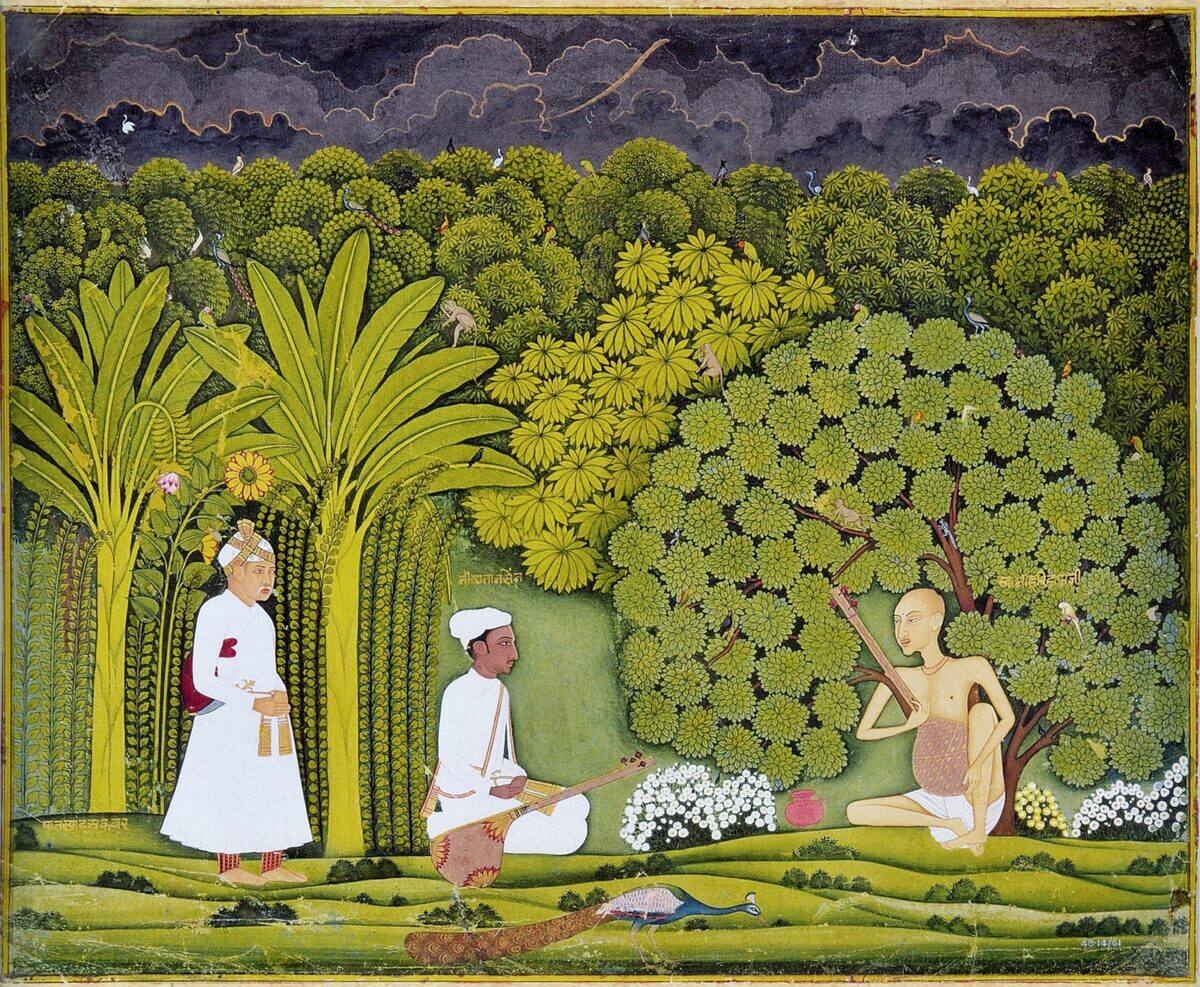
Swami Haridas
Pioneer · Dhrupad Saint-Musician of Vrindavan
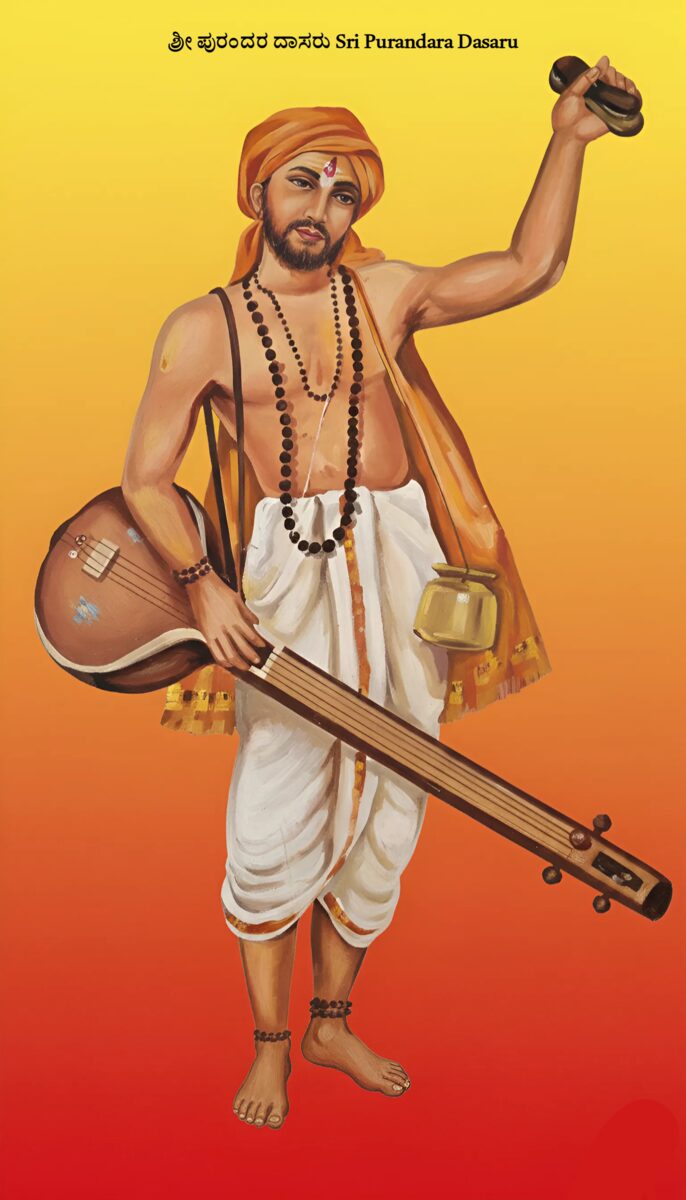
Purandara Dasa
Pioneer · Father of Carnatic Music & Wandering Haridasa
Kirtan Instruments: Harmonium, Tabla, Kartals, and More
Read · Learning
Terms in the Glossary
Words from this page, explained in our A–Z reference.
Keep Exploring