Purandara Dasa
The gem merchant who gave away his fortune and walked Karnataka with a tanpura — composing thousands of Kannada songs to "Purandara Vittala" and creating the teaching system that earned him the title father of Carnatic music.
Life & Legacy
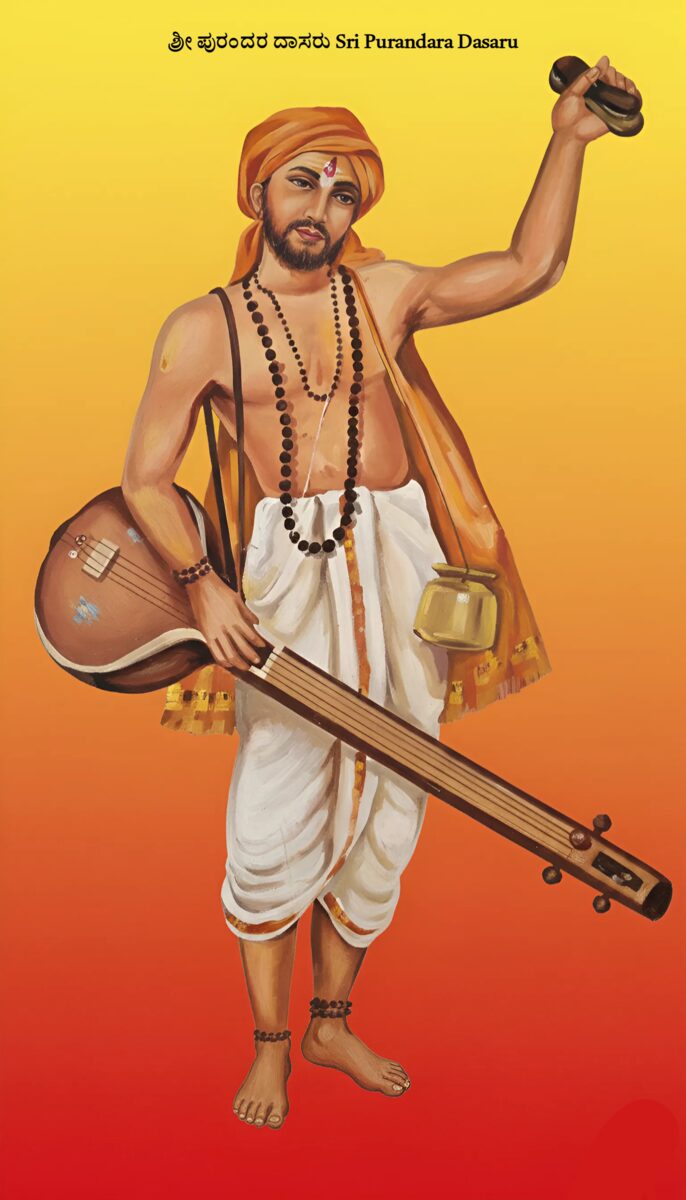
He began life as Srinivasa Nayaka, a wealthy gem and pawn merchant in the Vijayanagara empire — and, the tradition says, a famously tight-fisted one. The turning came through his wife: when she gave her own nose-ring to a poor brahmin the merchant had turned away, and the ring reappeared miraculously in his shop, Srinivasa saw the emptiness of his hoarding, gave away his entire fortune at around thirty, and took up the wandering life of a Haridasa — a servant of Hari singing from door to door. Initiated by the great Vyasatirtha, a teacher in Madhvacharya's lineage, he signed his songs "Purandara Vittala," the name of Krishna worshipped at Pandharpur, binding him to the same devotional current as the Varkari saints Namdev and Tukaram.
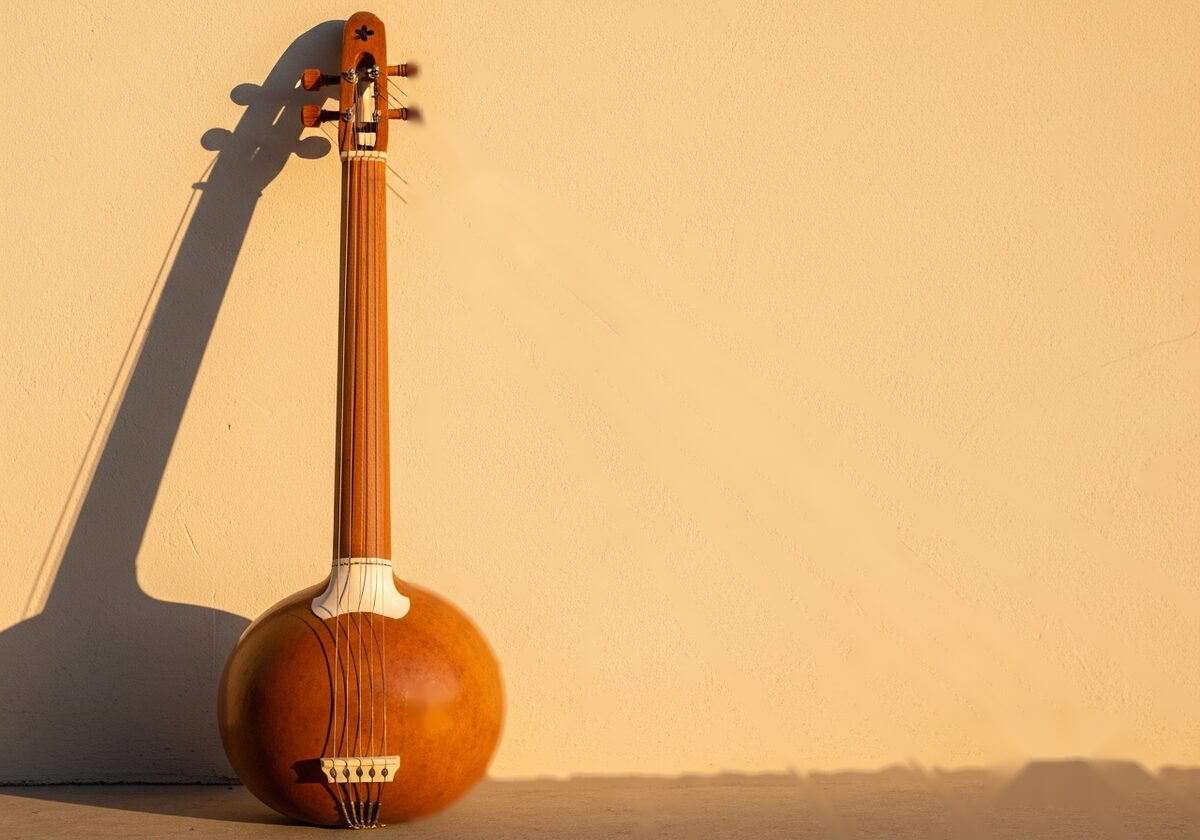
Walking Karnataka with tanpura in hand, he composed by traditional count hundreds of thousands of songs, of which about a thousand survive — kirtanas in plain, pungent Kannada that teach devotion through the stuff of daily life. His deeper revolution was pedagogical: he organized the first graded system for teaching South Indian classical music — the beginner's scale and exercise sequences still used by every student today — earning him the title Karnataka Sangita Pitamaha, the father of Carnatic music. Tyagaraja, the tradition's supreme composer two centuries on, saluted him as a master, and his songs remain staples of concert and bhajan repertoire alike.