
Swami Haridas
The reclusive saint-musician of Vrindavan's Nidhivan grove — revered as the fountainhead of dhrupad devotional music, traditional teacher of the legendary Tansen, and founder of a lineage where music itself is worship.
Life & Legacy
Swami Haridas lived in the forest of Nidhivan in Vrindavan, the pilgrimage heartland of Krishna devotion, during the sixteenth century — a renunciant who refused courts and patrons and sang only for God. Tradition holds that his ecstatic singing manifested the deity Banke Bihari, the "charming crooked one," whose temple remains one of Vrindavan's most beloved; the deity he worshipped in seclusion is served publicly to this day.
Haridas was a master of dhrupad, the oldest surviving form of North Indian classical vocal music — slow, austere, and meditative, built for temple worship rather than entertainment. His surviving songs, collected as the Kelimal, celebrate the divine play of Radha and Krishna in the groves of Braj. The Haridasi sampradaya that formed around him treats music not as an accompaniment to devotion but as the practice itself — nada as the doorway to the divine.
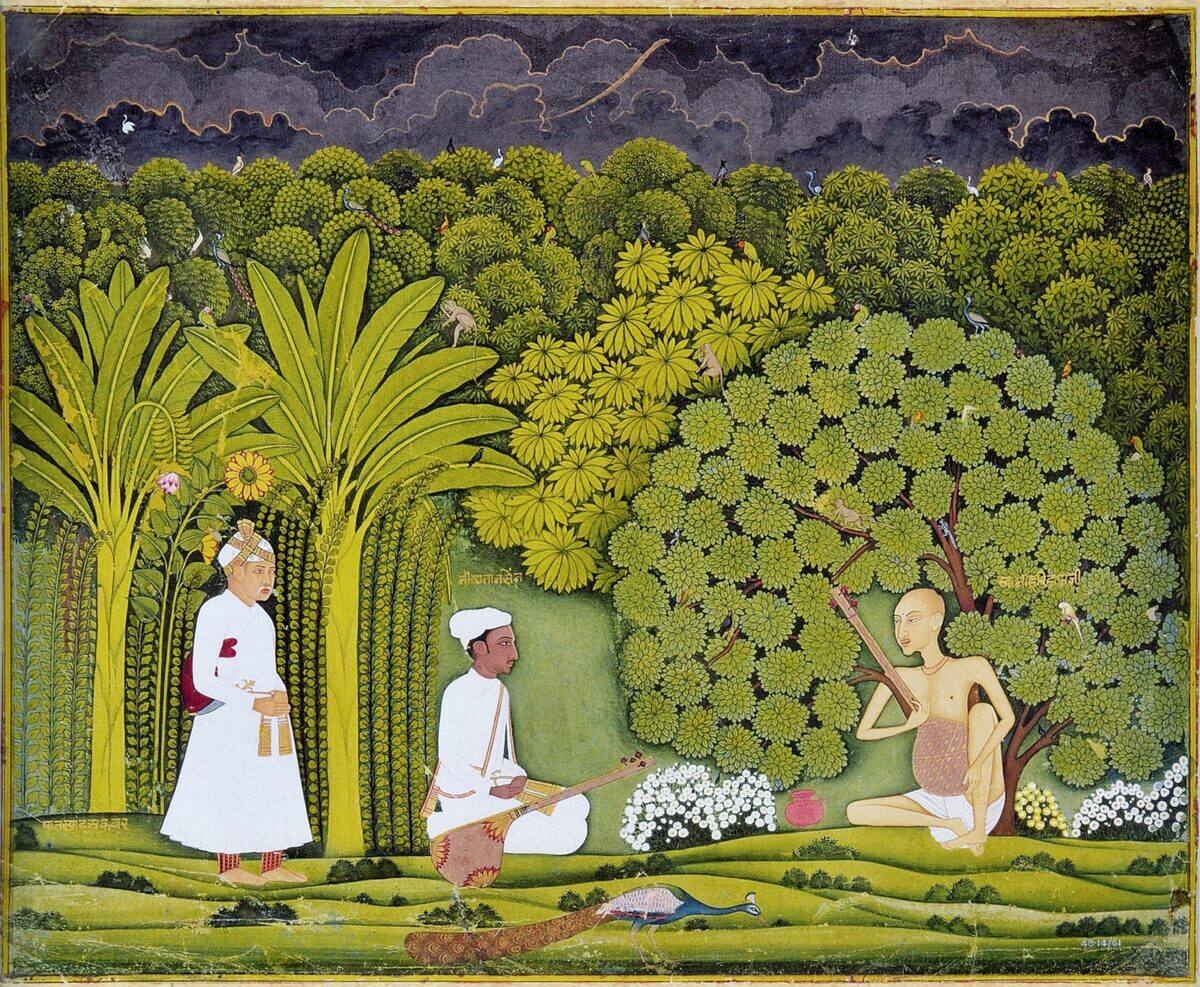
His fame as a teacher became legend: Tansen, the greatest musician of Emperor Akbar's court, is traditionally counted among his disciples, and a famous painting shows emperor and court musician traveling to the forest to hear the master who would sing for no king. Through Tansen and the dhrupad lineages, Haridas's influence runs through the whole of North Indian sacred music.