
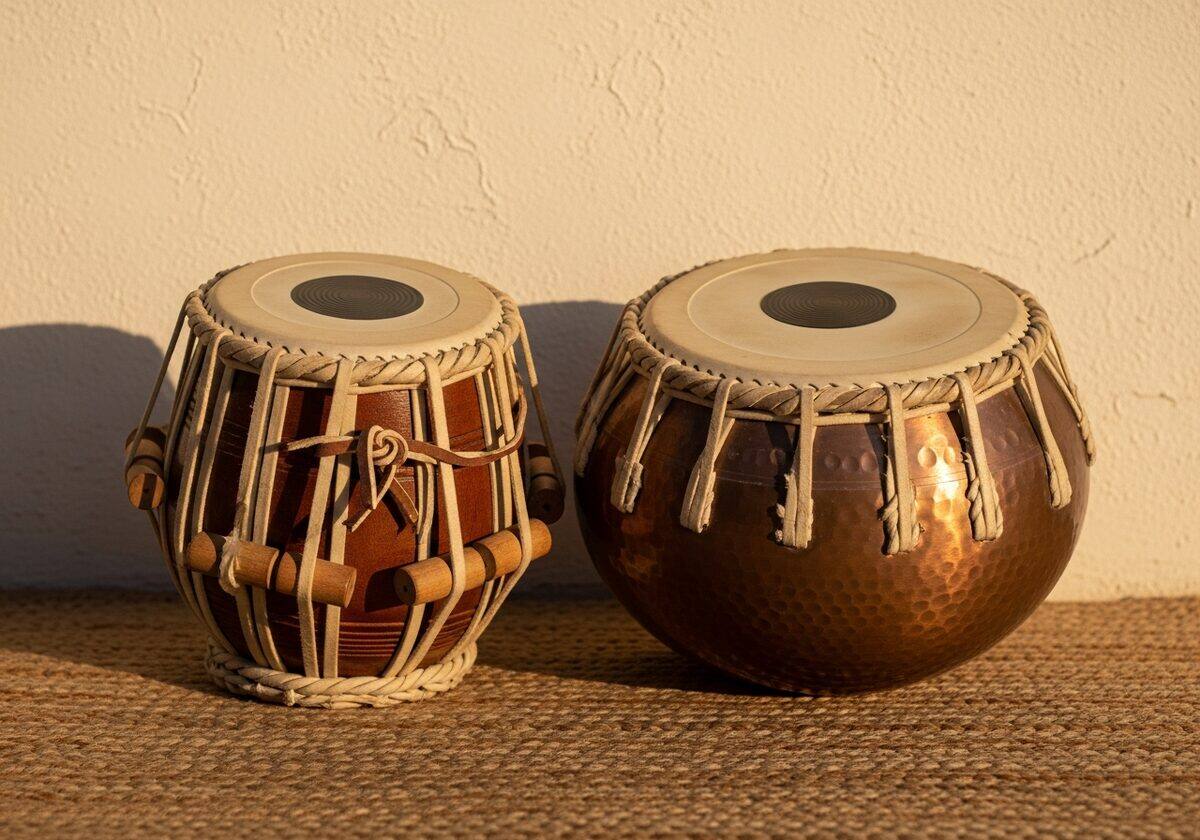
See & Hear the Tabla
About the Tabla
The tabla is a pair of small hand drums: the smaller wooden dayan (right hand), tuned to a specific pitch, and the larger metal bayan (left hand) that supplies the bass. A black tuning paste at the center of each head gives the tabla its distinctive ringing, pitched tone. The dominant percussion of North Indian (Hindustani) classical music, the tabla brings subtlety and intricate rhythmic cycles (tala) to Kirtan and bhajan, and it is one of the most common drums heard in Western Kirtan alongside the harmonium.
Its Role in Kirtan
The tabla brings the discipline of North Indian classical rhythm into the chant. Where a folk drum simply keeps the groove, the tabla player holds a tala — a repeating rhythmic cycle such as the eight-beat keherwa or six-beat dadra that underpin most bhajan and Kirtan singing — and decorates it with fills that answer the melody like a conversation. That partnership with the harmonium is the classic engine of a Kirtan: the leader sings, the tabla marks the cycle, and as the chant builds the drummer drives the gradual acceleration that carries a room from meditative repetition to ecstatic climax. Because the dayan is tuned to the key of the chant, the drum does not just keep time — it rings in harmony with the mantra itself, which is why tabla remains the most common drum on Western Kirtan recordings and stages.
Mantras Sung with the Tabla
Chants traditionally accompanied by the tabla in kirtan and practice.
Play Mantras on the Tabla
These chants have verified chord charts with a tabla-ready view — pick a key, follow the chart, and lead.
Raghupati Raghava Raja Ram
Chord chart with guitar & harmonium views
Hanuman Chalisa
Chord chart with guitar & harmonium views
Om Namah Shivaya
Chord chart with guitar & harmonium views
Want the full songbook? Browse every mantra with a chord chart →
Hear It in Practice
Terms in the Glossary
Words from this page, explained in our A–Z reference.
Keep Exploring