
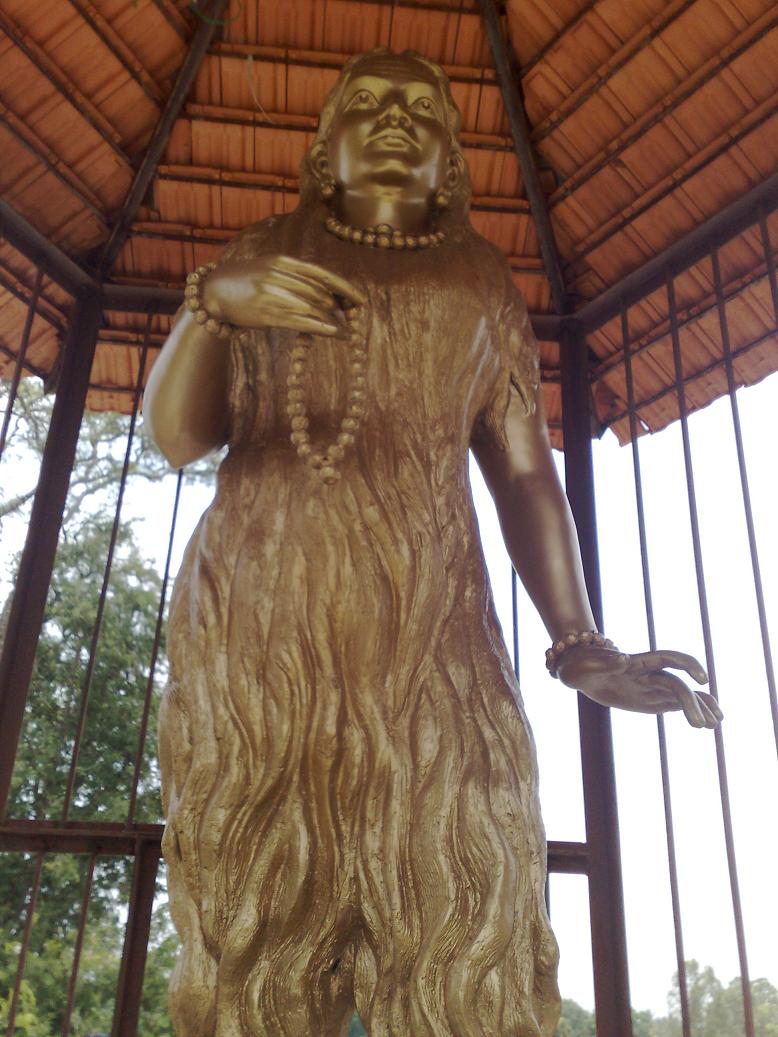
Life & Legacy
Born in the twelfth century at Udutadi in present-day Shivamogga district, Karnataka, Mahadevi was devoted from childhood to Shiva in his local form Chennamallikarjuna — a name the poet A.K. Ramanujan rendered as "the Lord white as jasmine." Tradition tells that she was pressed into marriage with the local chieftain Kaushika, and that when he violated the conditions she had set, she walked away from palace, possessions, and garments alike, wandering clad only in her tresses — a renunciation so absolute it startled even the saints. At Kalyana she sought out the Anubhava Mantapa, the "hall of experience" where Basavanna and Allama Prabhu gathered the sharanas; questioned sharply by Allama Prabhu, her answers won her the honorific Akka, "elder sister." Her vachanas speak of divine love with a directness that anticipates Mirabai by three centuries — the Lord as her only husband, the world's judgments as nothing. She spent her last years at the sacred mountain of Srisailam, where tradition holds she merged with her Lord in the Kadali grove while still in her twenties or early thirties.