
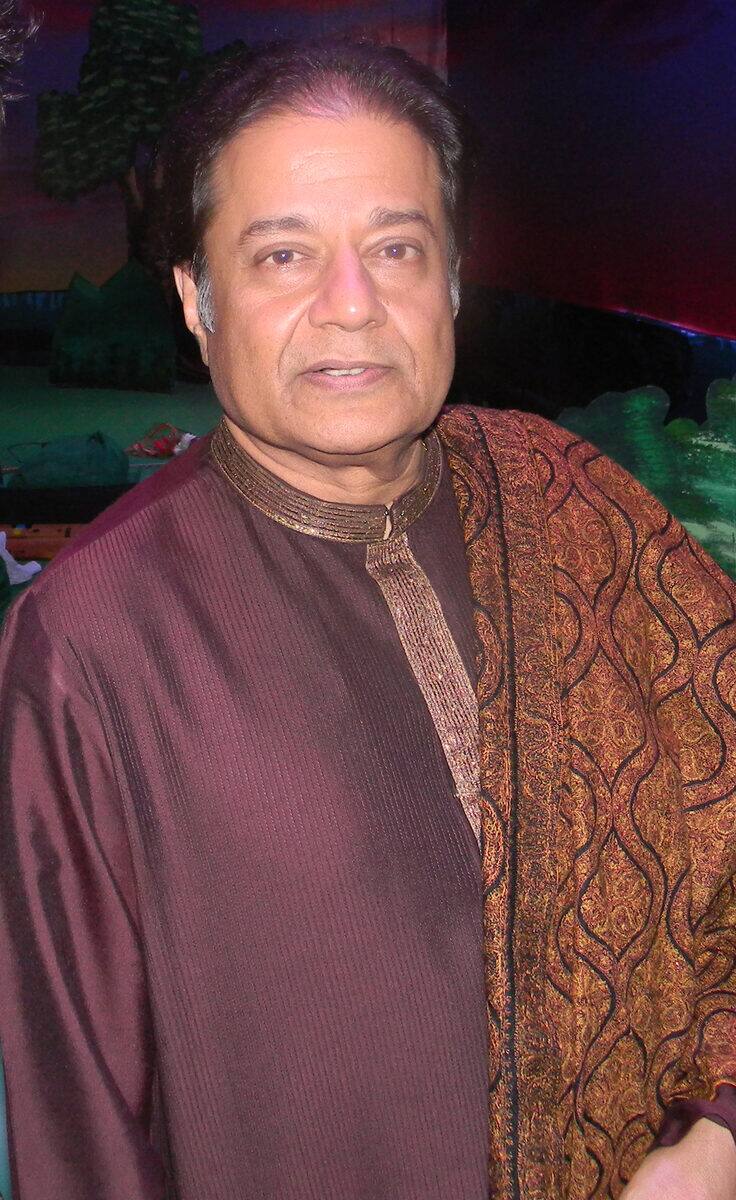
Life & Legacy
Anup Jalota was born in 1953 in Nainital and raised in the tradition at its source: his father, Purshottam Das Jalota, was a renowned singer of bhajans, and the son began performing at his side as a boy. After training in classical vocal music and a stint as a chorus singer at All India Radio, he emerged in the late 1970s and 1980s as the defining voice of a new phenomenon — the bhajan as a full concert art, filling auditoriums in India and across the diaspora with evenings of pure devotional song.
His renditions of "Aisi Lagi Lagan (Meera Ho Gayi Magan)" — telling of Mirabai's absorption in her Lord — and Mira's own "Rang De Chunariya" became some of the most widely heard bhajans ever recorded, alongside classics like "Jag Mein Sundar Hai Do Naam." Honored with the title "Bhajan Samrat" — emperor of bhajan — and awarded the Padma Shri in 2012, he has given thousands of concerts across more than sixty countries, moving easily between bhajan and ghazal. In an age of film music, he proved that an evening of unhurried devotional song could still fill the largest halls — and through his recordings, the padas of the medieval saints reach new listeners every day.