
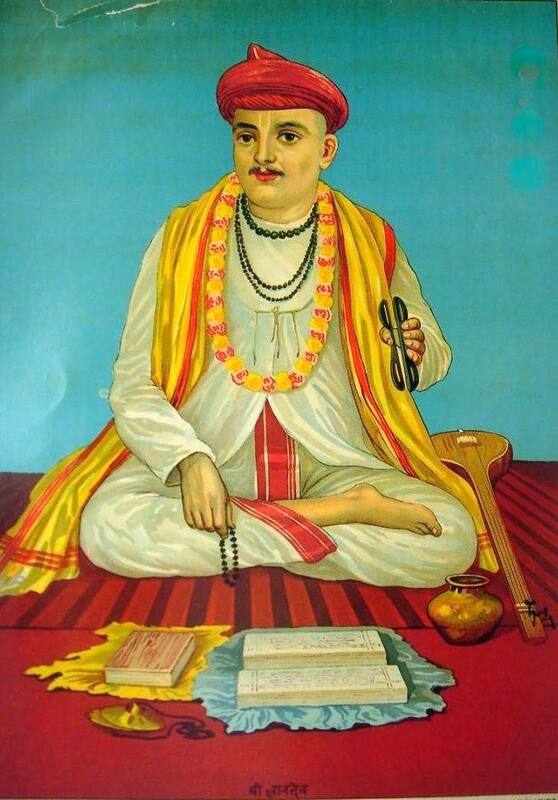
Life & Legacy
Dnyaneshwar (also written Jnaneshwar or Jnanadeva) was born in 1275 at Apegaon on the Godavari, one of four children of a renunciate who had returned to family life — a breach for which the children were ostracized by the orthodox community. Turned inward by hardship and tutored by his elder brother Nivruttinath, he produced, at about sixteen, the Dnyaneshwari: a verse commentary that carried the Bhagavad Gita out of Sanskrit and into the Marathi of farmers and weavers, insisting that the highest wisdom belongs in the mother tongue of ordinary people. He followed it with the Amrutanubhav, a work of pure philosophy, and hundreds of abhangs — direct, singable devotional verses to Vitthal of Pandharpur.
With his friend and fellow saint Namdev he traveled Maharashtra singing the divine name, helping seed the Varkari movement's practice of communal kirtan. In 1296, aged just twenty-one, he took sanjeevan samadhi — voluntarily entombing himself in meditation — at Alandi, where his shrine remains the starting point of the great wari pilgrimage. The Pasayadan, the Dnyaneshwari's closing prayer asking grace for all beings, is still one of the most beloved songs in the Marathi devotional repertoire.