
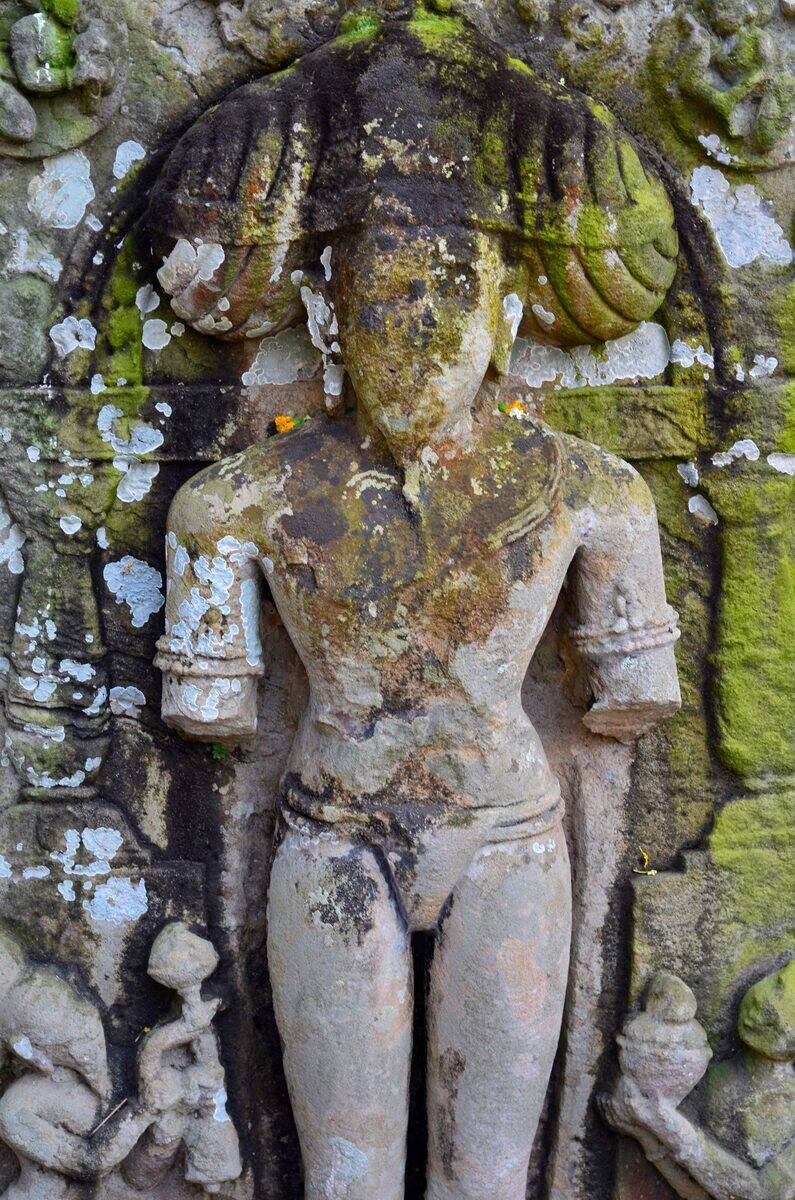
Life & Legacy
Jayadeva was a 12th-century Sanskrit poet, traditionally associated with the region of Odisha (with Bengal also claiming him as its own). His masterwork, the Gita Govinda ("Song of Govinda"), is a lyrical cycle celebrating the divine love-play of Radha and Krishna. Unlike the great Sanskrit epics, it was composed explicitly to be sung: each of its twenty-four songs — the ashtapadis — is set to a particular raga and tala.
The Gita Govinda became one of the most influential devotional works in Indian history, sung in the Jagannath temple of Puri and woven into the musical and dance traditions of much of the subcontinent. By marrying refined poetry to melody and rhythm, Jayadeva helped establish the sung celebration of Radha-Krishna love that flows directly into Gaudiya Vaishnava kirtan and the wider Bhakti tradition.