
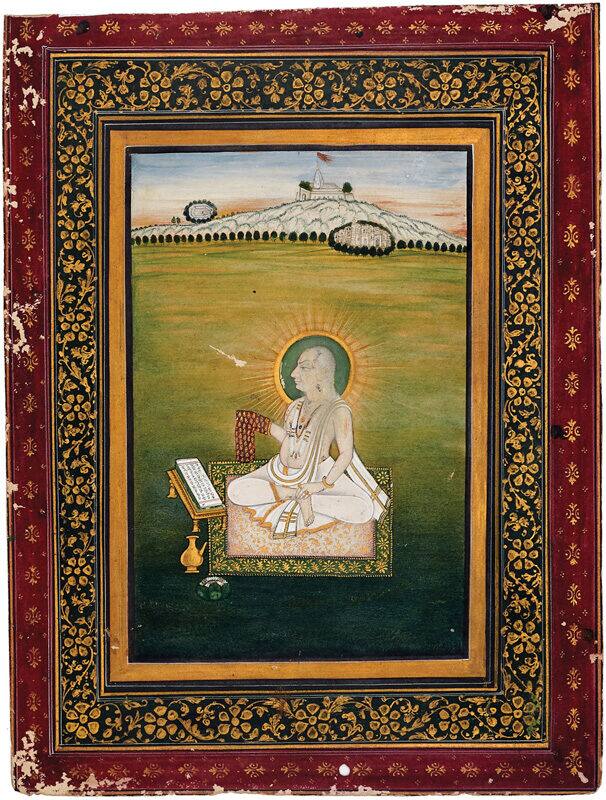
Vallabhacharya
The philosopher of divine grace who founded the Pushtimarg — the Krishna-devotion lineage of loving service and song whose poets, led by Surdas, created one of India's great bodies of devotional music.
Life & Legacy
Vallabhacharya was born in 1479 at Champaran in central India to a Telugu Brahmin family. A prodigy who completed his scriptural studies in childhood, he traveled India three times on foot, teaching a philosophy he called Shuddhadvaita — pure non-dualism — in which the world is real, the soul is a spark of Krishna, and liberation comes not through renunciation or effort but through pushti: the unearned, nourishing grace of God.
The practice he founded, the Pushtimarg or Path of Grace, centers on seva — tender, personal service of Krishna, especially in his child form as Shrinathji of Govardhan hill. In Pushtimarg havelis (temple-homes), that service is inseparable from music: every day is structured around kirtan sung to the deity through eight watches, from waking to rest, in the seasonal ragas of the Braj tradition.
Vallabhacharya gathered poet-singers around this worship, and under his son Vitthalnath they were formalized as the Ashtachhap — the eight seals — with the blind bard Surdas the most beloved among them. The haveli sangeet tradition they created is one of the oldest continuously performed bodies of devotional song in India, and in modern times the American scholar-kirtaniya Shyamdas carried its poetry and practice into the Western kirtan world.