
Life & Legacy
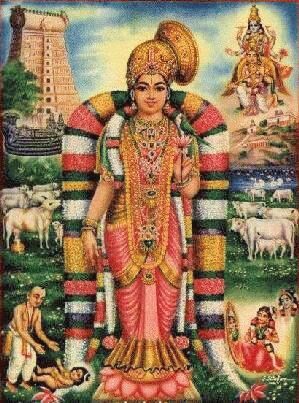
Tradition tells that Andal was found as an infant beneath a tulsi plant in the temple garden of Srivilliputhur, in the far south of Tamil Nadu, and raised by the garden''s keeper — the poet-saint Periyalvar. Named Kotai, she grew up so in love with Vishnu that she would secretly wear the flower garlands woven for the deity before they were offered, imagining herself his bride; discovered, she was found to have made the garlands more beloved to the Lord, earning the name by which Srivilliputhur still honors her — Sudikkodutta Nachiyar, "the lady who gave what she had worn." Refusing any earthly marriage, she declared she would wed only Ranganatha, the reclining Vishnu of Srirangam, and tradition holds that she merged into the deity there while still in her teens.
Her two works place her among the greatest poets of the Tamil devotional flowering. The Tiruppavai, thirty pasurams (verses) sung as a vow to awaken Krishna in the sacred month of Margazhi (mid-December to mid-January), is recited at dawn in temples and homes across South India to this day — one of the most continuously sung devotional poems on earth. The Nachiyar Tirumoli, 143 verses of longing addressed to her divine Beloved, gave woman-voiced bhakti its earliest full flowering — seven centuries before Mirabai sang her love for Krishna in the north.