
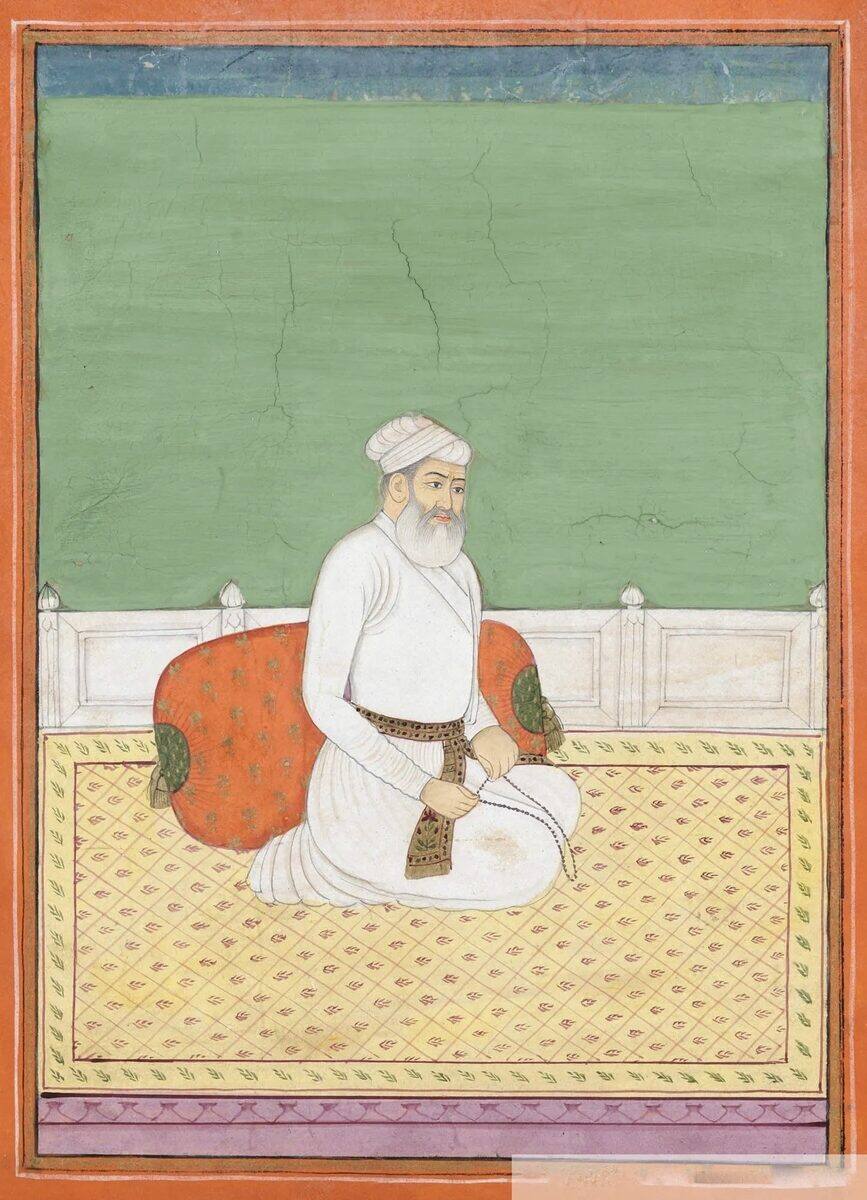
Guru Amar Das
The third Sikh Guru, won to the path by overhearing a sung hymn of Guru Nanak — composer of the Anand Sahib, the "Song of Bliss" sung at the close of every Sikh service, and preserver of the hymn collections that grew into the Guru Granth Sahib.
Life & Legacy
Born in 1479 in the village of Basarke near present-day Amritsar, Amar Das spent most of his life as a devout Vaishnava householder, making some twenty pilgrimages to the Ganges at Haridwar. The turning point of his life came through sacred song: already past sixty, he overheard Bibi Amro — the daughter of the second Guru, Guru Angad — singing a hymn of Guru Nanak at dawn, and was so moved that he sought out Guru Angad and became his most devoted disciple. After years of humble service he was appointed the third Guru of the Sikhs in 1552, at the age of seventy-three.
From his seat at Goindval on the river Beas, Guru Amar Das gave the young tradition much of its enduring shape. He made the shared community kitchen (langar) inseparable from meeting the Guru — even the Mughal emperor Akbar, visiting in 1567, first sat on the floor and ate with everyone else — and he spoke against caste distinctions, sati, and the veiling of women, appointing women among the preachers he sent out to lead distant congregations. A prolific sacred poet, he contributed over nine hundred hymns in seventeen ragas to what became the Guru Granth Sahib, above all the Anand Sahib ("Song of Bliss"), composed in Raag Ramkali and sung to this day at the close of every Sikh congregational service and ceremony. He also had the hymns of the first Gurus gathered into written collections at Goindval — the pothis that his grandson Guru Arjan drew upon when compiling the Adi Granth. His daughter Bibi Bhani married Bhai Jetha, who succeeded him as Guru Ram Das.