
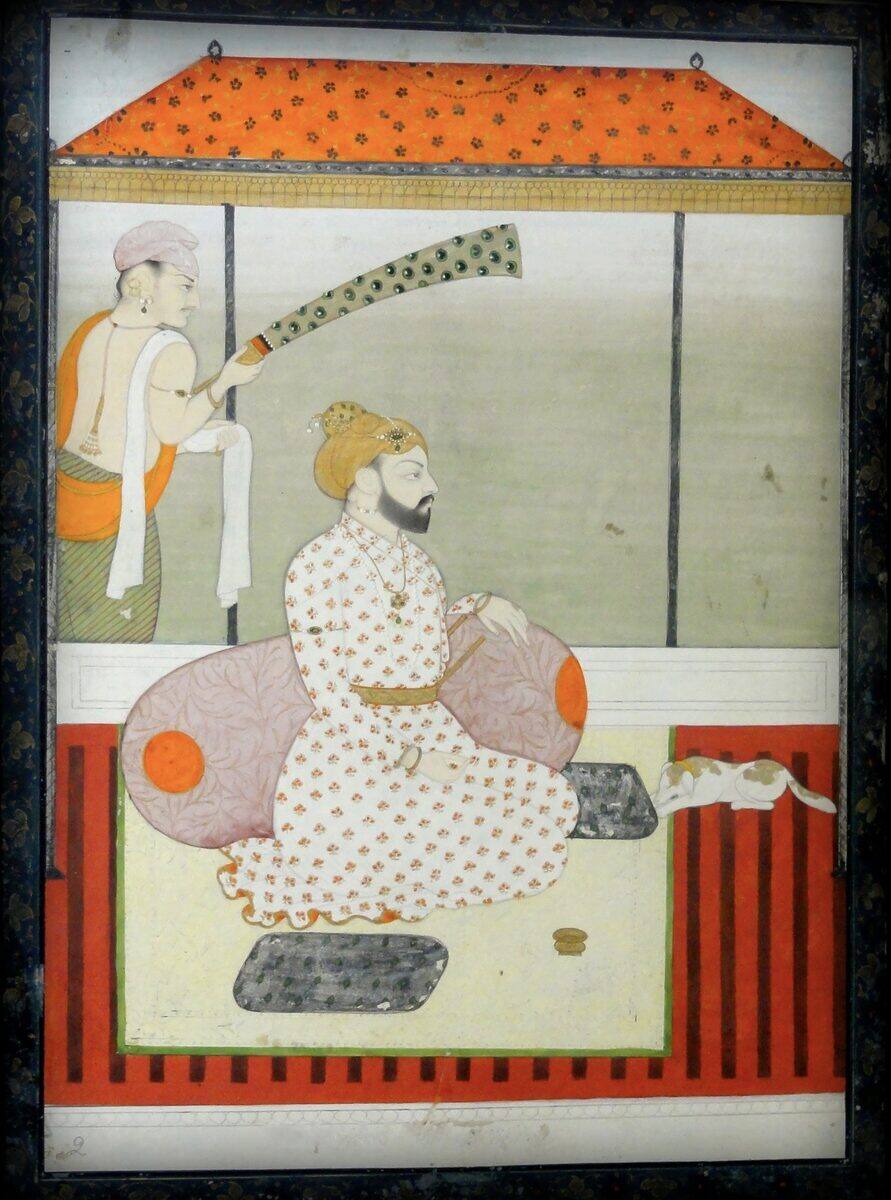
Life & Legacy
Born Lehna on 31 March 1504 in the village of Matte di Sarai (now Sarainaga) in the Muktsar region of Punjab, the future second Guru was a devout worshipper of the goddess Durga who led pilgrim parties to her shrines. His life changed when he heard a hymn of Guru Nanak being sung at dawn; he traveled to Kartarpur to meet the Guru and became his most devoted disciple. Guru Nanak renamed him Angad — from ang, "limb," a part of his own body — and in 1539 chose him over his own sons as successor.
From his seat at Khadur Sahib, Guru Angad gave the young tradition the script that still carries its song. He standardized and popularized Gurmukhi — "from the mouth of the Guru" — refining the letters then in use in Punjab into the alphabet in which Gurbani, the sung scripture, has been written ever since. He had Guru Nanak's hymns collected and written down in the new script, safeguarding them for the kirtan tradition, and composed his own shabads and saloks — sixty-two or sixty-three of which were later enshrined in the Guru Granth Sahib by Guru Arjan. His wife Mata Khivi ran the community kitchen (langar) with such devotion that she is praised by name in the scripture itself, and his daughter Bibi Amro's dawn singing of Guru Nanak's hymns later drew Guru Amar Das to the path — sacred song passing the lineage forward once again.