
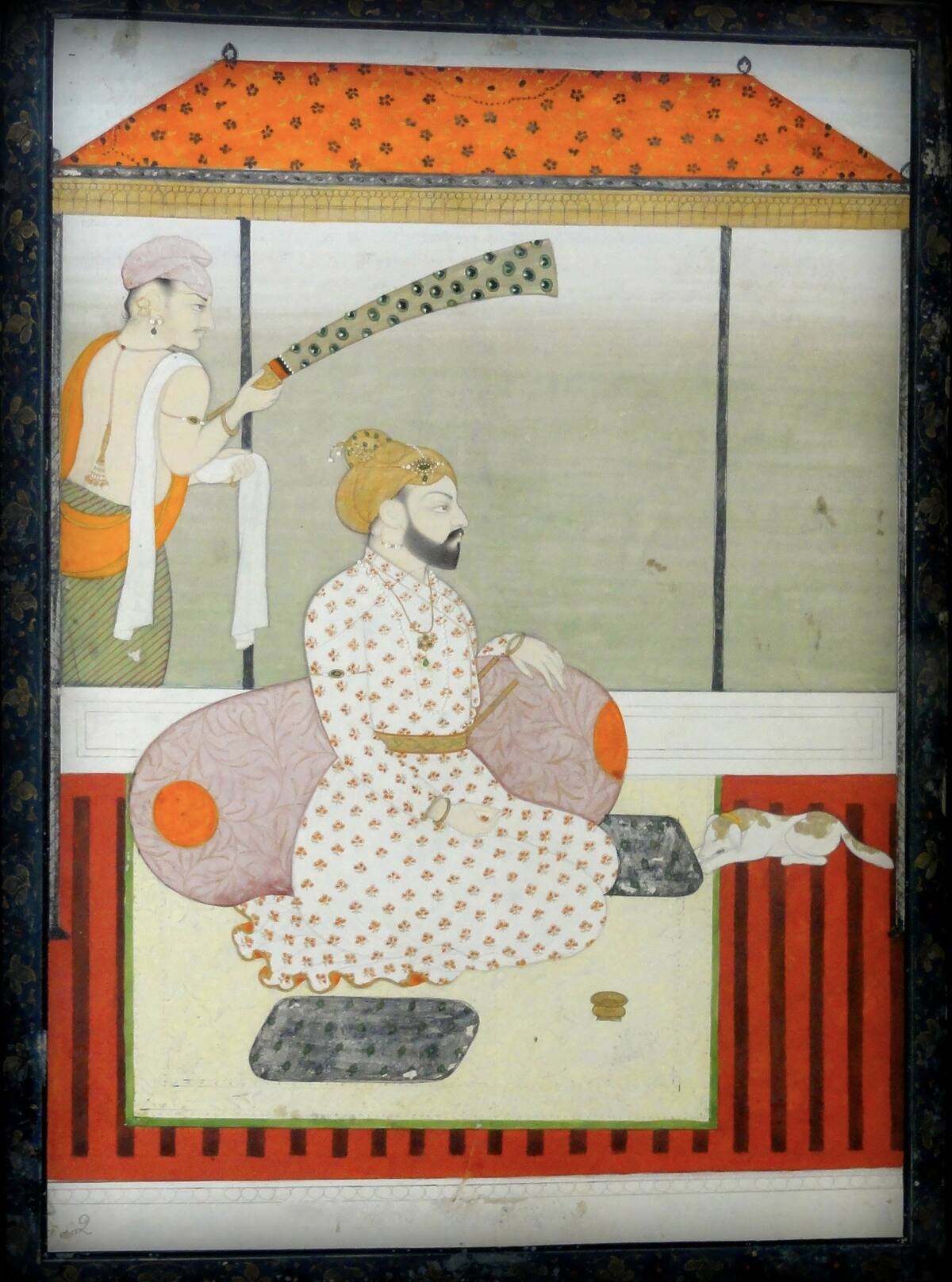
Guru Angad and the Alphabet Built for Song
When Guru Nanak died in 1539, he left behind something unusual for a spiritual movement barely a generation old: a body of teaching that existed almost entirely as song. He had traveled across South Asia singing his hymns with the Muslim rabab player Bhai Mardana at his side, and the community that gathered around him learned the teaching the way the Guru gave it — melodically, by heart. But memory is fragile, and songs that live only in mouths can drift, fracture, and disappear. The man Nanak chose as his successor solved that problem, and the solution reshaped the history of sacred music: he built the songs an alphabet.
The devotee who became a limb
He was born Lehna in 1504, in the village of Matte di Sarai in the Punjab, and for much of his early life he was a devout worshipper of the goddess Durga, leading pilgrim parties to her shrine in the hills. Then, in his early thirties, he heard a hymn of Guru Nanak's recited by a fellow villager — and the words stopped him where he stood. He traveled to Kartarpur, the farming community where the aging Nanak had settled, and stayed.
What followed is one of the tradition's most beloved stories of seva, selfless service. Lehna served without condition — carrying loads of muddy grass when Nanak's own sons refused, obeying instructions that made no worldly sense, asking for nothing. When the time came to name a successor, Nanak passed over both of his sons and chose the devotee instead, renaming him Angad — from ang, "limb" — my own limb, part of my own body. In 1539, Angad became the second Guru, and the succession itself established a principle that would hold for two centuries: the Guruship follows devotion, not blood.
An alphabet from the Guru's mouth
Guru Angad settled in the village of Khadur Sahib and took up the work that defines his legacy. The hymns of Nanak — and the sacred poetry of the wider Punjab — were being written down, when they were written at all, in a scatter of merchant shorthands and regional scripts, none of which recorded the sounds of the spoken language precisely. A song written ambiguously is a song waiting to be mis-sung.
So Angad standardized a script. He took the existing Punjabi letterforms, reformed and reordered them, fixed their vowel signs, and produced the alphabet the tradition came to call Gurmukhi — literally, "from the mouth of the Guru." It was exact where the older scripts were loose: what the Guru sang could now be written precisely as it sounded, and what was written could be sung back without distortion. He used it to collect and record the hymns of Guru Nanak, verifying them against the memories of those who had heard the founder sing, and he composed his own contribution — some sixty-two brief, flint-sharp saloks that later entered the scripture, each signed, in humility, with the name "Nanak" rather than his own.
It is hard to overstate what this made possible. Because of Gurmukhi, the Sikh tradition never had to reconstruct its founder's words from competing oral lineages. The hymns passed to Guru Amar Das intact, and from him down the line to the fifth Guru, Guru Arjan, who compiled them into the Adi Granth — a scripture organized by raga, written from its first page to its last in Angad's letters. Every shabad sung as kirtan in a gurdwara today is read from Gurmukhi. So is every Gurmukhi chant sung in a Western yoga studio.
The kitchen and the wrestling ground
Angad's thirteen years as Guru were not only scribal. At Khadur Sahib, the free community kitchen that Nanak had begun became an institution in the hands of Angad's wife, Mata Khivi, who ran the langar with such open-handed generosity that she is one of the very few women named in the Sikh scripture itself — remembered there for her "rich kirtan-sweetened" hospitality, serving milk and rice to all comers regardless of caste. The Guru, meanwhile, built wrestling grounds beside the prayer gatherings and insisted the community train its bodies as well as its voices — a strikingly whole-person vision of spiritual life: sing, serve, eat together, stay strong.
In his letters, to this day
The words Angad worked so carefully to preserve begin with Nanak's own credal verse — the Mool Mantar, the "root mantra" that opens the scripture: Ik Onkar, Sat Nam — One Creator, whose Name is Truth. When the German-Mexican duo Mirabai Ceiba sings the Mool Mantar for Western audiences, or when Prabhu Nam Kaur — a mother of the Western Gurbani lane — carries the old melodies into new rooms, the syllables they are singing reach them through an unbroken chain of written transmission that begins at Khadur Sahib, in the letters of a script built for exactly this purpose.
Guru Angad died in 1552, having chosen as his successor not a son but a seventy-two-year-old former pilgrim who had served him for a decade with a water-pot on his head. That man's story — the langar made law, the Song of Bliss — belongs to the next chapter of the lineage. But the page it is written on belongs to Angad. He is the reason sacred song, in this tradition, has never had to trust its survival to memory alone.
The Sikh Kirtan Lineage · Part 2 of 7
Terms in the Glossary
Words from this page, explained in our A–Z reference.
Join the Kirtans.com Community
Receive occasional updates — thoughtfully curated devotional music, upcoming gatherings, artist announcements, new resources, and inspiration to support your Bhakti practice.
From This Article

Continue Reading
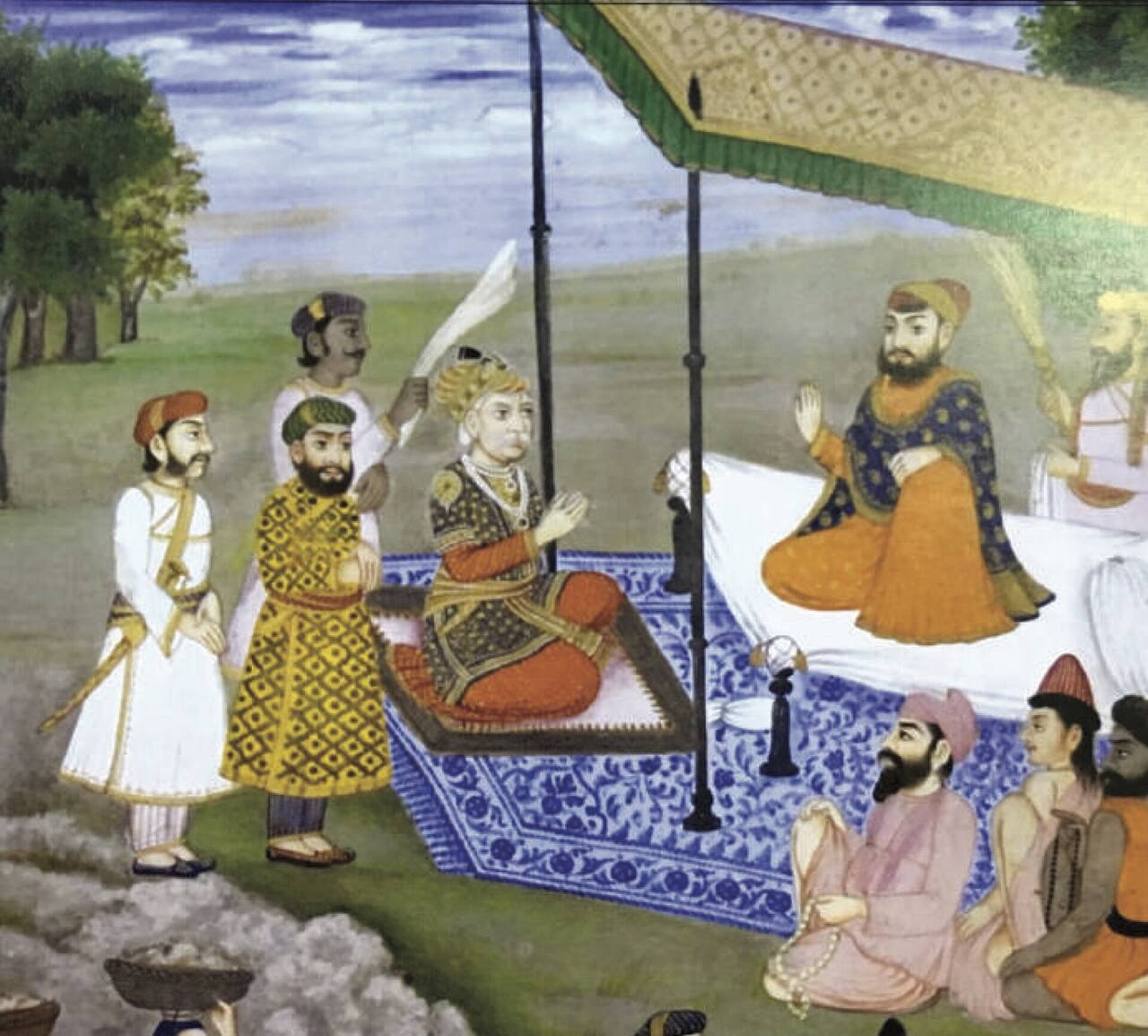
Guru Amar Das and the Song of Bliss
Converted at sixty-two by an overheard hymn, the third Sikh Guru made the free kitchen the tradition's front door — even an emperor sat on the floor to eat — and composed the Anand Sahib, the Song of Bliss that still closes every Sikh service in the world.
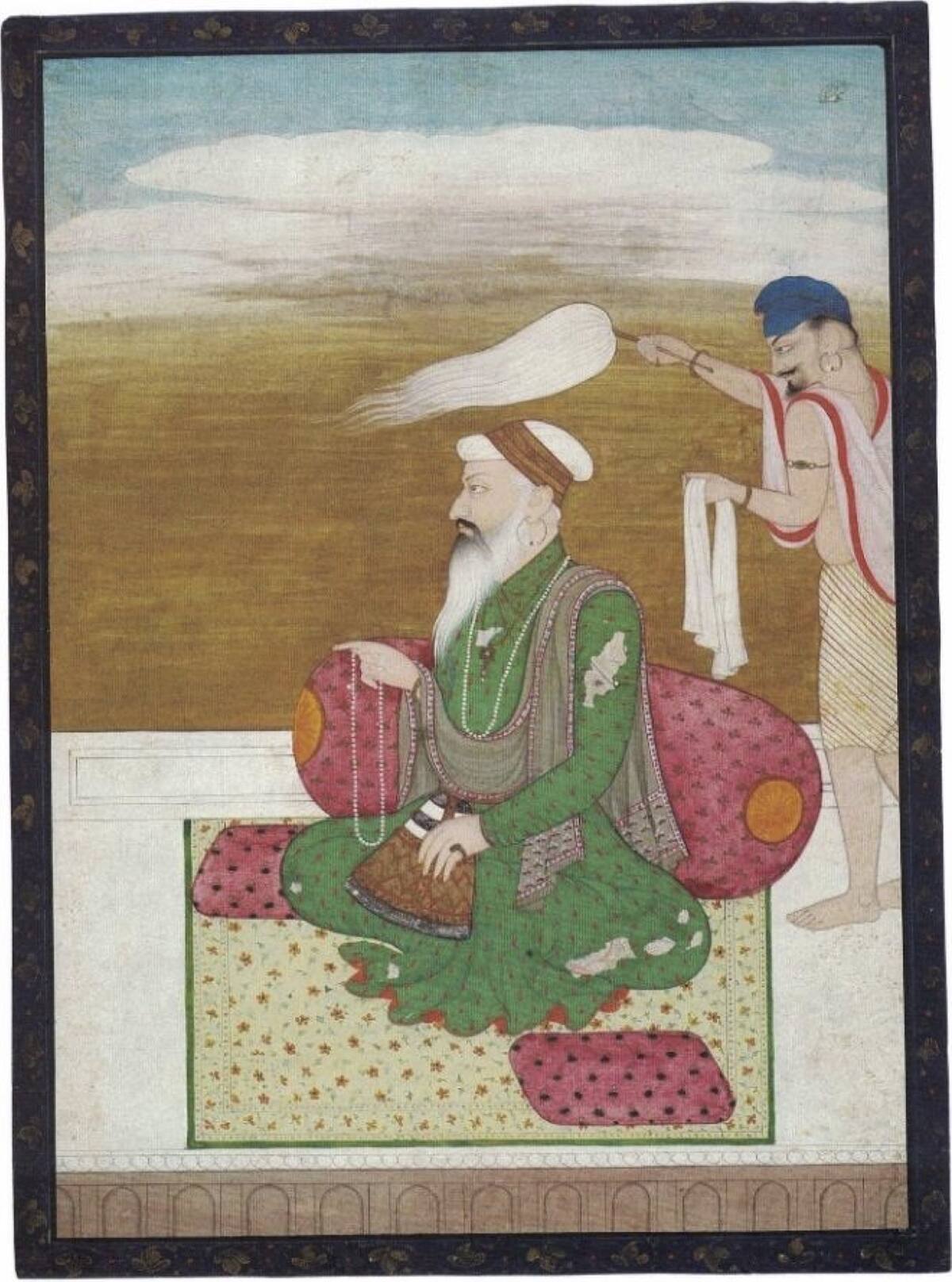
Guru Ram Das and the City of Nectar
An orphan who sold boiled chickpeas became the fourth Sikh Guru, founded Amritsar around a pool of nectar, and wrote the wedding hymns Sikh couples still circle to. Four centuries later, a chant bearing his name is sung in yoga studios around the world.
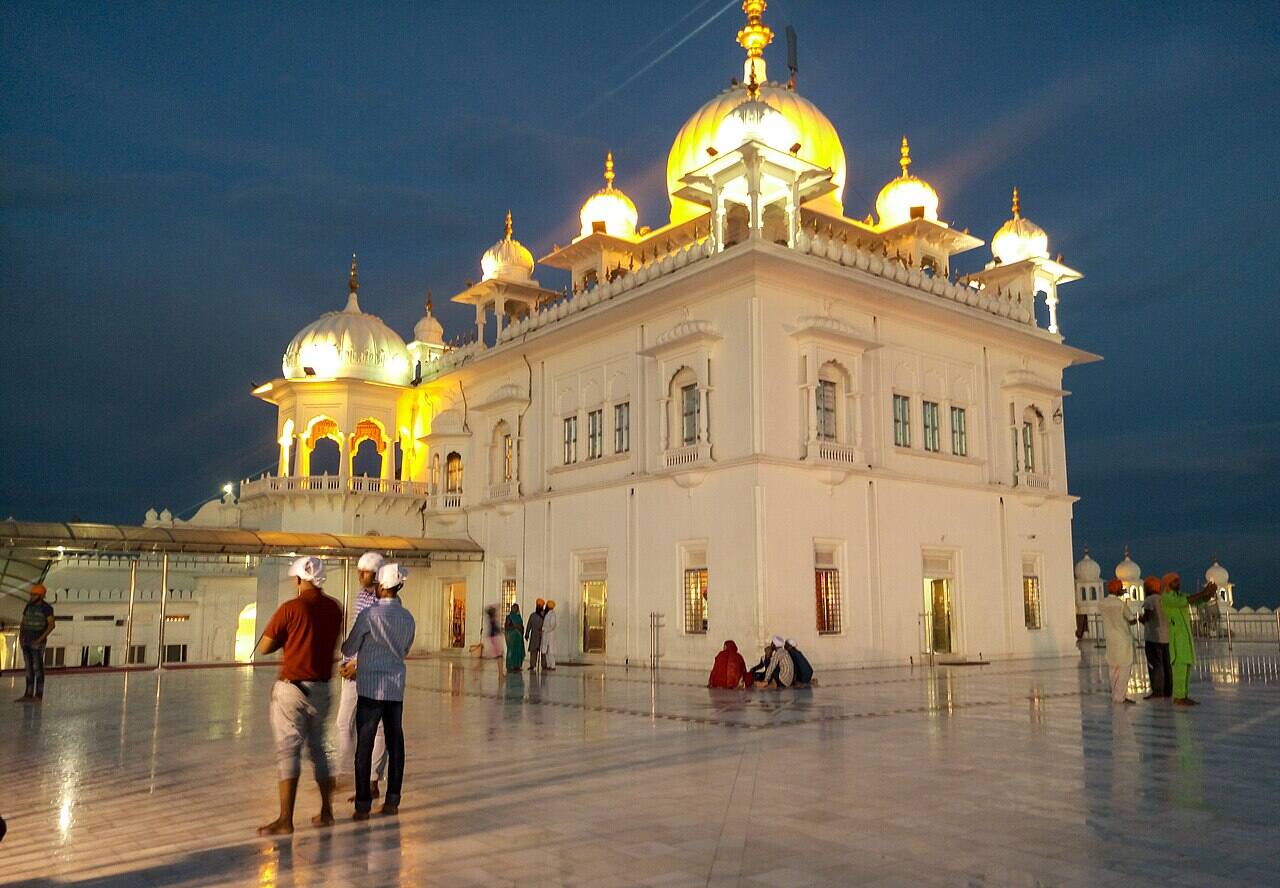
Guru Gobind Singh and the Song That Became the Guru
The tenth Sikh Guru founded the Khalsa, completed the Guru Granth Sahib with his martyred father's hymns — and none of his own — and then enthroned the book of songs as the eternal Guru. Kirtan has been the center of Sikh worship ever since.