

Guru Nanak and the Sikh Roots of Western Chant
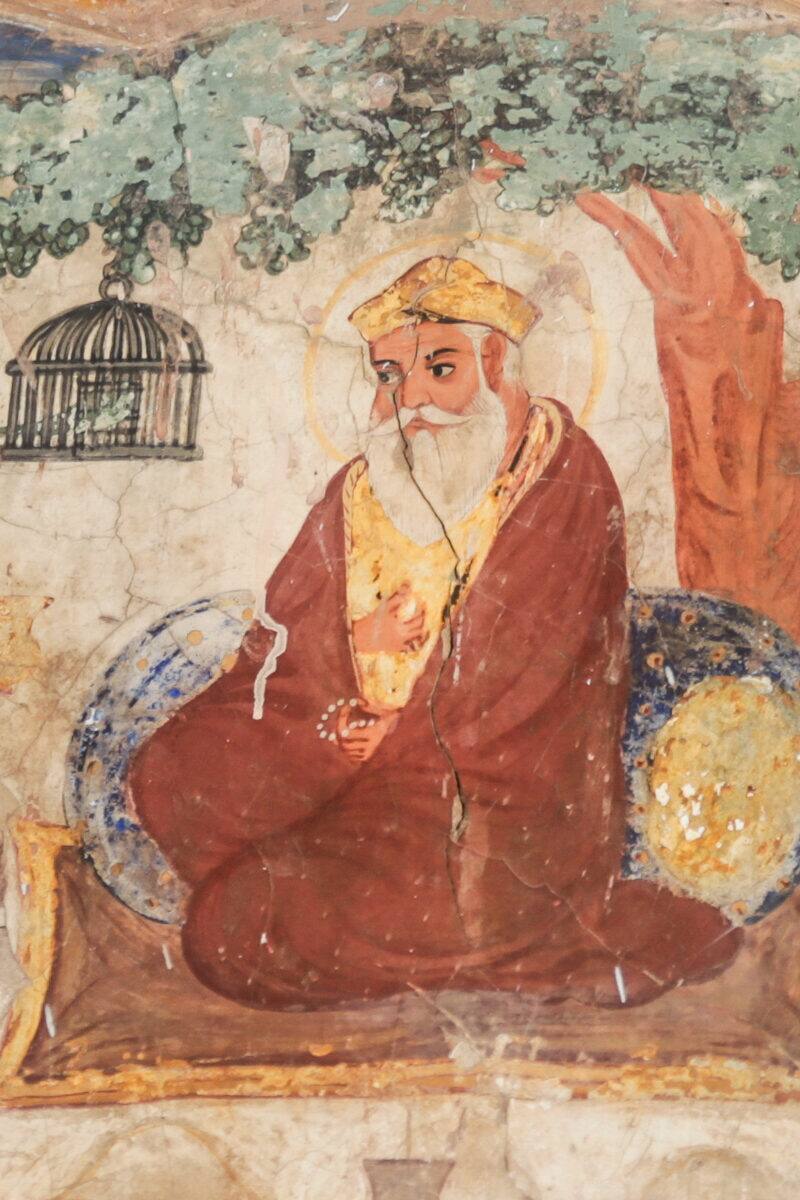
Guru Nanak was born in 1469 in the village of Rai Bhoi di Talwandi — today Nankana Sahib, in the Punjab region of Pakistan — and became the founder of Sikhi and the first of its ten Gurus. Emerging from a profound mystical experience around the age of thirty, he declared that the Divine is one and formless, beyond the boundaries of creed: "There is no Hindu, there is no Muslim." What makes his story extraordinary in the history of sacred chant is the form his teaching took. Guru Nanak did not lecture. He sang.
His lifelong musical companion was Bhai Mardana, a Muslim bard from the same village, roughly ten years his elder, who played the rabab — a plucked, lute-like instrument. Tradition remembers Guru Nanak turning to him at the moment inspiration arrived: "Mardana, touch the strings — the Word is descending." For more than two decades the two traveled together on the udasis, Nanak's great journeys across South Asia and — tradition holds — as far as Mecca and Baghdad. Wherever they stopped, the teaching happened as kirtan: Nanak sang his revelations, and Mardana's rabab carried them.
That partnership set the pattern for everything that followed. When Guru Nanak finally settled at Kartarpur on the banks of the river Ravi, he built a community around three practices that remain the pillars of Sikh life: honest work, shared food served free to all (langar), and the congregational singing of the Divine Name. His hymns — beginning with the Mul Mantar and the Japji Sahib — became the foundation of Gurbani, "the Guru's word." He passed away in 1539, but the singing never stopped — his chosen successor, Guru Angad, standardized the Gurmukhi script and wrote the hymns down, a story told in full in Guru Angad and the Alphabet Built for Song.
In 1604 the fifth Guru, Guru Arjan, compiled the hymns of the Gurus into the Adi Granth — organized not by theme but by raga, the classical melodic frameworks in which each hymn is meant to be sung, thirty-one of them in all. Remarkably, the scripture also enshrines the songs of Hindu and Muslim saints, among them the weaver-poet Kabir, whose verses sit alongside the Gurus' own. In 1708 the tenth Guru declared the scripture itself the eternal Guru, and as the Guru Granth Sahib it is sung as shabad kirtan in gurdwaras around the world — at the Harmandir Sahib (the Golden Temple) in Amritsar, kirtan flows nearly around the clock.
"Shabad" means the sacred Word — the hymn as a living vessel of the Divine. At the heart of the practice is Naam, the loving remembrance of the Name, distilled in the gurmantar Wahe Guru — an exclamation of wonder at the Divine. Lines of Gurbani such as Ang Sang Waaheguru — "the Divine is with every limb and fiber of my being" — carry that remembrance into chant.
Gurmukhi chant reached the West by a different road than Sanskrit kirtan. When Kundalini yoga arrived in the United States in the late 1960s, the communities that grew up around it — known as 3HO and Sikh Dharma — wove chants drawn from and inspired by the Sikh tradition into daily practice: Ong Namo Guru Dev Namo, which opens every Kundalini yoga class; the Guru Ram Das chant, invoking the humility and grace of the fourth Guru, who founded the city of Amritsar (his story is told in Guru Ram Das and the City of Nectar); and the healing chant Ra Ma Da Sa Sa Say So Hung. A generation of children raised in those communities grew up singing Gurbani — and some of them became the most beloved chant artists in the West.
The best known is Snatam Kaur, born in 1972 and raised in the Sikh Dharma community, where she learned Gurbani kirtan as a child at her mother's side. Her luminous recordings of Gurmukhi chant have earned Grammy nominations and made her one of the most recognized voices in all of Western sacred music.
She is far from alone. White Sun, the Los Angeles ensemble built around Gurmukhi mantra, has won the Grammy for Best New Age Album twice. Simrit, born in Athens, Greece and raised in South Carolina, sets Gurbani and Gurmukhi mantra to a hypnotic, ancient-meets-modern sound. Nirinjan Kaur, Ajeet, and Mirabai Ceiba each carry the tradition forward in their own voice — from classically rooted Gurbani kirtan to Gurmukhi mantra interwoven with Spanish lullabies.
Five and a half centuries after a singer and a rabab player walked out of Talwandi together, a room full of Westerners chanting Wahe Guru is continuing something very old: Guru Nanak's conviction that sacred song belongs to everyone, and that the Divine is most easily found when we sing together.
The Sikh Kirtan Lineage · Part 1 of 7
Terms in the Glossary
Words from this page, explained in our A–Z reference.
Join the Kirtans.com Community
Receive occasional updates — thoughtfully curated devotional music, upcoming gatherings, artist announcements, new resources, and inspiration to support your Bhakti practice.
From This Article


Continue Reading
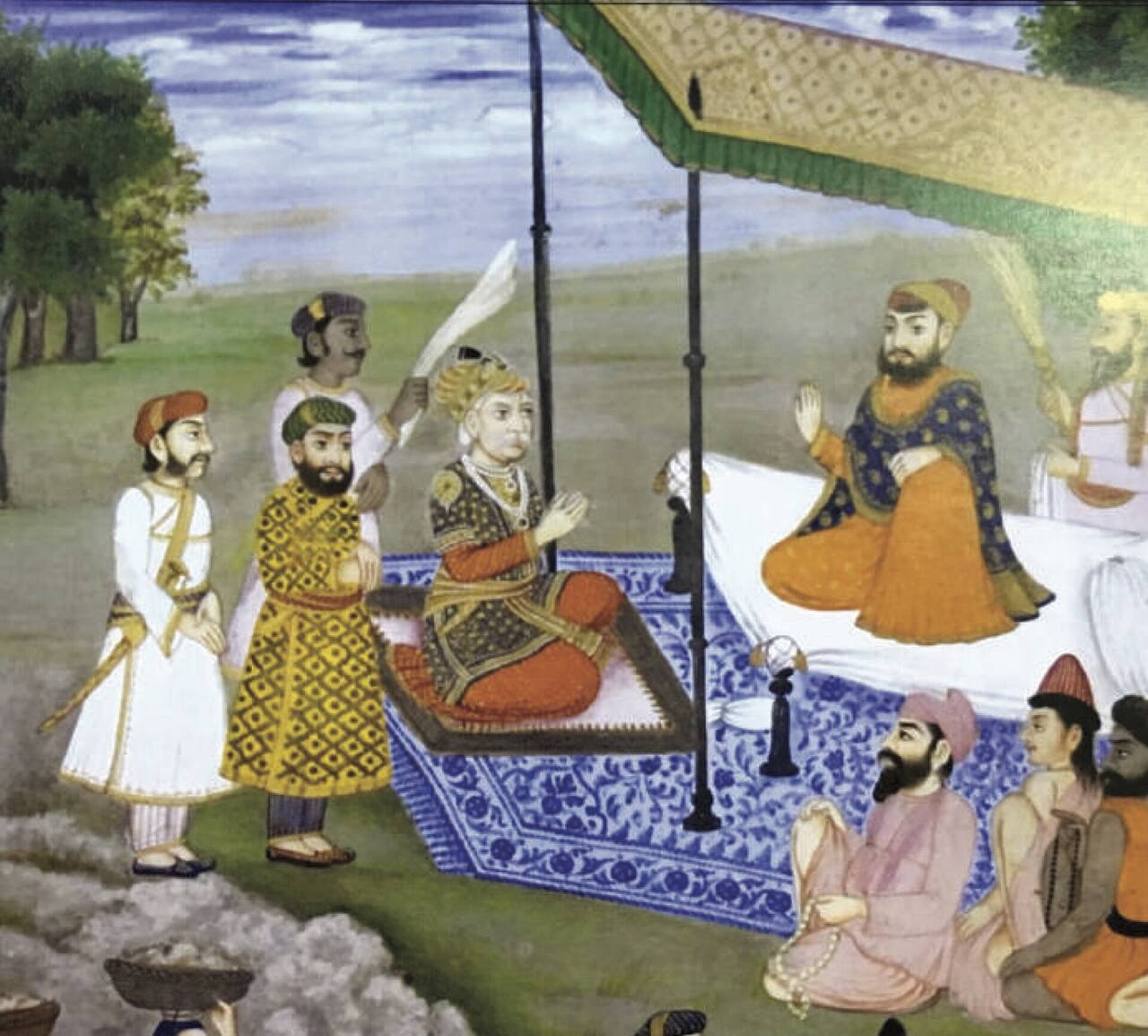
Guru Amar Das and the Song of Bliss
Converted at sixty-two by an overheard hymn, the third Sikh Guru made the free kitchen the tradition's front door — even an emperor sat on the floor to eat — and composed the Anand Sahib, the Song of Bliss that still closes every Sikh service in the world.
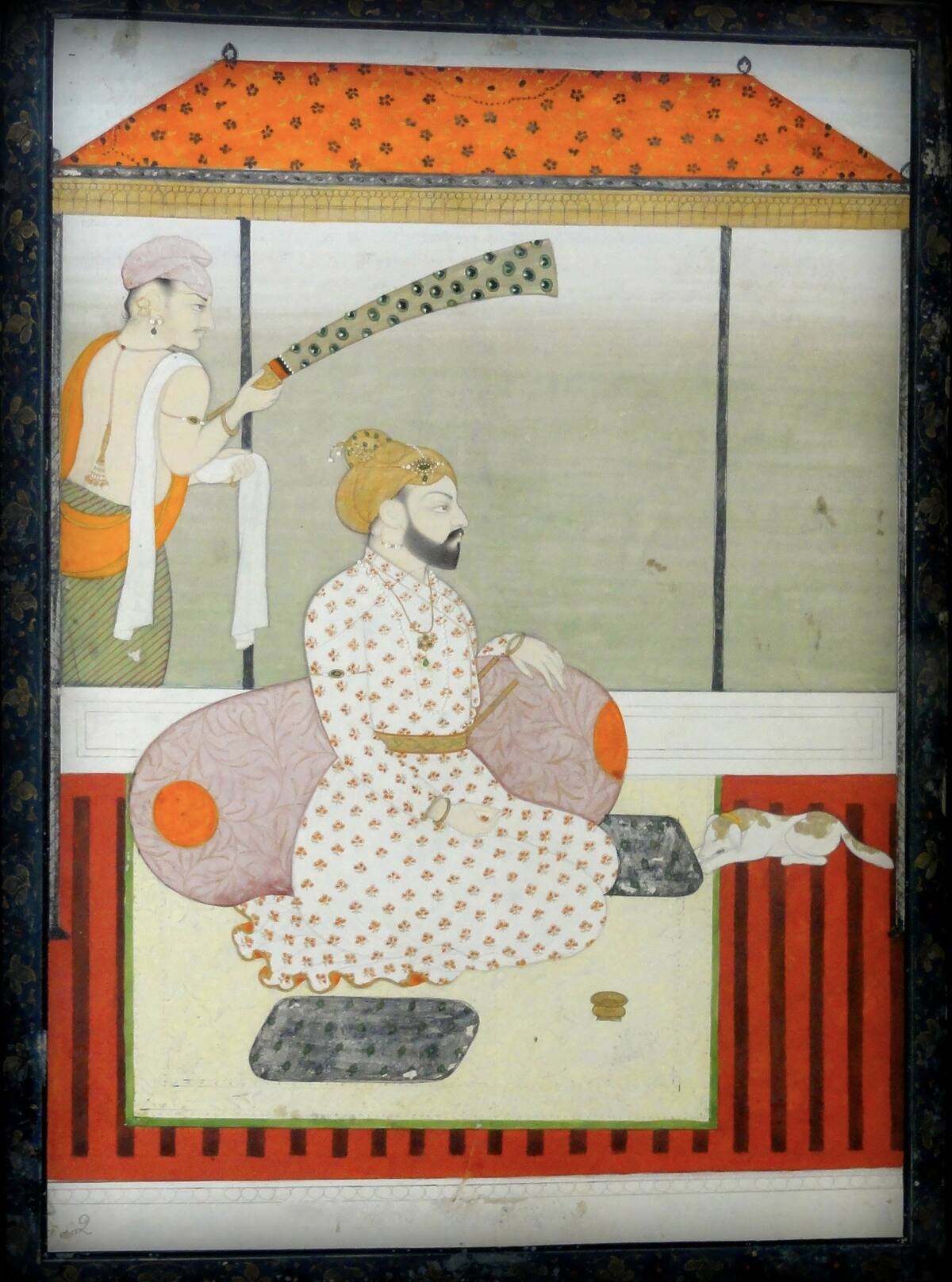
Guru Angad and the Alphabet Built for Song
The second Sikh Guru gave sacred song a script of its own. By standardizing Gurmukhi and collecting Guru Nanak's hymns in it, Guru Angad made sure the melodies would never lose their words — every Gurmukhi chant sung in the West today is written in his letters.
Guru Ram Das and the City of Nectar
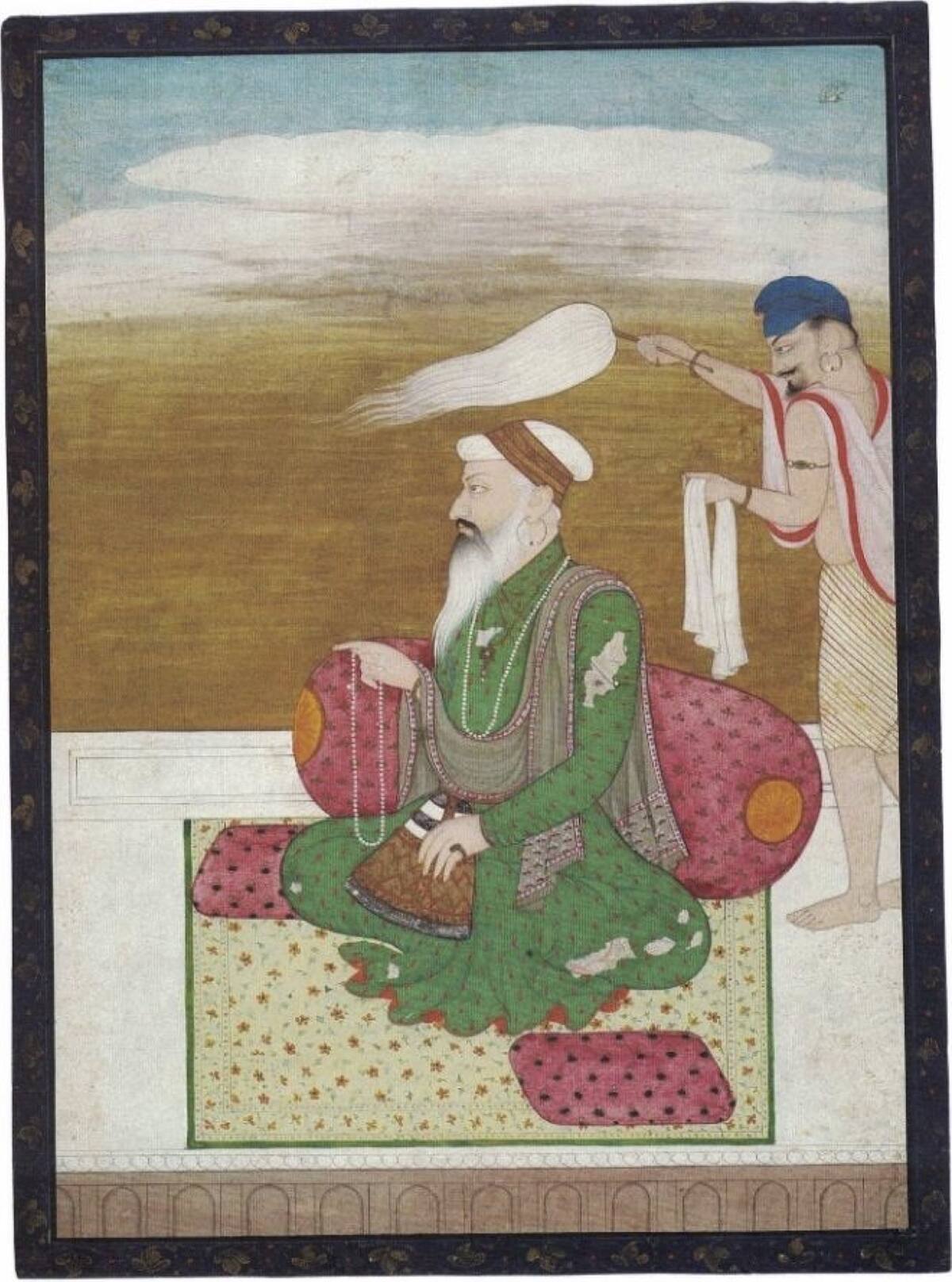
An orphan who sold boiled chickpeas became the fourth Sikh Guru, founded Amritsar around a pool of nectar, and wrote the wedding hymns Sikh couples still circle to. Four centuries later, a chant bearing his name is sung in yoga studios around the world.