
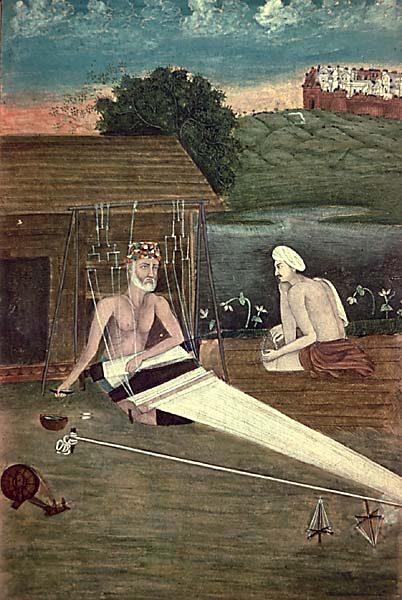
Life & Legacy
Born around 1440 in Varanasi and raised in a family of Muslim weavers, Kabir became one of India's most beloved and uncompromising poet-saints. A spiritual heir to the Bhakti reformer Ramananda, he sang of a formless, nameless Divine (nirguna) beyond temple and mosque, ritual and dogma. His pithy dohas (couplets) and padas (songs) — composed in the everyday language of the people rather than scholarly Sanskrit — skewered hypocrisy and pointed relentlessly toward a direct, loving experience of God.
Kabir's verses were embraced across religious lines: many are enshrined in the Sikh scripture, the Guru Granth Sahib, and his songs remain a living current in the devotional music of North India. By insisting that the Divine lives within the heart of every person — weaver or king, Hindu or Muslim — Kabir helped shape the inclusive, song-centered spirit of devotion that flows into Kirtan today.