
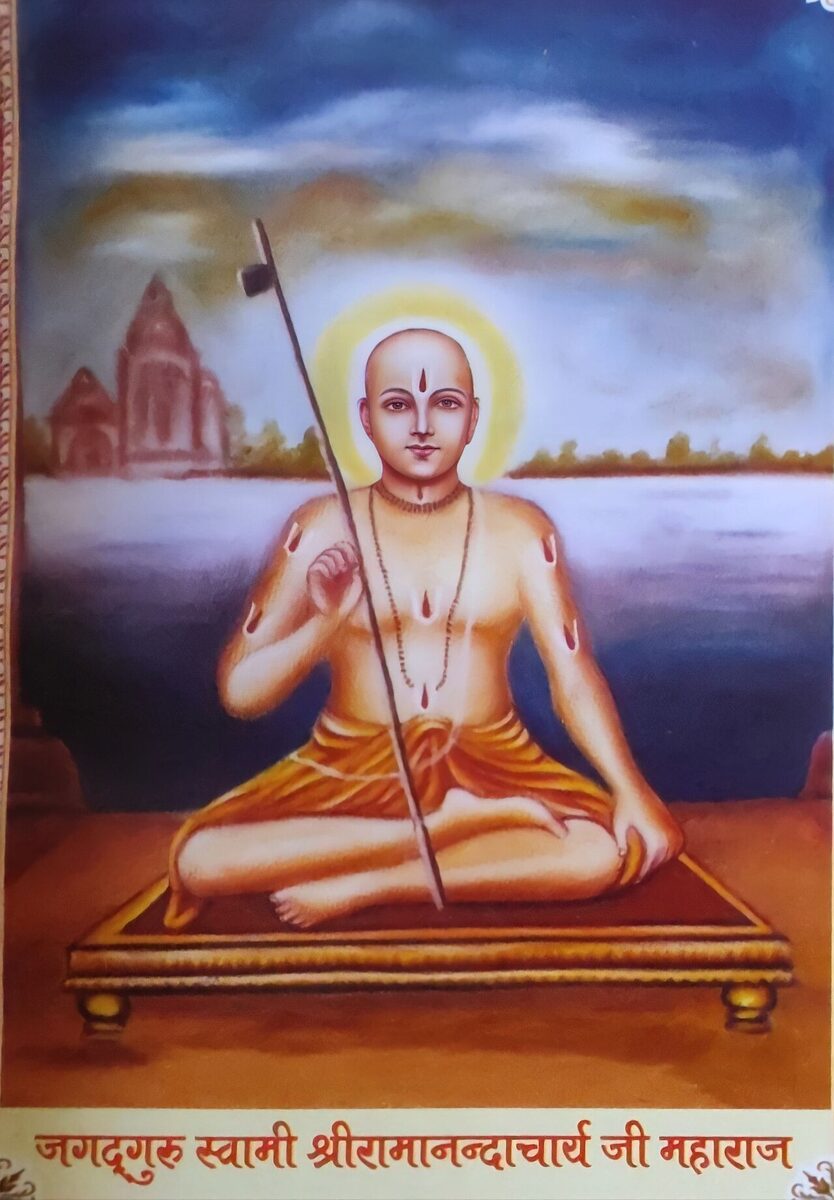
Life & Legacy
Ramananda lived in Varanasi between the fourteenth and mid-fifteenth centuries, teaching from the Panchaganga Ghat above the Ganges. Trained in the southern Vaishnava tradition that descended from the philosopher Ramanuja, he made a decision that changed the history of Indian devotion: he taught in the everyday language of the people rather than Sanskrit, and he accepted disciples from every walk of life — weavers, cobblers, barbers, farmers, and women. The saying attached to his name became a banner for the whole Bhakti movement: "Let no one ask a person''s caste or sect; whoever worships God belongs to God."
The roll of his traditional disciples reads like the founding generation of North Indian sacred song: Kabir the weaver, Ravidas the cobbler, Pipa the king who renounced his throne, Dhanna the farmer, and Sena the barber. Through them, the singing of God''s name spread through the bazaars and villages of the Gangetic plain. One of his hymns is preserved in the Sikh scripture, the Guru Granth Sahib, in Raag Basant, and the Ramanandi sampradaya he founded — devoted to Rama and the chanting of Rama''s name — remains one of the largest Vaishnava monastic orders in India today.