

The Healing Power of Chanting: What Science and Tradition Both Know
Research on chanting and mantra repetition has found measurable effects including: reduced cortisol levels, activation of the vagus nerve, increased alpha and theta brainwave activity (associated with meditative states), and the release of oxytocin — the bonding and trust hormone — through communal singing.
But traditional practitioners would say science is only beginning to scratch the surface. The Vedic understanding of Nada Brahman — the universe as sound — teaches that consciousness itself is vibrational in nature, and that sacred sound has the capacity to reorganize our inner experience at the most fundamental level.
Many contemporary artists work consciously at this intersection of sound and healing. Snatam Kaur's luminous Gurmukhi chants are used in hospitals and hospice settings; White Sun won a Grammy for music built on healing mantra; Simrit draws on ancient sound-current traditions with hypnotic effect; and Donna De Lory came to mantra music from a pop career precisely because of what the practice did for her own nervous system.
Terms in the Glossary
Words from this page, explained in our A–Z reference.
Join the Kirtans.com Community
Receive occasional updates — thoughtfully curated devotional music, upcoming gatherings, artist announcements, new resources, and inspiration to support your Bhakti practice.
From This Article
Continue Reading
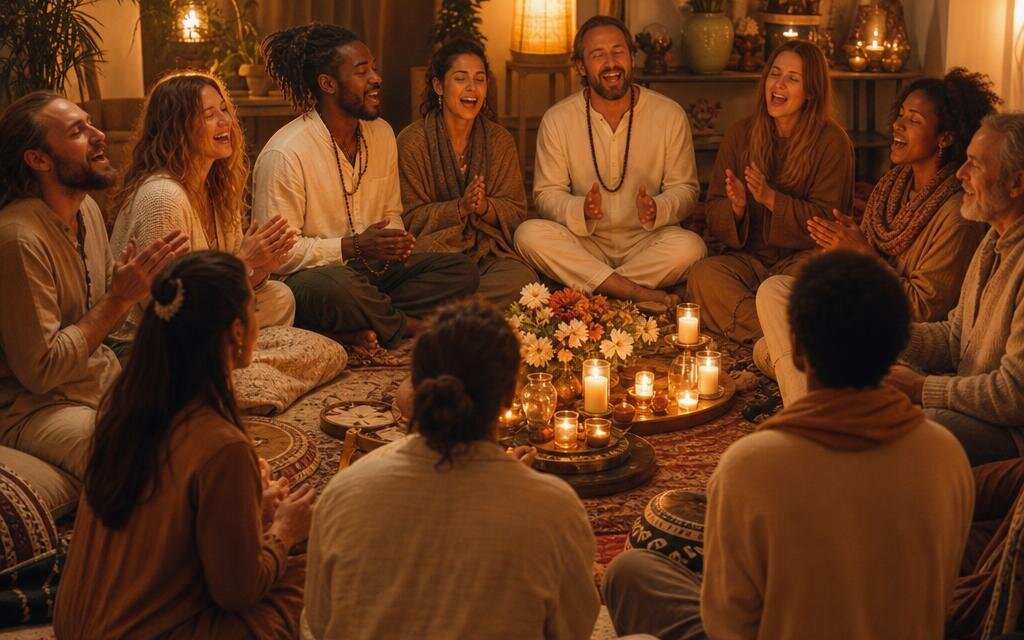
The Science of Singing Together: Why Group Chanting Bonds a Room
Strangers walk into a kirtan; an hour later the room feels like family. Research on choirs, synchrony, and social bonding explains why singing together is one of the fastest connection technologies humans have ever found — and why kirtan is built to maximize it.

Why Chanting Calms You: The Vagus Nerve and the Long Exhale
That deep settling you feel after a few minutes of chanting is not your imagination — it is your physiology. A tour of the vagus nerve, the science of the long exhale, and why singing a mantra may soothe the nervous system faster than sitting in silence.

Kirtan Kriya: The 12-Minute Practice Scientists Keep Studying
A simple chanted meditation from the Kundalini tradition has quietly become one of the most-studied contemplative practices in the world — with published research on memory, stress, and healthy aging. Here is what Kirtan Kriya is, what the studies actually found, and how to try it.