
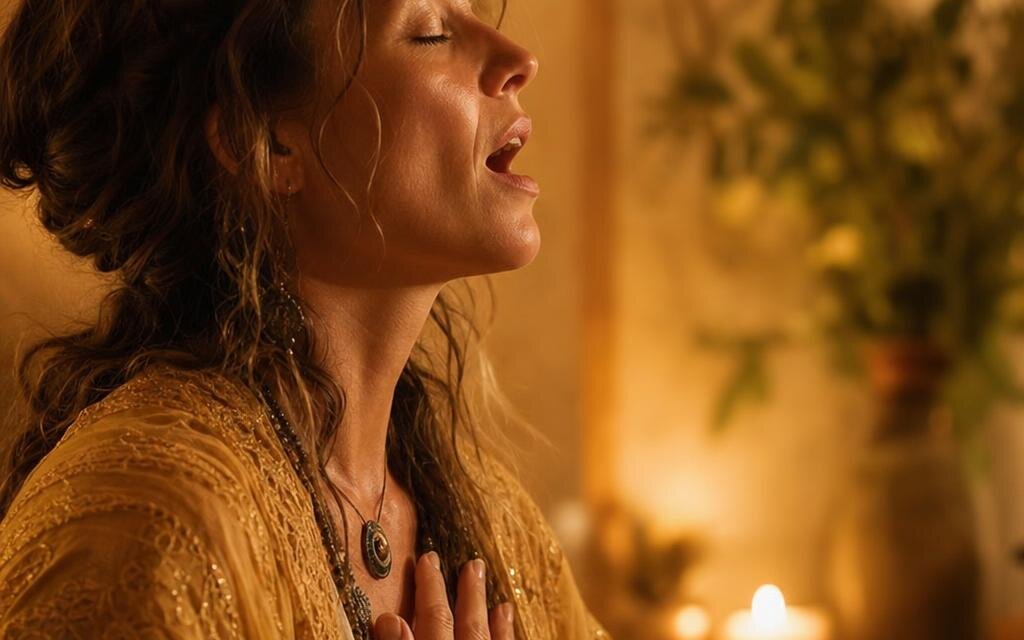
Why Chanting Calms You: The Vagus Nerve and the Long Exhale
Ask anyone who chants regularly what it does for them and you will hear the same words: settled, grounded, calm. For centuries that experience was explained in the language of devotion. Today, physiology offers a complementary explanation — and it runs straight through a wandering nerve you have probably heard of by now.
Meet the vagus nerve
The vagus nerve is the main highway of the parasympathetic nervous system — the "rest and digest" counterpart to fight-or-flight. It wanders (the name comes from the Latin for wandering, same root as vagabond) from the brainstem down through the throat and chest to the heart, lungs, and gut. When vagal activity is high, heart rate eases, digestion works, and the body reads the world as safe.
Here is the part that matters for chanting: the vagus nerve is mechanically and rhythmically entangled with the voice and the breath. It threads directly past the vocal cords and the muscles of the throat. And its influence on the heart is strongest during one specific phase of breathing: the exhale.
Chanting is exhale training
Every time you sing a line of mantra, you are performing a long, controlled exhale — usually far longer than the inhale that preceded it. A round of Om Shanti might carry a single breath out over ten or fifteen seconds. Do that for twenty minutes and you have done something measurable: you have shifted your breathing rate down to a fraction of its resting pace and spent most of that time in the exhale phase, where vagal braking on the heart is strongest.
Slow breathing around five to six breaths per minute reliably increases heart rate variability — a standard index of vagal tone and a marker associated with stress resilience. Chanting gets you there without counting anything. The phrase length does the pacing for you; the melody makes you want to stay.
Research on chanting specifically is younger but pointed in the same direction. A well-known fMRI study of "Om" chanting found reduced activity in the amygdala and other limbic regions — the brain's alarm circuitry — compared with a simple vowel sound. Studies of humming and resonant vocalization report increased nasal nitric oxide and the same slow-exhale cardiac effects. The vibration you feel in the chest and skull while chanting appears to be more than pleasant; resonance and the muscular engagement of the throat are plausible additional routes to vagal stimulation, which is why "humming" now shows up on clinical lists of vagus-friendly practices.
Why chanting beats "just breathe slowly" for many people
If slow exhaling is the active ingredient, why not skip the mantra and do breathing exercises? You can — but chanting solves the two problems that make breath practices hard to sustain:
It occupies the mind. Counting breaths leaves plenty of room for worrying. A mantra fills the channel — sound, meaning, melody, memory — the same absorption principle behind practices like Kirtan Kriya.
It is enjoyable. Adherence is the quiet failure point of every wellness practice. People abandon exercises; they return to songs. As we explore in the healing power of chanting, tradition understood long before science did that beauty is what makes a practice repeatable.
There is also a third ingredient silence cannot offer: when chanting happens in a room full of people, the calm is amplified by connection — a story we tell in the science of singing together.
Feeling it for yourself
You do not need training to test any of this tonight:
- Pick a short, simple chant — Om Shanti is ideal, and the Hare Krishna maha-mantra works beautifully at a slow tempo.
- Sing it low and unhurried for ten minutes. Let each phrase empty the breath fully; let the inhale happen by itself.
- Notice the state of your body afterward — jaw, shoulders, heartbeat.
A drone helps enormously here: sustaining your voice against a steady tone naturally slows and smooths the phrases. Our free practice tools include a tanpura drone you can chant over, and if you are curious about the instrument behind that sound, see our tanpura guide.
The tradition says chanting opens the heart. The physiology says chanting slows the heart. It is not a bad sign for a practice when both descriptions turn out to be true.
Terms in the Glossary
Words from this page, explained in our A–Z reference.
Join the Kirtans.com Community
Receive occasional updates — thoughtfully curated devotional music, upcoming gatherings, artist announcements, new resources, and inspiration to support your Bhakti practice.
From This Article
Continue Reading
The Science of Singing Together: Why Group Chanting Bonds a Room
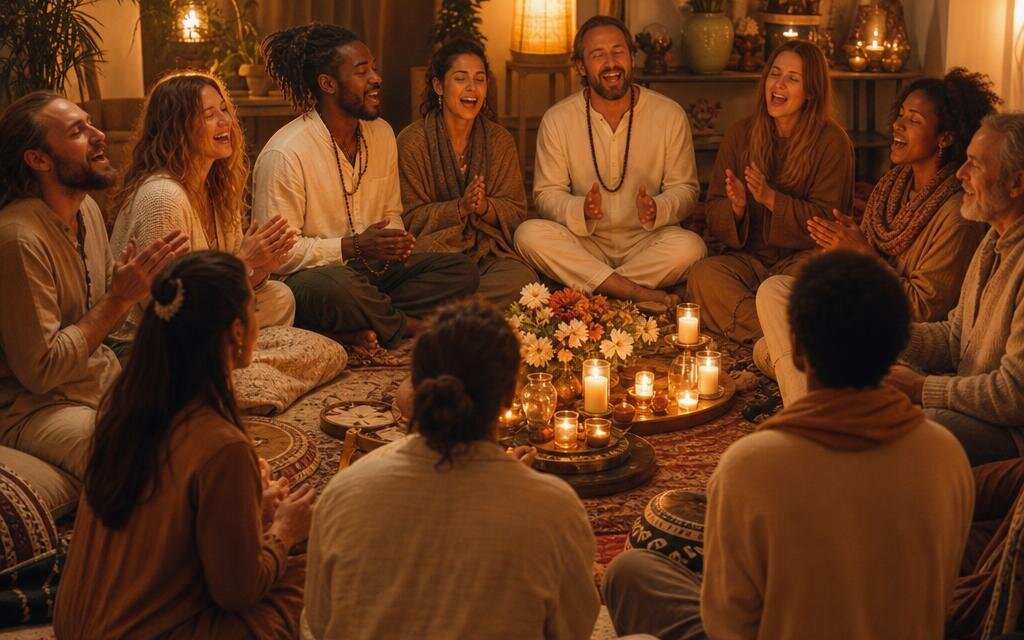
Strangers walk into a kirtan; an hour later the room feels like family. Research on choirs, synchrony, and social bonding explains why singing together is one of the fastest connection technologies humans have ever found — and why kirtan is built to maximize it.

Kirtan Kriya: The 12-Minute Practice Scientists Keep Studying
A simple chanted meditation from the Kundalini tradition has quietly become one of the most-studied contemplative practices in the world — with published research on memory, stress, and healthy aging. Here is what Kirtan Kriya is, what the studies actually found, and how to try it.

The Healing Power of Chanting: What Science and Tradition Both Know
For thousands of years, devotional traditions have known what modern neuroscience is now beginning to confirm: that sacred chanting has measurable effects on the brain, the nervous system, and the human heart.