
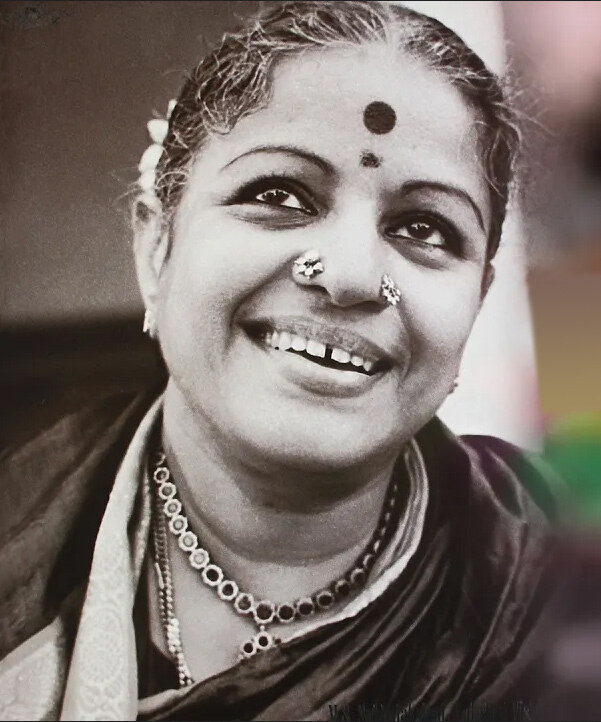
Life & Legacy
Madurai Shanmukhavadivu Subbulakshmi was born in 1916 in the temple city of Madurai, Tamil Nadu, into a family of hereditary musicians — her mother, Shanmukhavadivu, was a veena player, and the child learned at her side. She gave her first recording at ten and her Madras Music Academy debut at thirteen; by her twenties her voice was already spoken of as something apart. In 1945 she played the poet-saint Mirabai in the film "Meera," and her renditions of Mira's bhajans carried her fame far beyond the concert halls of the south — Jawaharlal Nehru famously called himself "a mere Prime Minister before the Queen of Song."
Mahatma Gandhi asked for her by name: in 1947 he requested that she sing the bhajan "Hari Tum Haro," saying he would rather hear it spoken by her than sung by anyone else. In 1966 she sang before the United Nations General Assembly — the first Indian musician to do so — closing with a hymn of peace. Her recordings of the Venkateswara Suprabhatam, the Vishnu Sahasranamam, and Adi Shankara's "Bhaja Govindam" became the sound of dawn across South India, played daily in temples and homes to this day. Steeped in the concert tradition of Tyagaraja's kritis, she treated the humble bhajan with the same devotion as the grandest composition. In 1998 she became the first musician ever awarded the Bharat Ratna, India's highest civilian honor.