Narsinh Mehta
Gujarat's first poet — the 15th-century Krishna devotee whose "Vaishnava Jana To," beloved of Mahatma Gandhi, distilled the whole of bhakti into one song, and whose dawn hymns are still sung across Gujarat every morning.
Life & Legacy
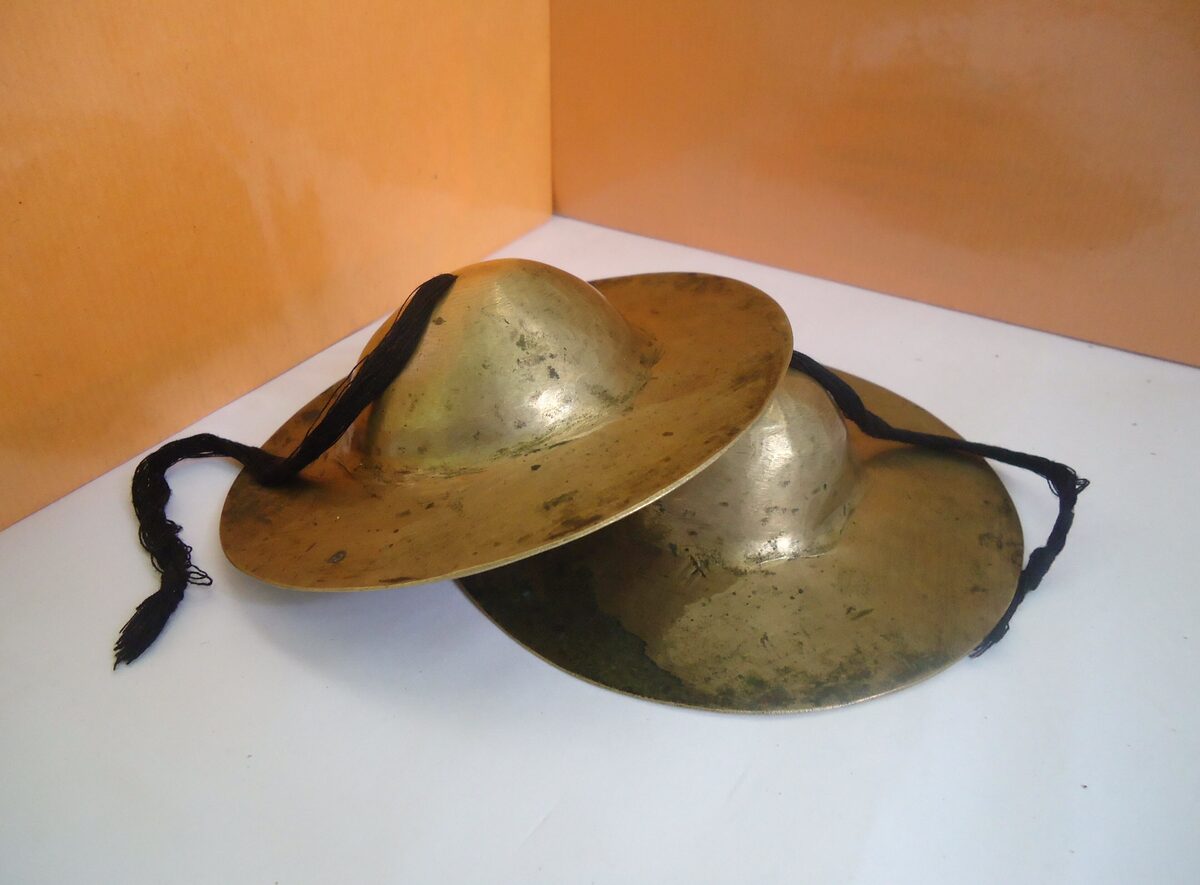
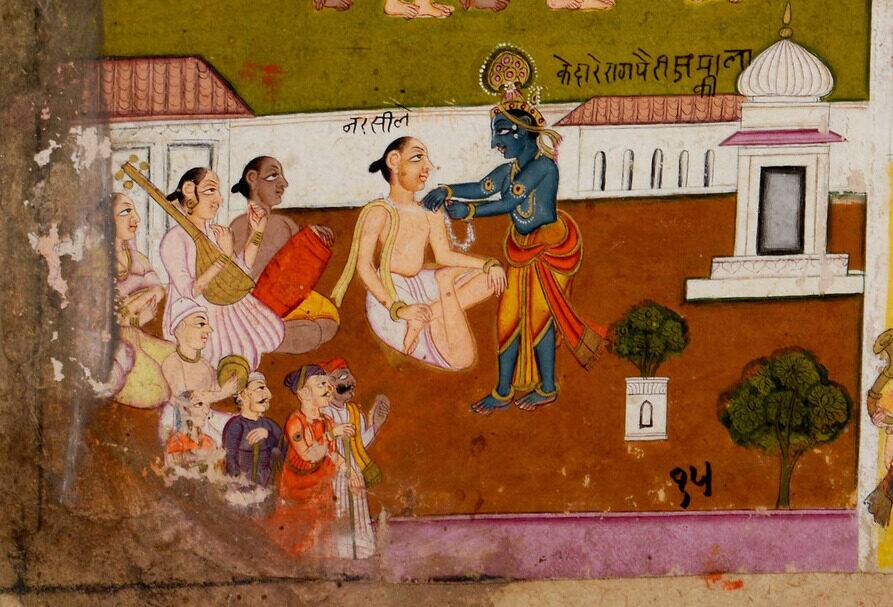
Narsinh Mehta was born in 1414 at Talaja and spent his life in Junagadh, in the shadow of Mount Girnar in Gujarat. Honored as the Adi Kavi — the first poet — of the Gujarati language, he was a householder-saint who lived in cheerful poverty, singing of Krishna with kartals in hand. The legends that gather around him are stories of a devotion so complete that Krishna himself intervenes in his affairs: honoring a money-order the penniless poet wrote against the Lord's name, standing in for him at his daughter's wedding costs, carrying his water. What is certain is the poetry — hundreds of padas of Krishna-love, and the prabhatiyan, morning hymns that Gujarati households still sing at dawn.
Narsinh sang past every social boundary of his time. Invited to sing among communities then branded untouchable, he went gladly, was ostracized by his own caste for it — and answered with songs declaring that a true devotee sees the Divine in all. His most famous bhajan, "Vaishnava Jana To" — "call that one a Vaishnava who feels another's pain" — became Mahatma Gandhi's favorite hymn five centuries later, sung daily at his prayer meetings and carried by him onto the world stage. Like Mirabai, his younger contemporary in the neighboring lands of Rajasthan, he made western India sing its devotion in its own mother tongue.