Tulsidas
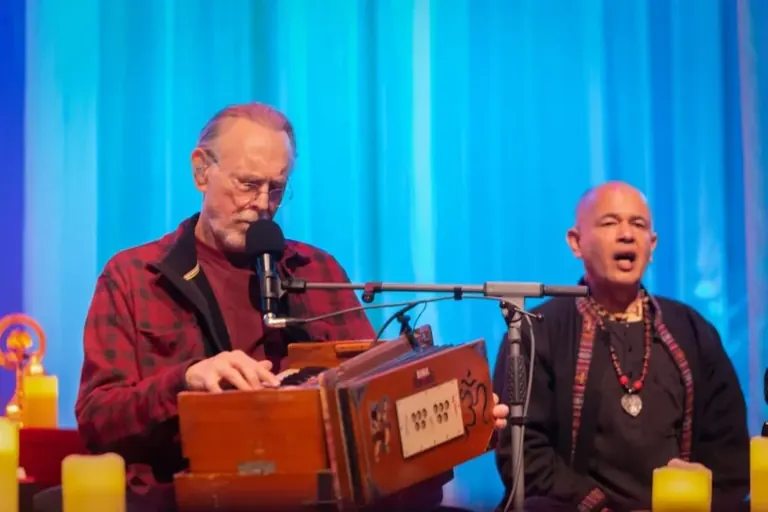
The poet-saint who retold the Ramayana in the language of the people and composed the Hanuman Chalisa — songs of Rama and Hanuman sung daily by millions and carried into Western kirtan by artists like Krishna Das.
Life & Legacy
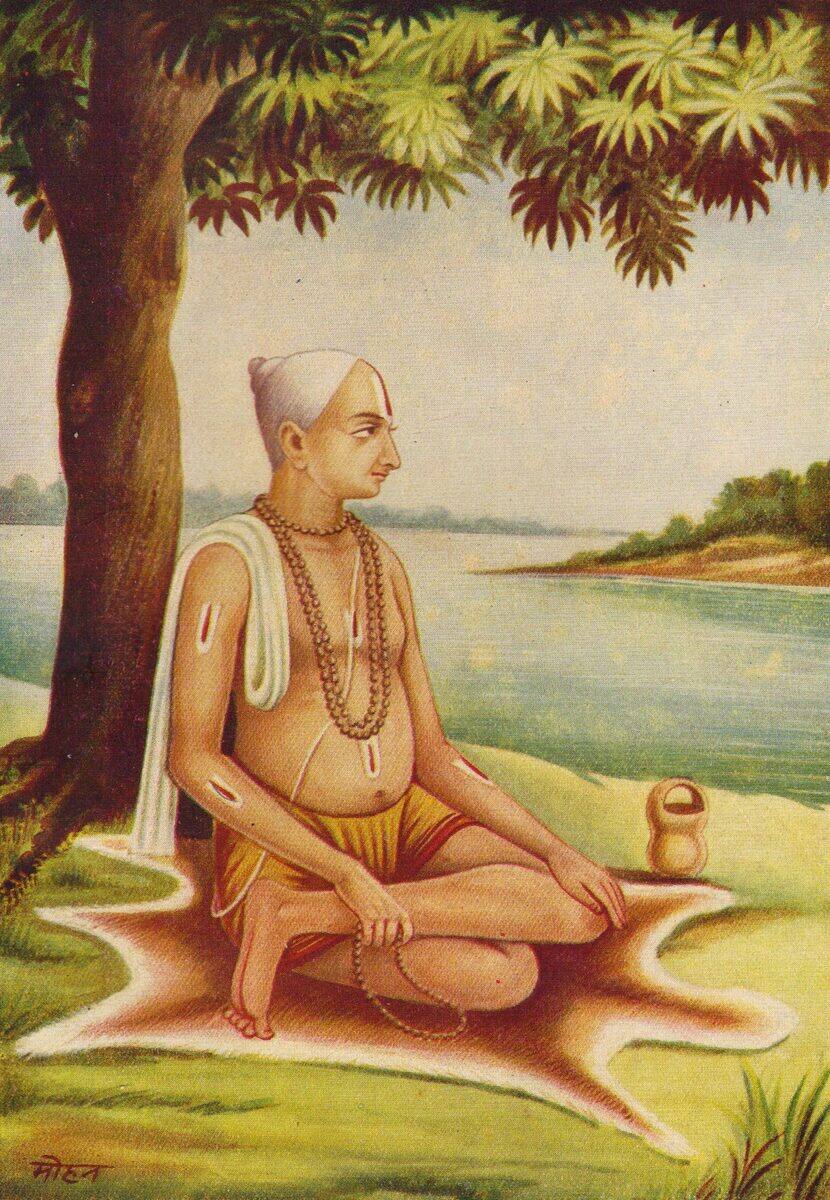
Tulsidas was a 16th–17th-century poet-saint and devotee of Rama, one of the most influential figures in the history of North Indian devotion. His masterwork, the Ramcharitmanas, retold the story of Rama in Awadhi — the spoken language of the people rather than Sanskrit — making the epic's devotion directly accessible to ordinary singers and listeners. It remains one of the most widely read and recited works of the Hindi-speaking world.
He is also traditionally credited with the Hanuman Chalisa, a forty-verse hymn of praise to Hanuman that is among the most frequently sung devotional songs on earth. Through these works Tulsidas placed the names of Rama, Sita, and Hanuman at the heart of popular devotional singing — a current that flows directly into contemporary kirtan, where the Hanuman Chalisa is a beloved centerpiece.