Kali is the most misunderstood — and most fiercely loved — face of the Divine Mother. Black as the night sky, wild-haired, wearing a garland of severed heads, she dances on the battlefield with her tongue out. To outsiders she can look terrifying. To her devotees she is simply Ma — the mother who loves so completely that she will destroy everything false in you to set you free.
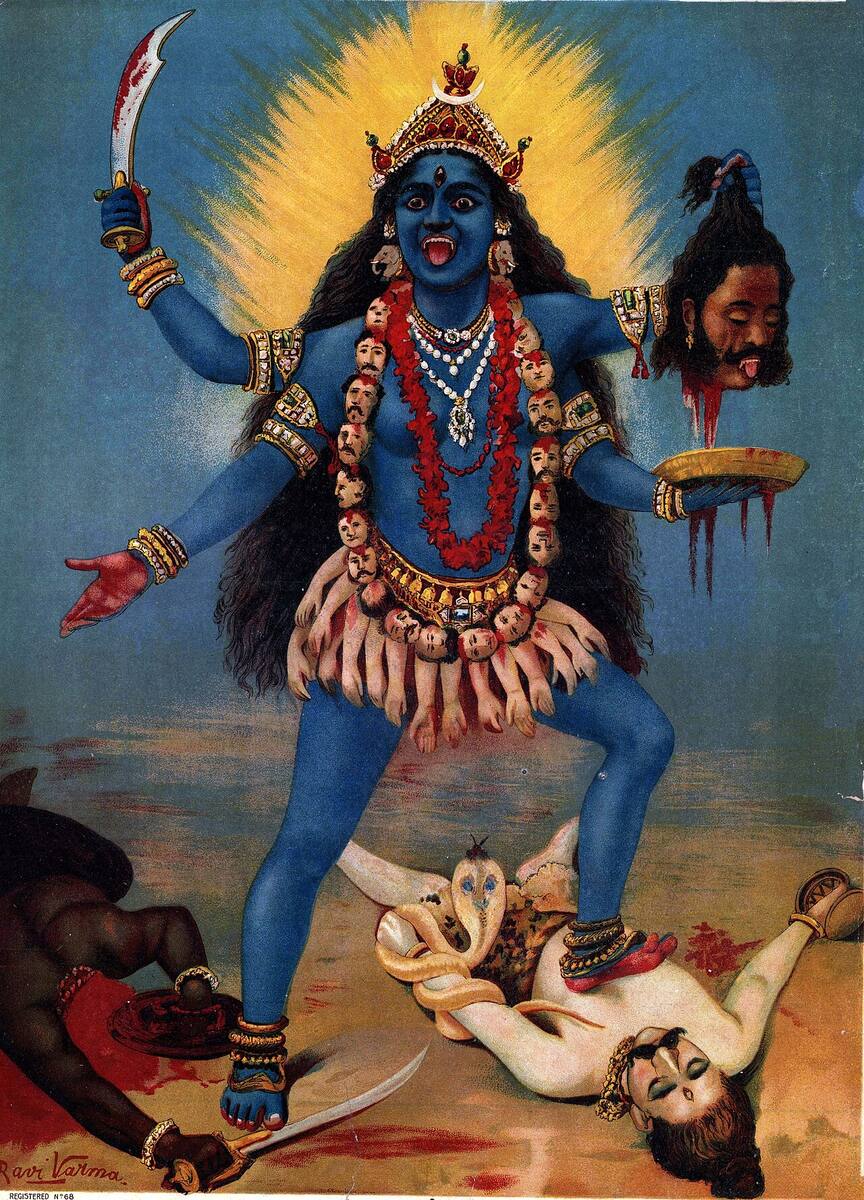
Her name comes from kala, "time": Kali is she who devours time itself. The heads on her garland represent the letters of the alphabet, the seeds of all thought and speech; the head she holds in her hand is the ego. Her most famous image — standing on the chest of the prostrate Shiva — is read as consciousness (Shiva) lying still beneath the wild dance of divine energy (Shakti).
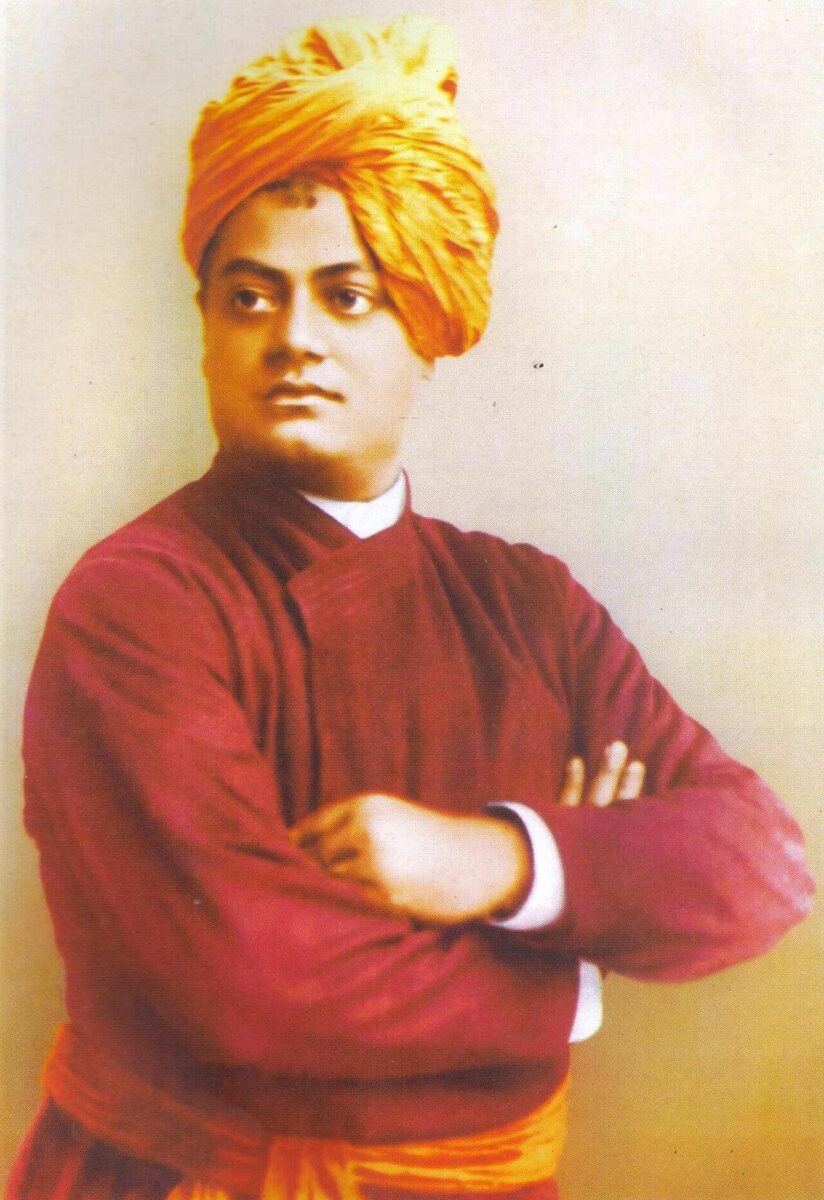
The nineteenth-century Bengali saint Ramakrishna, whose devotion to Kali as the Divine Mother transformed modern Hinduism, and his disciple Swami Vivekananda carried her worship into the modern world. In Kirtan, Kali's name is sung when something needs to break — fear, stuckness, pretense — and singers often describe Kali chants as the most cathartic in the repertoire.
In Traditional Art
Kali is depicted with skin of deep blue-black, four arms, loose flowing hair, and a red tongue extended. She wears a garland of heads and a skirt of arms, holds a curved sword and a severed head in her left hands, and offers blessings and fearlessness with her right — destruction and grace in a single figure. She is usually shown dancing or standing upon the reclining Shiva.
In Kirtan
Kali kirtans — "Kali Durge Namo Namah," "Jai Ma Kali" — carry a raw, ecstatic voltage. The tradition says her name burns through illusion faster than any other, which is why singers turn to her when the heart needs breaking open rather than soothing. Chanting to Kali is an act of trust: giving the Mother permission to take what no longer serves.
Mantras Sung to Kali
Kali Durge Namo Namah
"Again and again I bow to Kali and Durga, the fierce Divine Mother"
Jai Kali Ma
"Victory to Mother Kali, the dark goddess of transformation"
Om Krim Kalikayai Namaha
"Salutations to Kali — invoking her transforming power through her seed syllable"