
गोविन्द दामोदर माधवेति
Govinda Damodara Madhaveti
govinda dāmodara mādhaveti
Listen & Chant Along
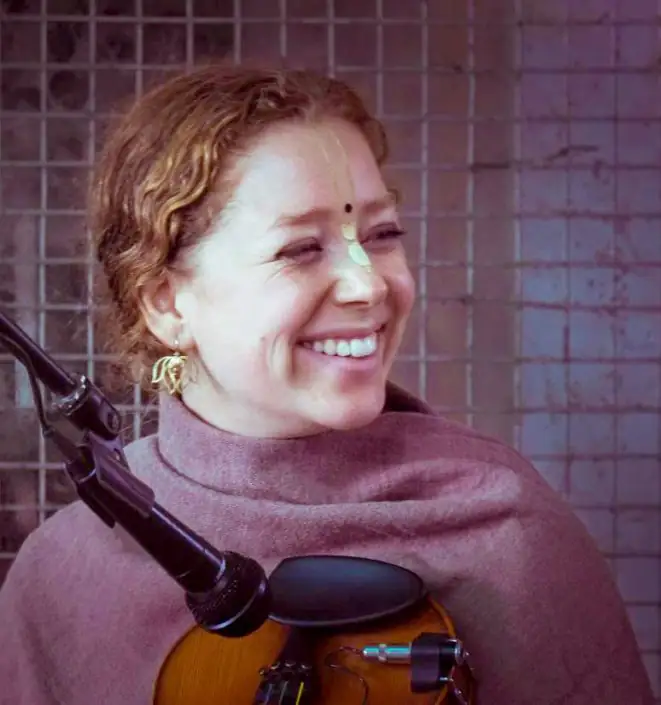
Listen & chant along — performed by Jahnavi Harrison
"The beloved refrain of the Govinda Damodara Stotram — a sweet, continuous calling of three names of Krishna: Govinda, Damodara, and Madhava."
Meaning & Translation
Sanskrit
गोविन्द दामोदर माधवेति
Transliteration
govinda dāmodara mādhaveti
Pronunciation
go-VIN-dah DAH-mo-dar MAH-dhah-vay-tee
Deity / Quality Invoked
Krishna
Full Translation
This is the recurring refrain of the Govinda Damodara Stotram, composed by Bilvamangala Thakura. Each verse returns to these three names, teaching the practice of remembering Krishna constantly — in joy and in sorrow, and especially at life's final moment. Jahnavi Harrison's "Like a River" sets the refrain to a flowing, contemplative melody.
Spiritual Significance
The stotram's central instruction is to never let the tongue be idle of Krishna's names. By weaving "Govinda Damodara Madhaveti" through every verse, it models a life soaked in remembrance — the names carrying the devotee the way a river carries a leaf to the sea.
Cultural Context & History
Attributed to Bilvamangala Thakura (author of the Krishna Karnamrita). The stotram famously imagines great devotees invoking these names in their hour of need. "Damodara" recalls the leela in which mother Yashoda lovingly bound the child Krishna at the waist with a rope.
For Leaders
Chords and structure for leading this chant on harmonium or guitar — transcribed from the linked recording. New to leading? Read our guide to leading kirtan →
Original key
Em
Tempo & feel
Sweet medium lilt (~80 bpm); conversational, like calling a friend's names
Chord Chart
Strumming & rhythm (4/4)
D = downstrum, U = upstrum, · = let it ring. the classic kirtan strum at a conversational volume.
Call & Response Structure
The three names cycle over an Em–C–G–D frame, with the answering line passing through Am before resolving home. Classic call-and-response — the response mirrors the call's chords exactly, so one line of each is the whole map.