
Meaning & Translation
Sanskrit
हरि ॐ
Transliteration
Ha-ri Om
Pronunciation
HAH-ree ohm
Deity / Quality Invoked
Vishnu
Full Translation
Hari is a beloved name of Vishnu — from the Sanskrit root hri, "to take away" — the one who steals the heart and removes suffering, negativity, and all that obscures our true nature. Joined with Om, the primordial vibration, it becomes a complete mantra of purification: the divine dissolving whatever stands between the chanter and the truth within.
Spiritual Significance
Hari Om is chanted both as energizing call-and-response kirtan and as quiet japa (silent repetition). Practitioners turn to it as a cleansing mantra — each repetition understood to loosen the grip of accumulated worry and self-concern. Its two small words also serve as a greeting and blessing in many Indian spiritual communities: to say "Hari Om" is to salute the divine in the one you meet.
Cultural Context & History
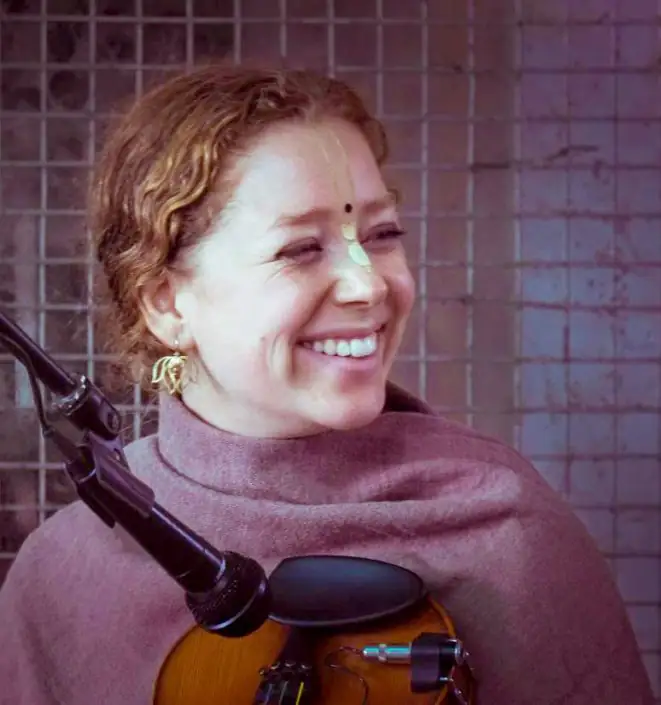
Rooted in the Vedic and Puranic traditions of Vishnu devotion, Hari Om is among the most widely chanted mantras in India and one of the first mantras taught in many yoga lineages, including the Sivananda and Bihar schools. In the Western kirtan world it appears in countless settings; Jahnavi Harrison's "Hari Om (May All Be Blessed)," from her 2015 album Like a River to the Sea, wove the mantra together with an English prayer of blessing and became one of the scene's most beloved renditions.
For Leaders
Chords and structure for leading this chant on harmonium or guitar — transcribed from the linked recording. New to leading? Read our guide to leading kirtan →
Original key
Fm
Tempo & feel
Slow rolling waves (~72 bpm); deepens rather than accelerates
Chord Chart
Strumming & rhythm (4/4)
D = downstrum, U = upstrum, · = let it ring. grounded and warm: downs on 1 and 3, a fuller turn at the end of the bar.
Call & Response Structure
Two syllables cycling through a minor-key arc: Fm home, Ab brightening the first Om, Db opening wide before the line settles back. Call and response identical; the chant grows by repetition and depth, not variation.