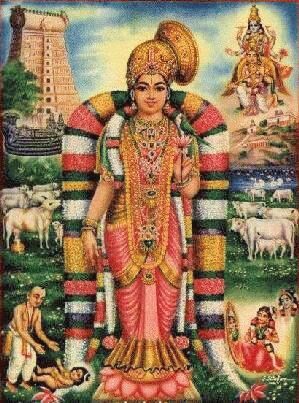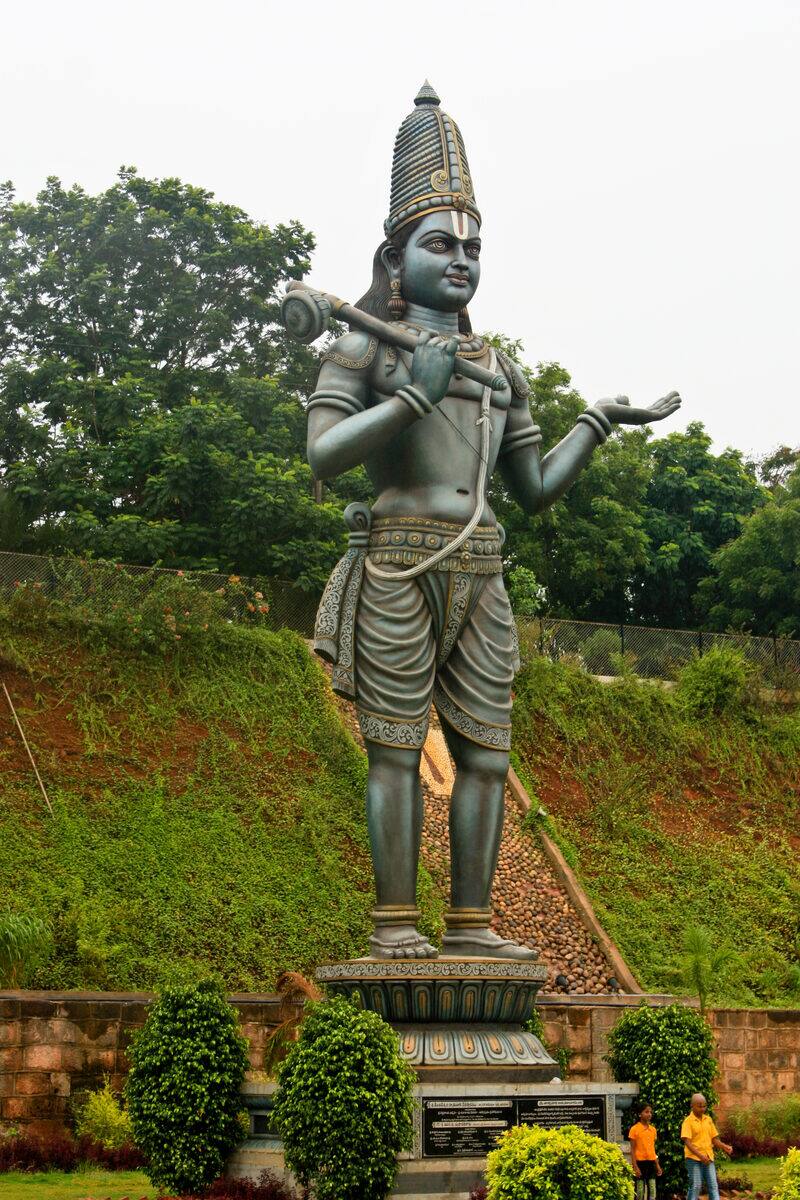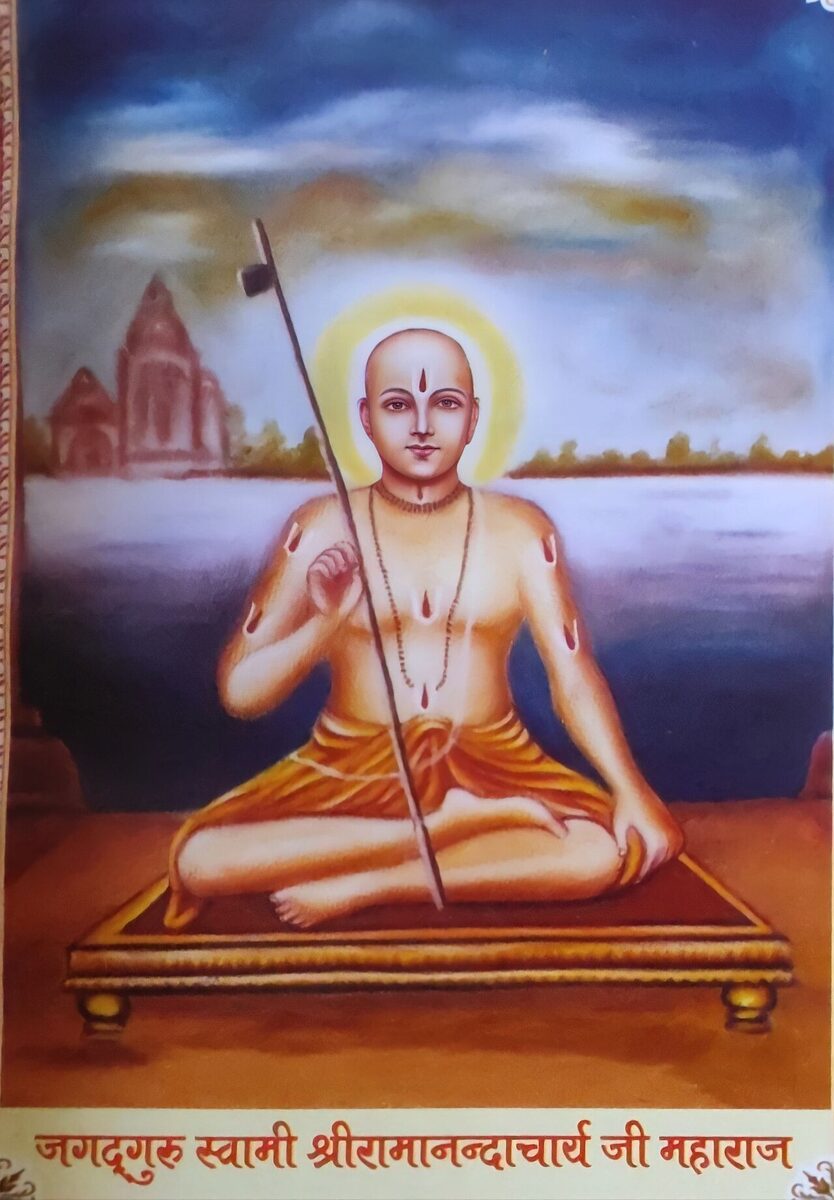
Vishnu is the sustainer — the face of the Divine that preserves the universe and protects the good. In the classical trinity, Brahma creates and Shiva dissolves, but Vishnu holds everything in loving maintenance in between. His most famous promise, spoken in the Bhagavad Gita: "Whenever dharma declines and adharma rises, I send myself forth — age after age."
Those descents are the avatars: Vishnu enters the world as the fish, the tortoise, the boar, the man-lion Narasimha, and — most beloved of all — as Rama and Krishna. This means that most of Bhakti's chanting is already Vishnu-chanting: the traditions devoted to him and his avatars, called Vaishnavism, form the largest devotional stream in Hinduism, and the deep root of nearly all Kirtan.
In his cosmic form, Vishnu rests on the thousand-headed serpent Ananta, afloat on the ocean of milk, dreaming the universe — while Lakshmi, goddess of abundance, attends him. His thousand names, gathered in the Vishnu Sahasranama, have been recited daily for centuries; his eight-syllable mantra Om Namo Narayanaya is one of the great mantras of refuge.
In Traditional Art
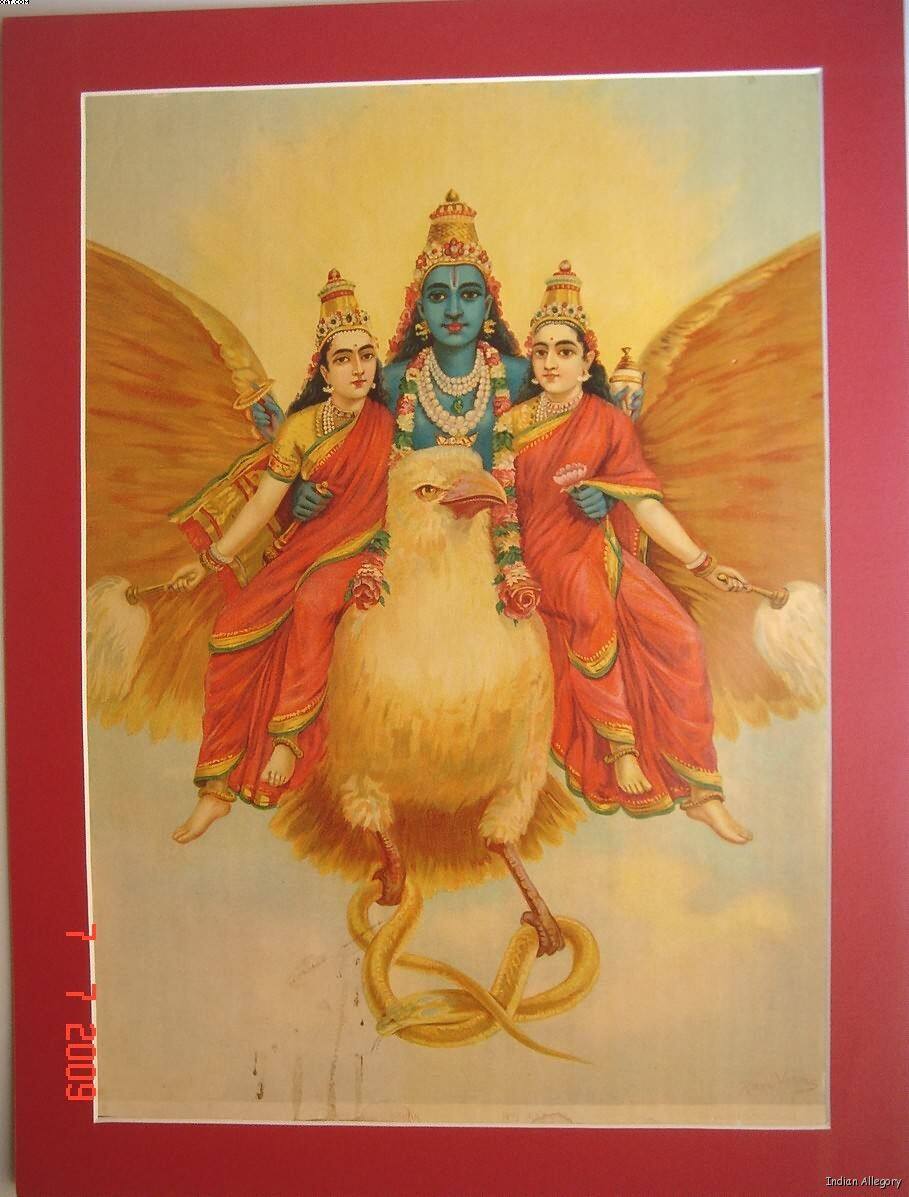
Vishnu is depicted with dark blue skin and royal dress, four-armed, holding the conch (whose sound is creation), the discus, the mace, and the lotus. He is shown either standing crowned in majesty, reclining on the serpent Ananta with Lakshmi at his feet, or flying upon his eagle mount Garuda.
In Kirtan
"Om Namo Narayanaya" and chants to Hari — a name of Vishnu that echoes through kirtans everywhere, including the maha-mantra's "Hare" — invoke shelter and sustenance. Where Shiva chants blaze and Kali chants break open, Vishnu chanting settles the room into steadiness: the felt sense of being held by what maintains all things.