
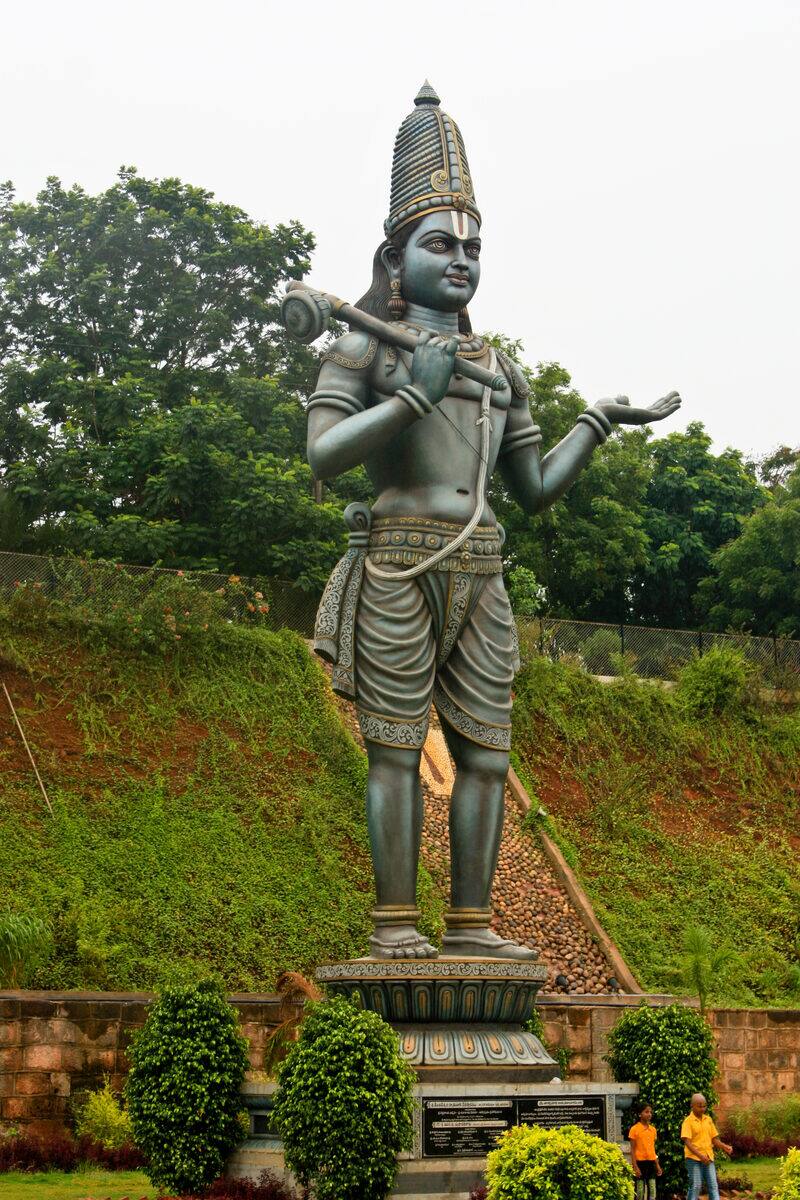
Annamacharya
The 15th-century Telugu poet-saint of Tirumala who composed a song a day for the Lord of the Seven Hills — some 32,000 sankirtanas, engraved on copper plates and rediscovered centuries later, that made him the "grandfather of Telugu song."
Life & Legacy
Tallapaka Annamacharya — Annamayya to the millions who sing him — was born in 1408 in the village of Tallapaka in present-day Andhra Pradesh. Tradition holds that at sixteen he walked to the hill shrine of Tirumala, and from that day poured out devotional songs to its presiding deity, Venkateswara — by traditional count one every day of his long life, some 32,000 sankirtanas in all. Initiated into the Sri Vaishnava tradition that reveres the Alvars — the Tamil poet-saints whose line begins for this site with Andal — he sang in Telugu, the language of the people, ranging from the loftiest philosophy to lullabies for the Lord and wedding songs for the divine couple.
His songs came close to being lost. His son and grandson had thousands of them engraved on copper plates, which were sealed in a vault in the Tirumala temple and forgotten — rediscovered only in the early twentieth century, when scholars found roughly 12,000 compositions intact. Honored as Pada-kavita Pitamaha, the "grandfather of Telugu song-poetry," Annamacharya anticipated by a generation the Haridasa singing of Purandara Dasa to the west, and his rediscovered kritis — "Brahmam Okate," "Adivo Alladivo" — are today among the most beloved devotional songs of South India, sung from temple courtyards to concert halls.