
ॐ पूर्णमदः पूर्णमिदं पूर्णात्पूर्णमुदच्यते | पूर्णस्य पूर्णमादाय पूर्णमेवावशिष्यते || ॐ शान्तिः शान्तिः शान्तिः ||
Om Purnamadah
Om Purnamadah Purnamidam | Purnat Purnam Udachyate | Purnasya Purnam Adaya | Purnam Evavashishyate || Om Shanti Shanti Shanti ||
Listen & Chant Along
Listen & chant along — performed by Shantala
"That is whole, this is whole — from wholeness, wholeness arises"
Meaning & Translation
Sanskrit
ॐ पूर्णमदः पूर्णमिदं पूर्णात्पूर्णमुदच्यते | पूर्णस्य पूर्णमादाय पूर्णमेवावशिष्यते || ॐ शान्तिः शान्तिः शान्तिः ||
Transliteration
Om Purnamadah Purnamidam | Purnat Purnam Udachyate | Purnasya Purnam Adaya | Purnam Evavashishyate || Om Shanti Shanti Shanti ||
Pronunciation
om POOR-nam-ah-dah POOR-nam-ee-dam — the "u" in purnam is a long "oo"; chanted slowly and evenly, often concluding with three rounds of "om shanti"
Deity / Quality Invoked
Brahman (the Absolute)
Word by Word
Full Translation
This shanti (peace) mantra declares that the Absolute is complete and whole, that the manifest world arising from it is equally whole, and that when wholeness is taken from wholeness, wholeness alone remains. It is a meditation on the paradox that infinity cannot be diminished — everything is already full, lacking nothing.
Spiritual Significance
Chanted as the invocation to the Isha Upanishad and found in the Brihadaranyaka Upanishad, this is one of the great shanti mantras of the Shukla Yajur Veda tradition. Teachers open and close study of the Upanishads with it, and in the Western yoga world it is often sung at the end of practice as a reminder that nothing essential is ever missing — the seeker, the path, and the goal are all already complete.
Cultural Context & History
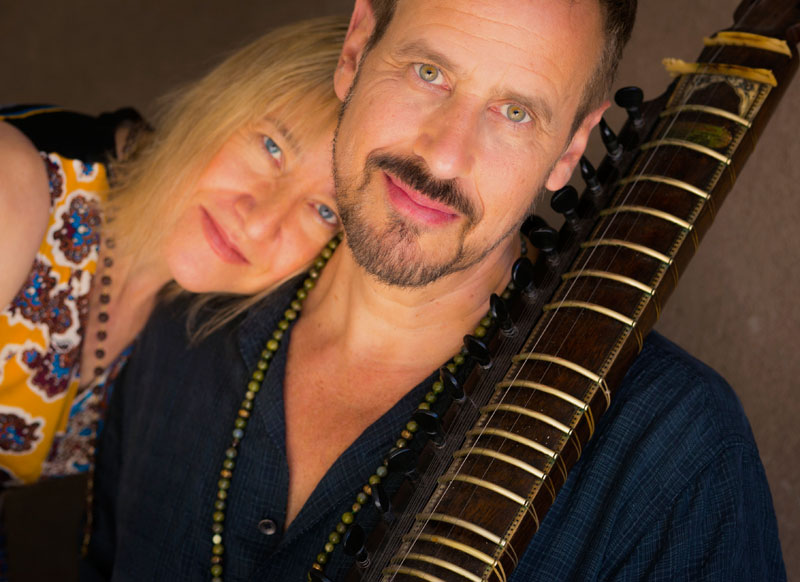
Benjy and Heather Wertheimer of Shantala — the Portland-based husband-and-wife duo blending Heather's luminous voice with Benjy's esraj and tabla — recorded "Purnamadah" on their album The Love Window, and it has remained one of their most beloved pieces. Their gentle, spacious setting has carried this Upanishadic verse into yoga studios and kirtan halls across the West.
For Leaders
Chords and structure for leading this chant on harmonium or guitar — transcribed from the linked recording. New to leading? Read our guide to leading kirtan →
Original key
Am
Tempo & feel
Spacious and slow (~54 bpm pulse); one line of the verse per breath
Chord Chart
Strumming & rhythm (4/4)
D = downstrum, U = upstrum, · = let it ring. one bell-like downstrum per bar; fullness needs no filling.
Call & Response Structure
The Purnamadah verse floats on an Am–Em seesaw, with G lifting the second line and F warming the third — each line starts from the same Am home and exhales onto Em. Sung as unison prayer, closing with Om Shanti Shanti Shanti over the same Am. Keep it weightless; the esraj and voice carry the motion.
Terms in the Glossary
Words from this page, explained in our A–Z reference.