
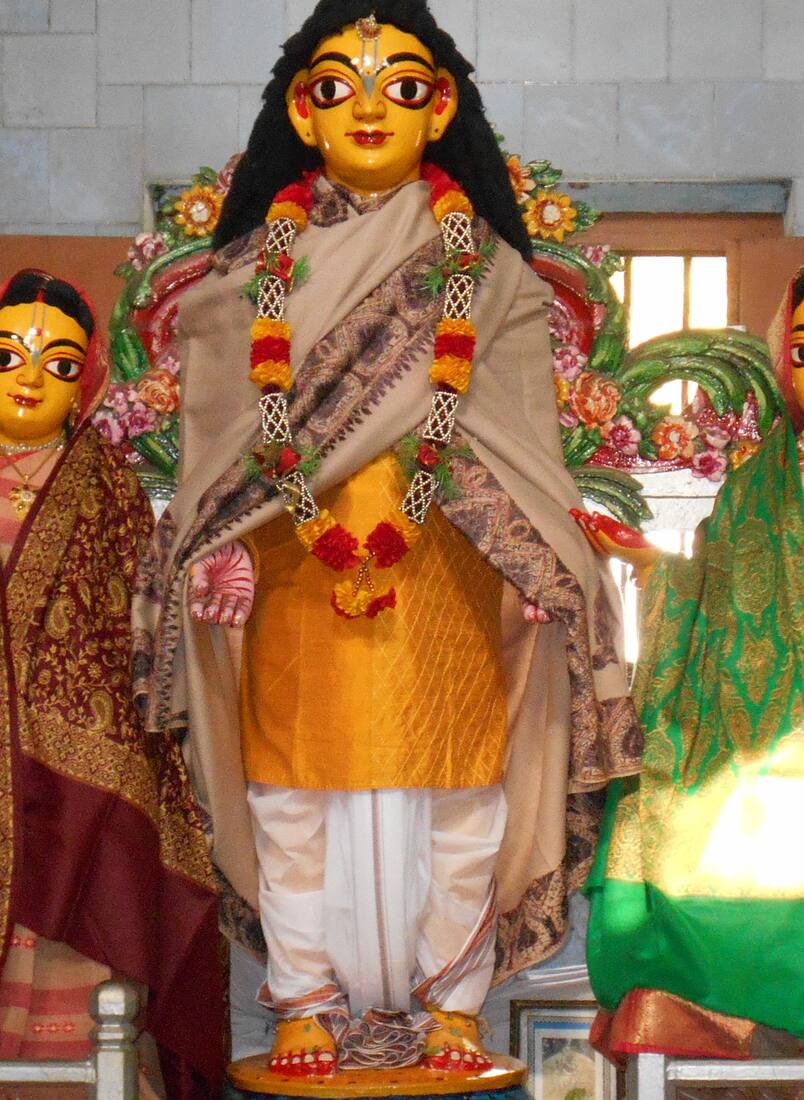
Nityananda
Chaitanya Mahaprabhu's closest companion — the wandering avadhuta called "Nitai" who carried congregational chanting door to door through Bengal and became the Gaudiya tradition's embodiment of unconditional mercy.
Life & Legacy
Nityananda was born around 1474 in the village of Ekachakra in Bengal. He left home young and wandered India for two decades as an avadhuta — a renunciate beyond social convention — before arriving in Nabadwip around 1506, where he met Chaitanya Mahaprabhu and became his inseparable companion. In the Gaudiya understanding the two are a single grace in two forms: Gaura and Nitai, the golden Lord and his mercy.
When Chaitanya took sannyasa and settled in Puri, he sent Nityananda back to Bengal to spread harinam — the chanting of the divine name — and Nityananda took the instruction literally, going door to door with the chant. The story of Jagai and Madhai, two violent drunkards who struck him and were answered only with love until they broke and became devotees, remains the tradition''s defining image of mercy. His household line and his organizing work rooted sankirtana so deeply in Bengal that the movement survived and flowered for centuries — reaching, through the Gaudiya lineage, the kirtan sung worldwide today. A generation later his widow, Jahnava Devi, presided over the first great Kheturi festival — organized by Narottama Dasa Thakura, whose padavali songs of longing for Nitai are still sung across Bengal — sealing the place of Nityananda's line at the heart of the tradition.