
Life & Legacy
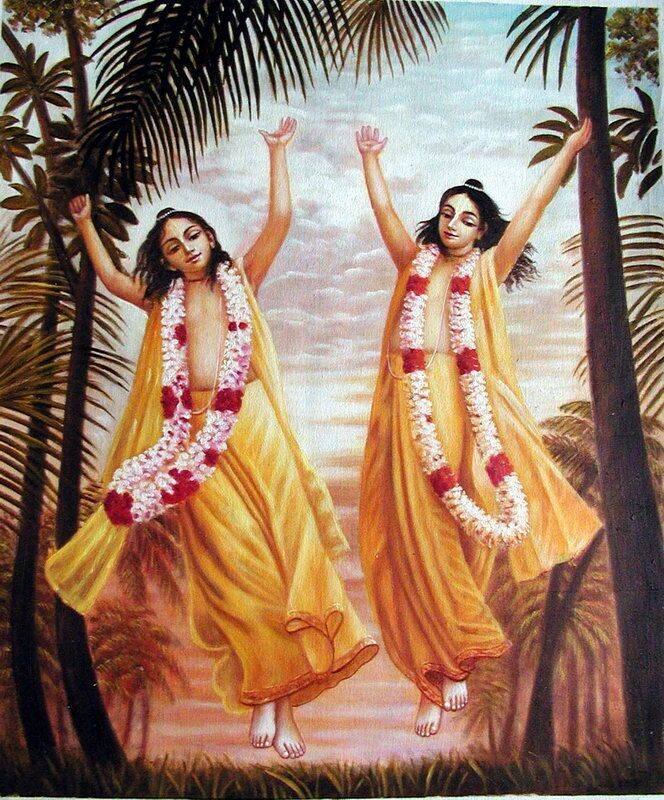
Born in Nabadwip, Bengal, in 1486, Chaitanya Mahaprabhu is revered in the Gaudiya Vaishnava tradition as an incarnation of Krishna absorbed in the mood of his own devotee. He taught that in the present age the most accessible path to the Divine is nama-sankirtana — the congregational chanting of God's names — and he made it a public, ecstatic, street-level practice open to everyone, regardless of caste, gender, or learning.
He especially propagated the Hare Krishna maha-mantra: Hare Krishna Hare Krishna, Krishna Krishna Hare Hare / Hare Rama Hare Rama, Rama Rama Hare Hare. With his closest companion Nityananda at his side, he led processions of singers and dancers through the towns of Bengal and Odisha, setting in motion a devotional revival whose songs, theology, and lineage flow directly into the Kirtan sung around the world today. A generation after his passing, the movement he set in motion was consolidated by Narottama Dasa Thakura, the foremost second-generation disciple, who organized the first great Kheturi festival that reunited Chaitanya's followers and fixed the tradition's songs and standards for centuries to come.
Contribution to Kirtan
Continue the Lineage
Related Reading
In the Glossary
Bhagavata Puranaभागवतपुराण
The most beloved of the Puranas — the great scripture of Krishna's life, from his childhood in Vrindavan and his play with the gopis to his role as teacher and friend. Also called the Srimad Bhagavatam, it is the root text of Gaudiya Vaishnava kirtan: Chaitanya Mahaprabhu's sankirtana movement grew from its vision of loving devotion, and its stories flow through every Hare Krishna chant sung today.
Harinamहरिनाम
The holy names of Hari (Krishna) — and the practice of chanting them, considered the most accessible spiritual practice of this age.
Sankirtanaसङ्कीर्तन
Congregational chanting of the holy names together — the public, communal form of kirtan championed by Chaitanya Mahaprabhu.