
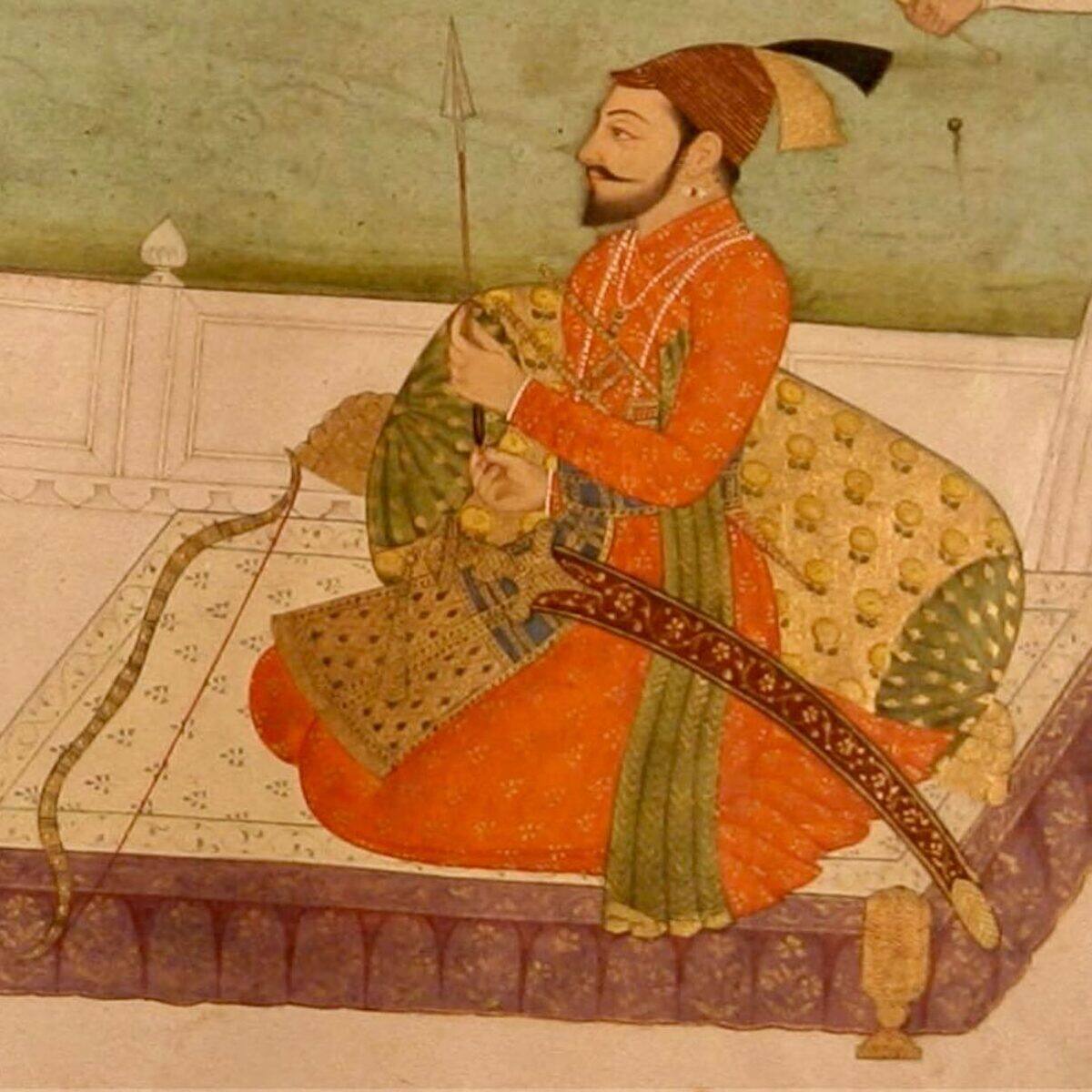
Life & Legacy
Born in Patna in 1666, Gobind Rai was nine years old when his father, the ninth Guru, Guru Tegh Bahadur, was executed in Delhi for defending the religious freedom of others — and the boy was installed as the tenth Guru of the Sikhs. From Anandpur in the Punjab hills he led his people through decades of siege and battle, losing all four of his sons to the conflict, yet his court was as much a court of poetry as of arms: he gathered fifty-two poets around him, and his own compositions — the thunderous Jaap Sahib, a cascade of names of the Divine; the Chandi di Var; the Zafarnama, a defiant epistle in Persian verse to the emperor Aurangzeb — rank among the tradition's literary summits. In 1699 he founded the Khalsa, the initiated community of saint-soldiers, binding Sikh identity to courage and devotion alike.
His final act completed the arc begun by Guru Nanak two centuries earlier. At Nanded in 1708, before his death, he ended the line of human Gurus and enthroned the scripture — the Adi Granth compiled by Guru Arjan, now the Guru Granth Sahib — as the eternal Guru of the Sikhs. From that moment the Guru of the tradition IS its book of sung hymns: every act of shabad kirtan in every gurdwara is, in the tradition's own understanding, an audience with the Guru. His Jaap Sahib is recited and sung daily, and lines from his compositions are chanted in the Kundalini yoga world that carried Sikh-rooted mantra to the West.