
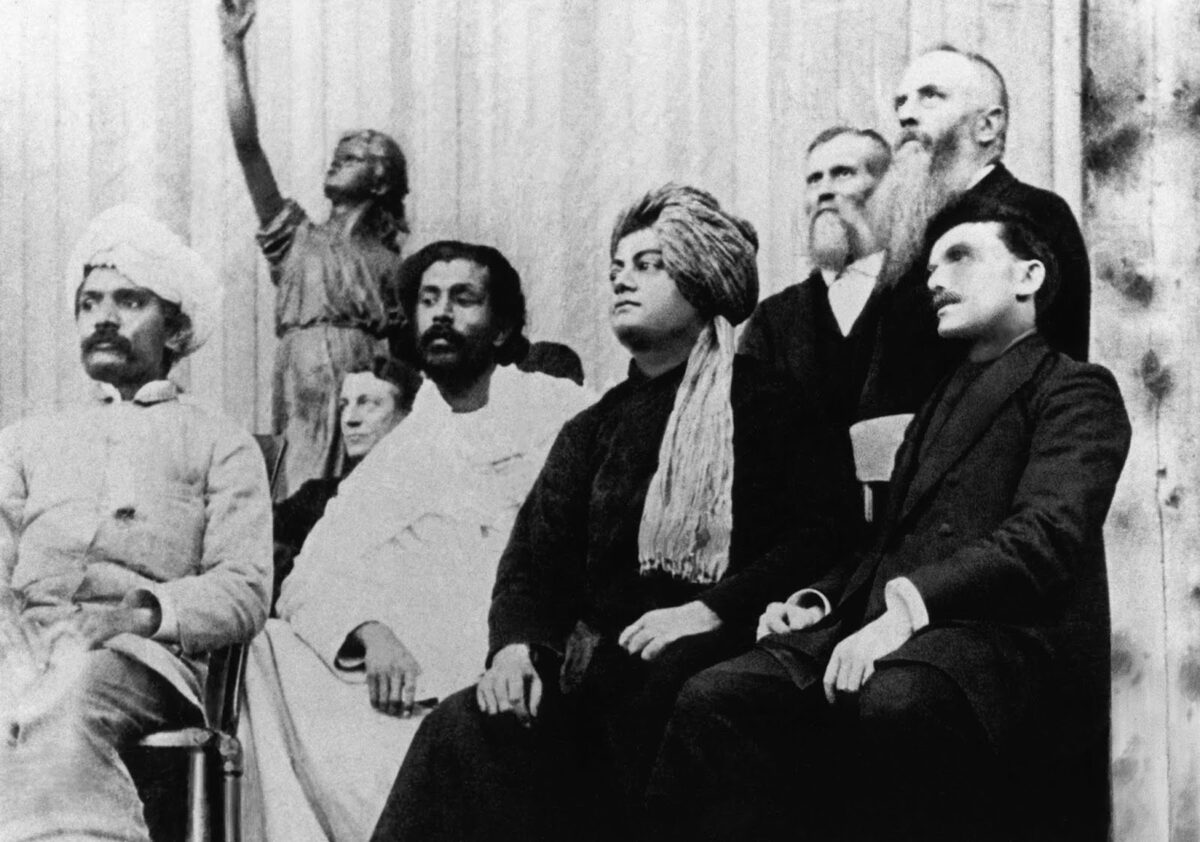
Swami Vivekananda and the Speech That Opened the West
Before he was a monk, Swami Vivekananda was a singer. Born Narendranath Datta in Calcutta in 1863, he trained seriously in Indian classical vocal music as a young man and compiled an anthology of devotional songs while still in his early twenties. When the eighteen-year-old was first brought before the mystic Ramakrishna at the Dakshineswar temple, it was his singing that won the master's heart — and for the rest of Ramakrishna's life, Narendra's voice was among his favorite doorways into ecstasy. The West remembers Vivekananda as a philosopher; his own teacher met him first as a voice raised in sacred song.
After Ramakrishna's passing in 1886, the young monk wandered the length of India with little more than a staff and a water pot, seeing the country's poverty and its spiritual depth at close range. When he learned that a World's Parliament of Religions would convene in Chicago in 1893, alongside the World's Fair, he resolved to speak there for India's traditions — and after a hard journey and days of uncertainty, he found himself on its platform.
On September 11, 1893, at the hall of the Art Institute of Chicago, he rose and began: "Sisters and brothers of America." Before he could continue, the audience of thousands was on its feet, applauding a greeting that had somehow said more than the prepared speeches around it. In the addresses that followed he spoke of every religion as a river running to one sea. Newspapers made him famous almost overnight, and in the years that followed he taught across the United States and England, founding the Vedanta Society of New York in 1894 — the first Hindu organization in the West.
What does a lecturing philosopher-monk have to do with kirtan? More than it first appears. His book Bhakti Yoga gave English-speaking readers their first systematic account of the devotional path — the discipline of love in which the divine name is repeated, sung, and finally lived, the practice of japa and the whole inner world of bhakti that every chant gathering draws on. In Raja Yoga he dwelt on Om, the seed-syllable he called the most sacred of all sounds. The vocabulary the Western chant world now takes for granted — yoga, mantra, bhakti — entered the English-speaking mainstream largely through his lectures and books.
He returned to India a national hero and founded the Ramakrishna Mission in 1897, joining contemplative life to service of the poor. He died at Belur Math in 1902, only thirty-nine years old — but the road he opened stayed open. Paramahansa Yogananda walked it in 1920 and went on to lead a Carnegie Hall audience of thousands in chant; the disciples of Swami Sivananda built ashrams across the West where kirtan is daily practice — Ragani leads chant retreats at the Sivananda ashram on Paradise Island in the Bahamas; and when Srila Prabhupada stepped off a cargo ship in 1965 with a pair of kartals in his luggage, he arrived in a country that had been introduced to India's spiritual voice seventy years earlier — by a monk who was a singer first.
Terms in the Glossary
Words from this page, explained in our A–Z reference.
Join the Kirtans.com Community
Receive occasional updates — thoughtfully curated devotional music, upcoming gatherings, artist announcements, new resources, and inspiration to support your Bhakti practice.
From This Article
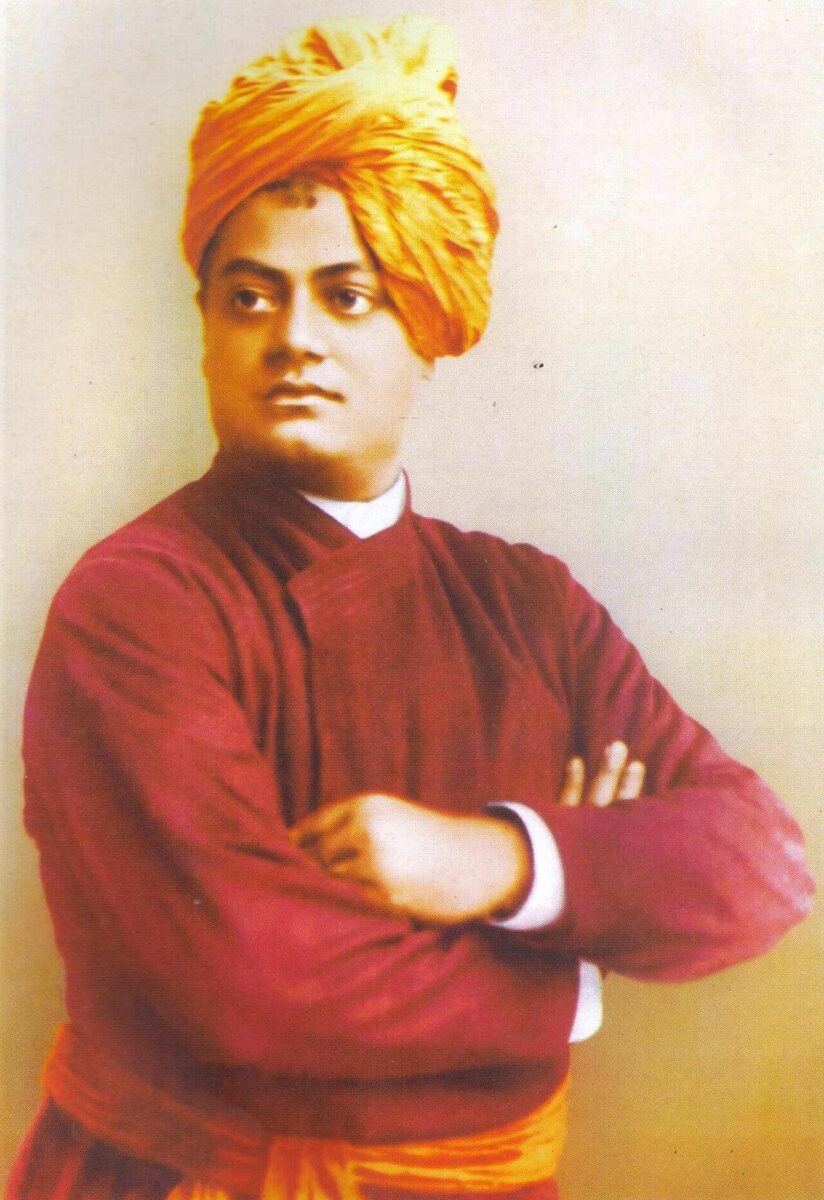
Continue Reading
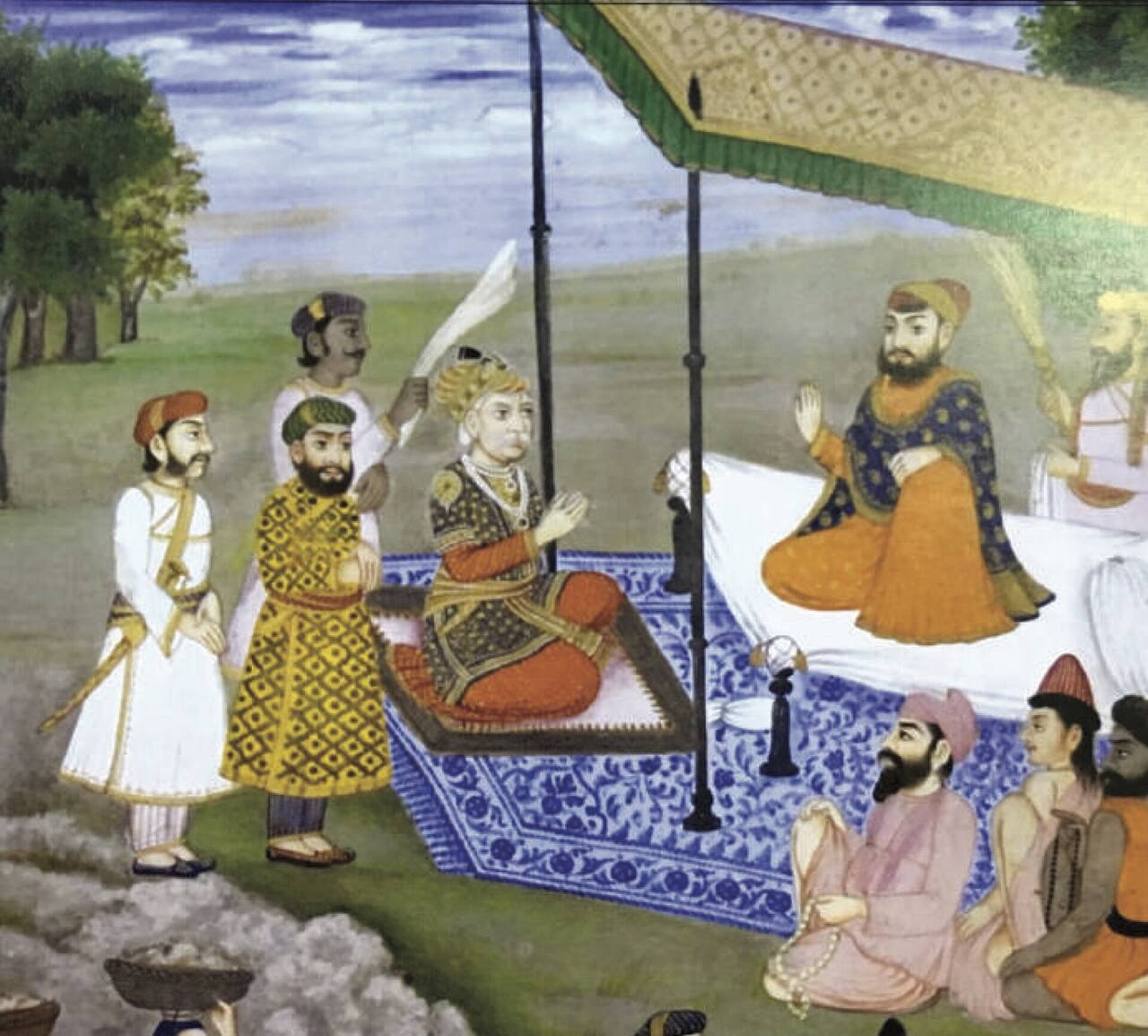
Guru Amar Das and the Song of Bliss
Converted at sixty-two by an overheard hymn, the third Sikh Guru made the free kitchen the tradition's front door — even an emperor sat on the floor to eat — and composed the Anand Sahib, the Song of Bliss that still closes every Sikh service in the world.
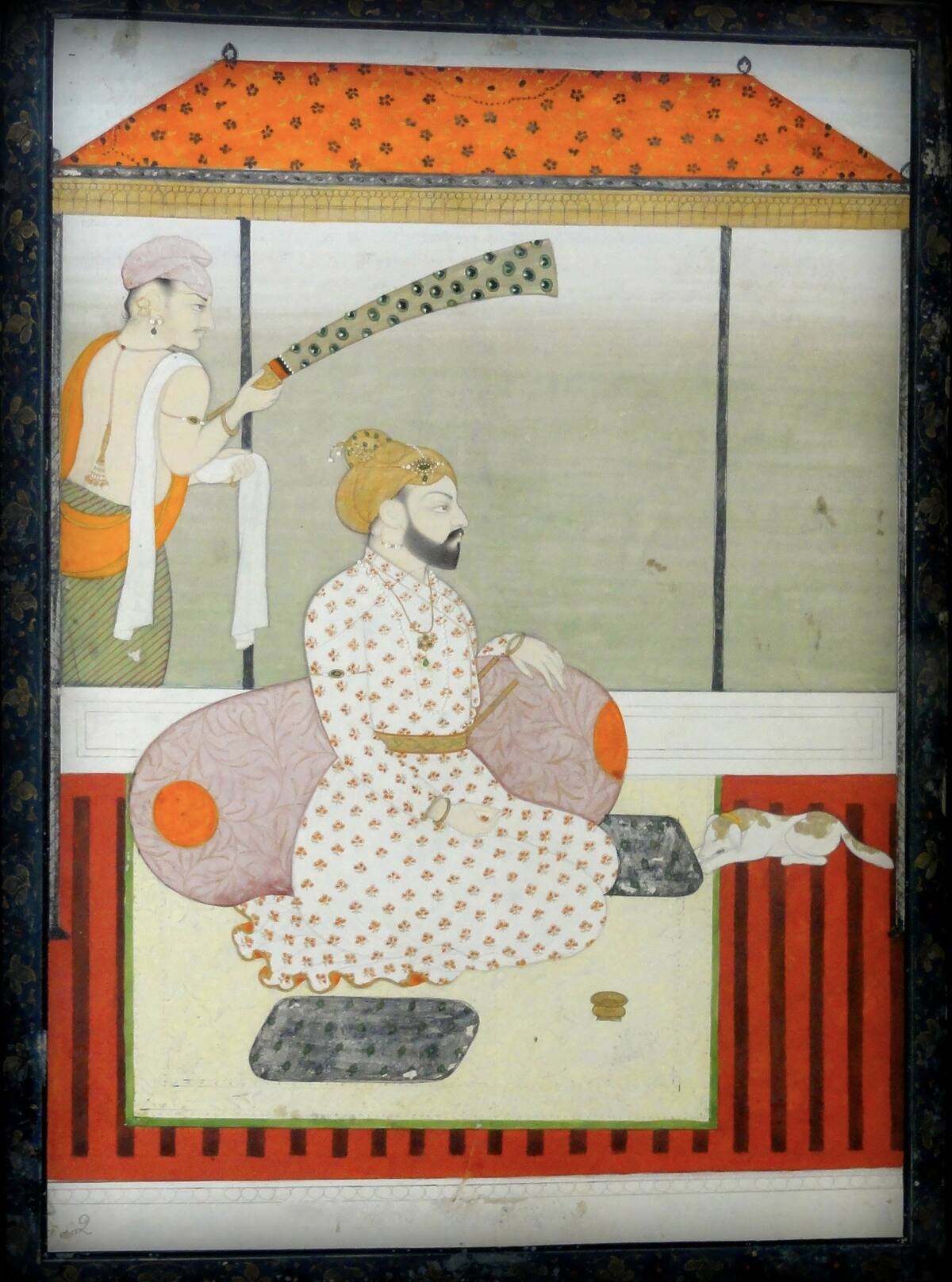
Guru Angad and the Alphabet Built for Song
The second Sikh Guru gave sacred song a script of its own. By standardizing Gurmukhi and collecting Guru Nanak's hymns in it, Guru Angad made sure the melodies would never lose their words — every Gurmukhi chant sung in the West today is written in his letters.
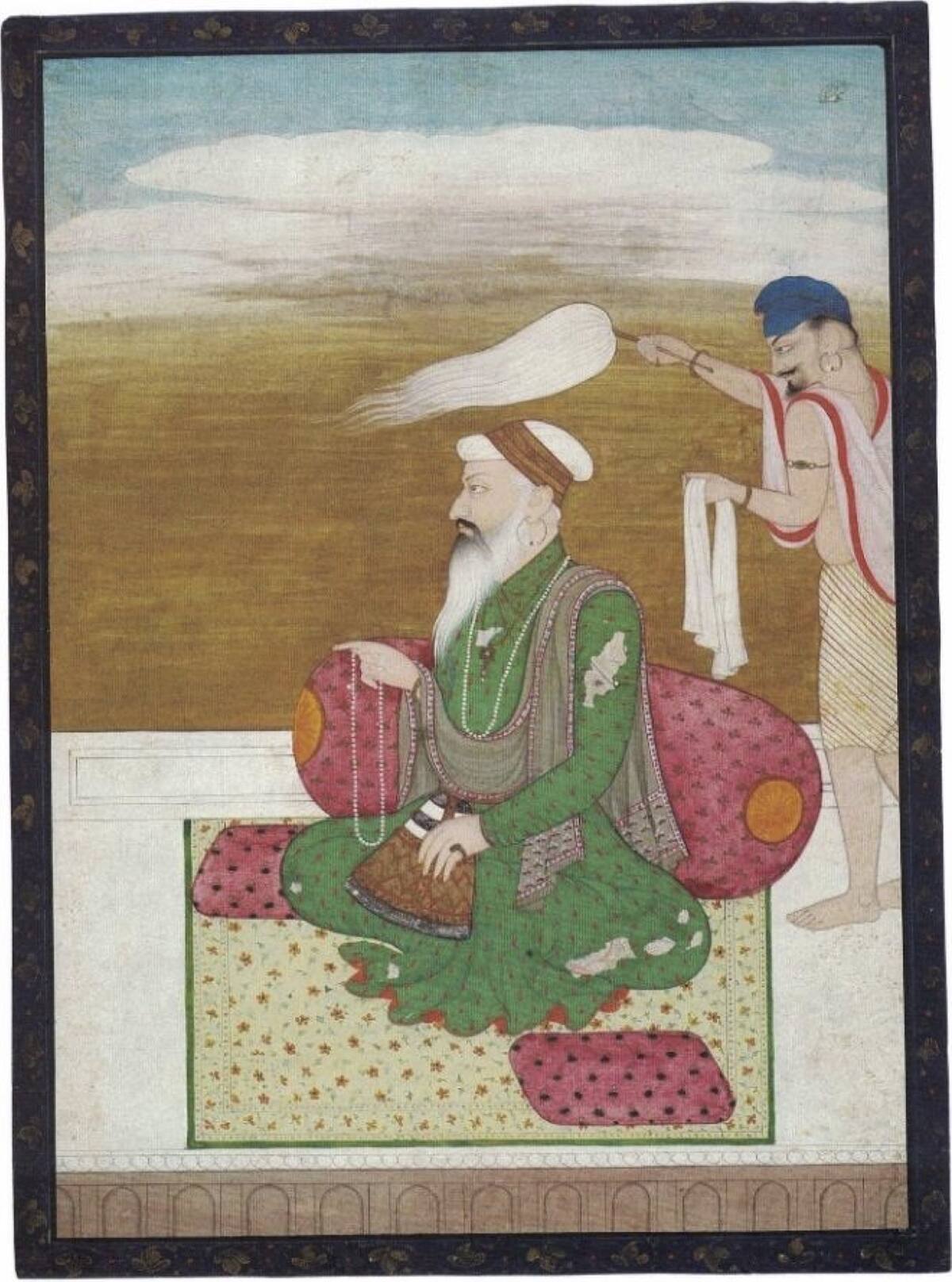
Guru Ram Das and the City of Nectar
An orphan who sold boiled chickpeas became the fourth Sikh Guru, founded Amritsar around a pool of nectar, and wrote the wedding hymns Sikh couples still circle to. Four centuries later, a chant bearing his name is sung in yoga studios around the world.