
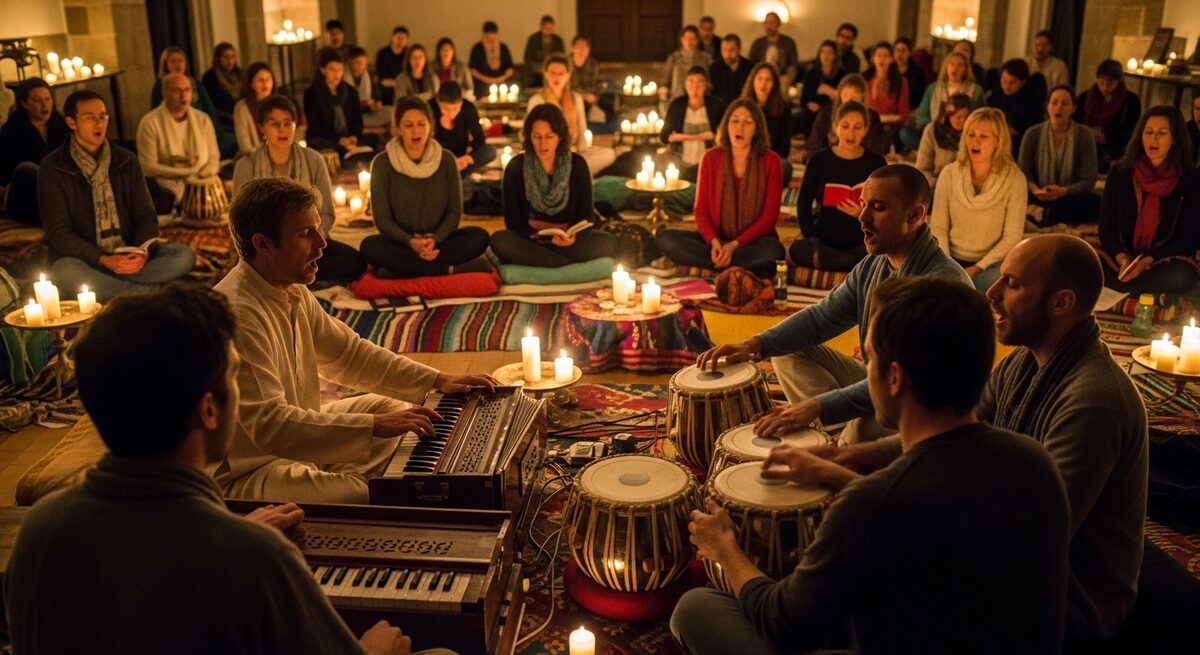
What to Expect at Your First Kirtan Gathering
If you've never been to a Kirtan before, here's what to expect: You'll likely arrive to find a room with cushions, mats, or chairs arranged in a circle or facing a small stage. There may be candles, flowers, images of deities, or other sacred objects. The atmosphere is usually warm and informal — people chatting quietly, setting up instruments, finding their seats.
The music will begin with a simple melody on harmonium or guitar, and the leader will start chanting a mantra, inviting the group to respond. At first you might not know the words — but that's completely okay. Just listen, breathe, and let the sound wash over you.
As the chant continues, the tempo may shift, the energy may rise, and something unexpected may happen: your ordinary thinking mind may grow quiet, and something underneath — spacious, warm, and alive — may begin to emerge.
Every leader holds the room differently, which is part of the joy of going in person. Nina Rao leads with an intimate, steady warmth; Dave Stringer brings a gospel-tinged energy that gets whole rooms singing; Sean Johnson & the Wild Lotus Band fold New Orleans soul into the chants; and Govind Das & Radha hold a devotional, candlelit atmosphere at their Los Angeles gatherings.
Terms in the Glossary
Words from this page, explained in our A–Z reference.
Join the Kirtans.com Community
Receive occasional updates — thoughtfully curated devotional music, upcoming gatherings, artist announcements, new resources, and inspiration to support your Bhakti practice.
Continue Reading
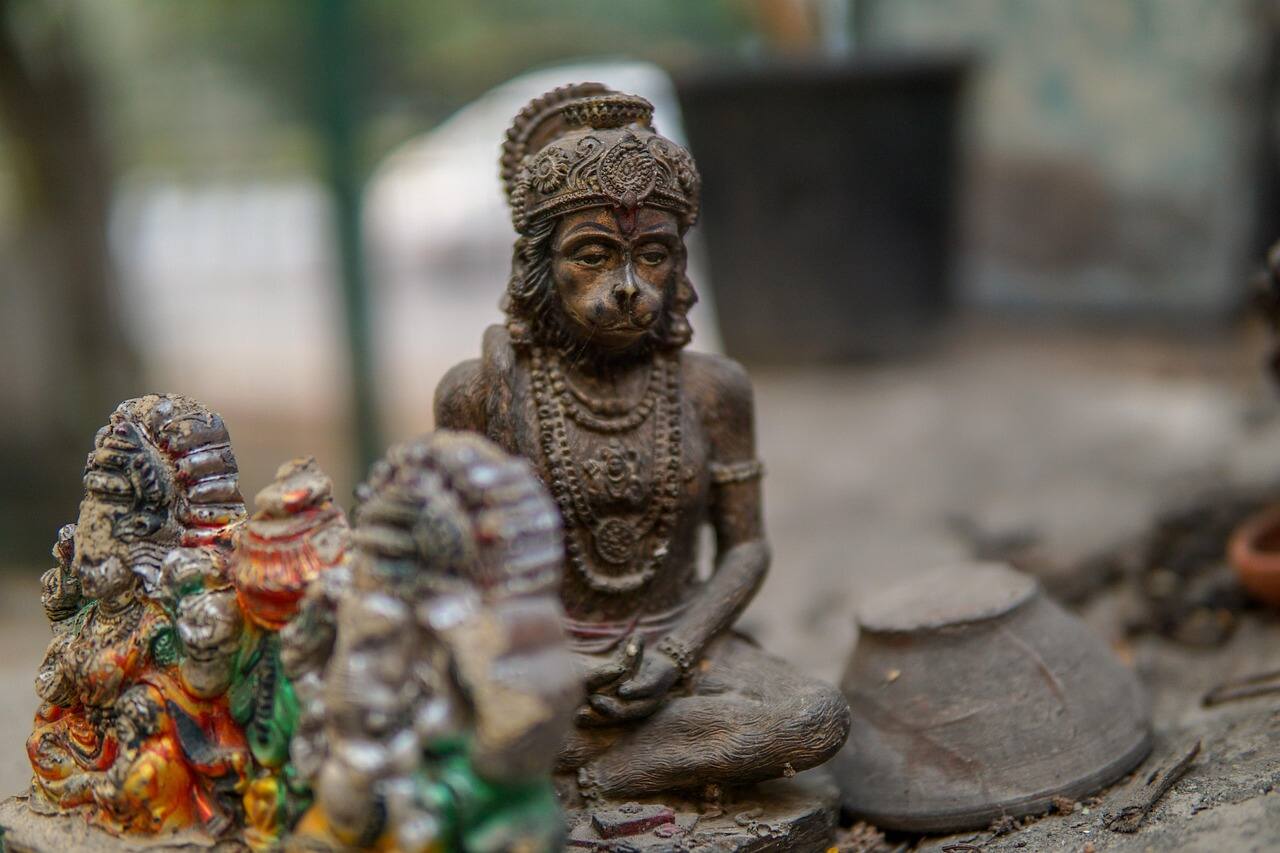
The Story Scriptures Behind Kirtan: Epics, Puranas, and the Names We Sing
Ram, Sita, Hanuman, Krishna — the names sung at almost every kirtan come from stories. Part 2 of our guide to the sacred texts maps the story canon: the two great epics and the Puranas, and how their heroes became the heart of the chant.
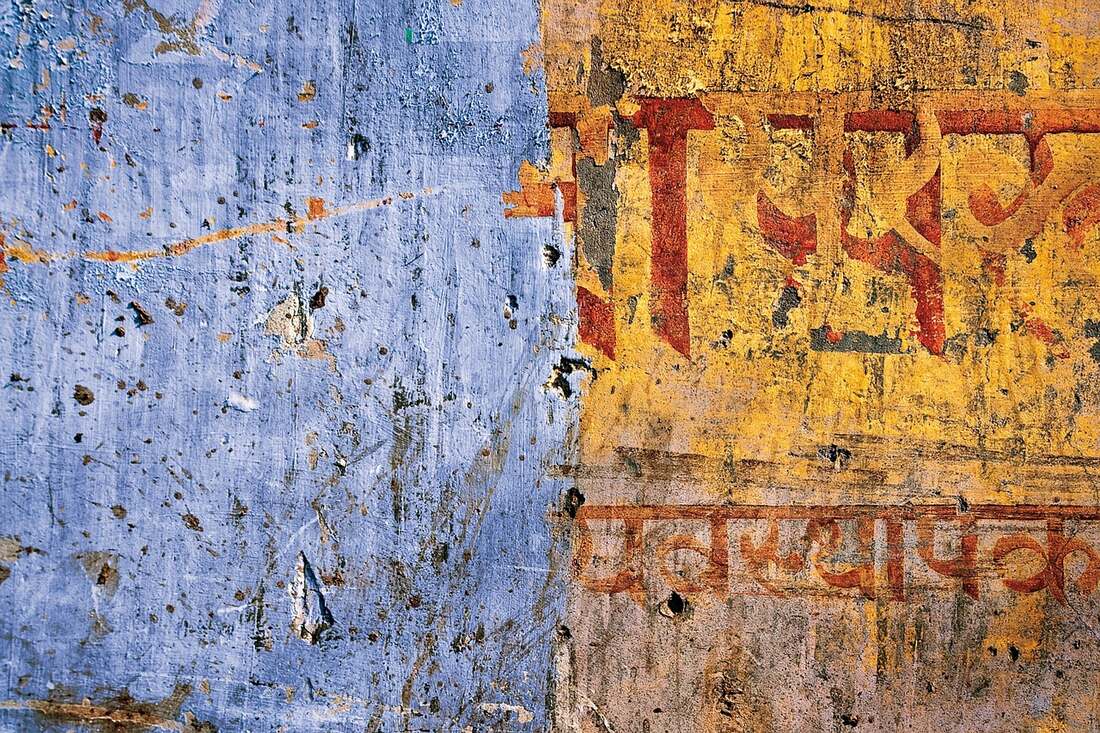
The Sacred Texts Behind Kirtan
Read about almost any mantra and you'll meet the same names: the Vedas, the Upanishads, the Bhagavad Gita. What are these texts, and why do chanters keep encountering them? A beginner's map to the scriptures behind the songs.
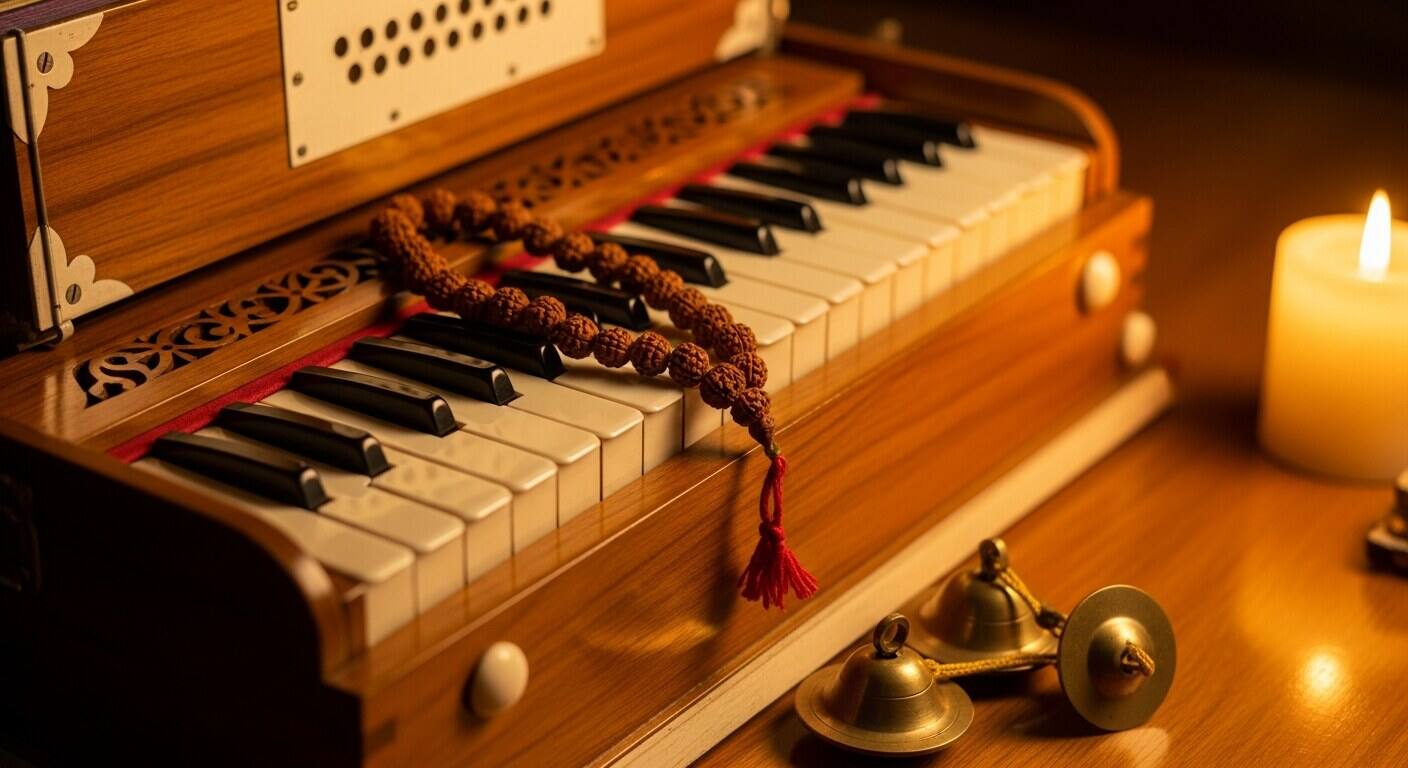
What Is Kirtan? A Beginner's Introduction to Sacred Chanting
Kirtan is a devotional practice of call-and-response chanting, often rooted in Bhakti yoga and the mantra traditions of India. But what exactly happens when a group of people sit in a circle and chant together — and why does it feel so transformative?