
The Story Scriptures Behind Kirtan: Epics, Puranas, and the Names We Sing
Part 1 of this series, The Sacred Texts Behind Kirtan, mapped the philosophical canon — the Vedas, the Upanishads, the Bhagavad Gita, and Vedanta. But sit in a kirtan for one evening and you will notice something: most of what a room actually sings is not philosophy. It is names. Ram and Sita. Hanuman. Krishna and Radha. Every one of those names trails a story behind it — and the stories live in a second family of texts: the epics and the Puranas. Here is the map to the story canon.
The Ramayana: the love story the West sings most
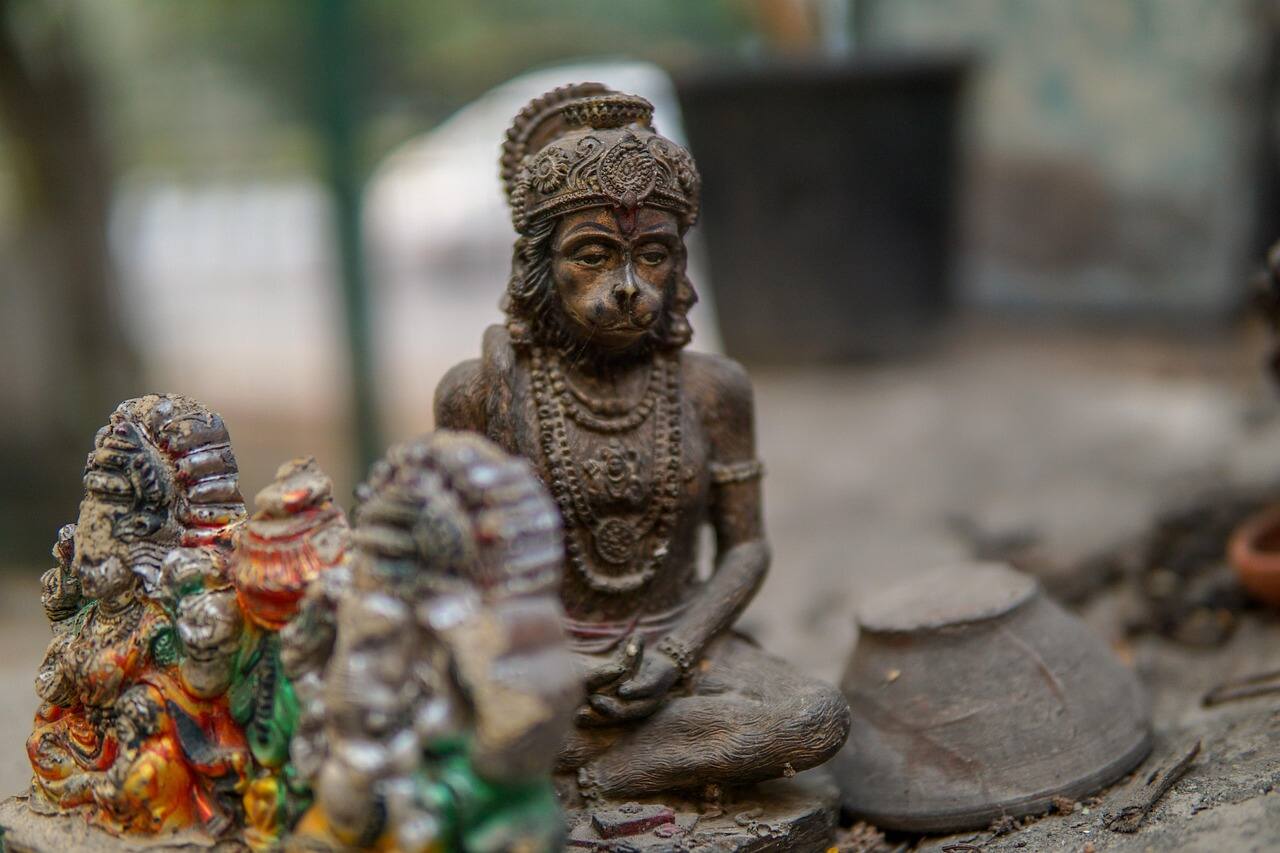
The Ramayana — "Rama's journey" — is the older and shorter of India's two great epics, traditionally attributed to the sage Valmiki. It tells of prince Ram, exiled to the forest for fourteen years; his wife Sita, abducted by the demon king Ravana; and the devoted monkey hero Hanuman, who leaps the ocean to find her. It is an adventure, a love story, and — for the devotional traditions — something more: a portrait of what loyalty, courage, and selfless love look like in action.
For chanters, the Ramayana is everywhere. When a kirtan sings Sita Ram, it is invoking the divine couple at the epic's heart — the union of the soul and the Divine. When a room takes up Sri Ram Jai Ram, it is singing the taraka mantra of Ram's name. And the epic's most beloved devotee gave the Western kirtan scene one of its signature pieces: the Hanuman Chalisa, forty verses in praise of Hanuman composed by the poet-saint Tulsidas — the same Tulsidas whose Hindi retelling of the epic, the Ramcharitmanas, put the story of Ram into the language of ordinary people and made it singable for everyone.
The Mahabharata: the epic that carries the Gita
The Mahabharata is the Ramayana's vast sibling — at roughly one hundred thousand verses, often called the longest poem in the world. It tells of two branches of a royal family, the Pandavas and the Kauravas, and the catastrophic war between them. Inside its immensity sits almost everything: statecraft and dharma, love stories and moral riddles — and, famously, a seven-hundred-verse conversation on a battlefield.
That conversation is the Bhagavad Gita — the text Part 1 of this series explored, in which Krishna teaches the warrior Arjuna that loving devotion, bhakti, is a complete spiritual path. So the two canons are not separate after all: India's most influential philosophical teaching arrives embedded in its greatest story. When kirtan sings to Krishna — in Om Namo Bhagavate Vasudevaya or the Maha Mantra — it is singing to the same charioteer who speaks the Gita.
The Puranas: the storybooks of the gods
If the epics are two monumental tales, the Puranas — the word means "ancient ones" — are the tradition's great story library: eighteen major collections gathering the myths of creation, the genealogies of gods and sages, and the beloved tales of Shiva, Vishnu, Durga, Ganesha, and the goddess in all her forms. Where the Vedas belonged to ritual specialists, the Puranas belonged to everyone — recited in temples and village squares, painted on walls, danced and sung.
Almost any deity name that arises in a kirtan carries Puranic stories with it. The Ganesha invoked in Om Gam Ganapataye Namaha, the Shiva of Om Namah Shivaya, the goddess praised in Jaya Ambe Jagadambe — their personalities, families, and famous deeds all live in the Puranas. Knowing even a little of these stories turns a wall of Sanskrit names into a cast of characters you recognize.
The Bhagavata Purana: where chanting itself is taught
One Purana matters so much to kirtan that it deserves its own chapter: the Bhagavata Purana, also called the Srimad Bhagavatam. Its tenth book tells the stories the Bhakti traditions love most — Krishna's childhood among the cowherds of Vrindavan, the butter thief, the flute player, the divine dance with the gopis. And it does more than tell stories: it teaches that in this age, singing the names of the Divine — sankirtana — is itself the highest spiritual practice.
Five hundred years ago, Chaitanya Mahaprabhu took that teaching literally and led ecstatic congregational chanting through the streets of Bengal, centered on the Hare Krishna Maha Mantra. His movement treasured the Bhagavata Purana above all other texts — and when Srila Prabhupada sailed for New York in 1965, the trunk he carried was filled with his own translations of it. The kirtan wave that followed in the West is, in a very real sense, the Bhagavata Purana still being sung.
Two canons, one practice
Put the two halves of this series together and the map is complete. The philosophical canon — Vedas, Upanishads, Gita, Vedanta — explains why sacred sound works and what the singing is for. The story canon — the Ramayana, the Mahabharata, the Puranas, and above all the Bhagavata Purana — supplies the names, the personalities, and the love stories that the voice actually carries. You never need to read any of them to chant. But the next time you sing to Hanuman, or call Sita and Ram together, or repeat Krishna's name until the room dissolves, you will know: you are singing the oldest stories in the world.
The Sacred Texts Behind Kirtan · Part 2 of 2
Terms in the Glossary
Words from this page, explained in our A–Z reference.
Join the Kirtans.com Community
Receive occasional updates — thoughtfully curated devotional music, upcoming gatherings, artist announcements, new resources, and inspiration to support your Bhakti practice.
Continue Reading
The Sacred Texts Behind Kirtan
Read about almost any mantra and you'll meet the same names: the Vedas, the Upanishads, the Bhagavad Gita. What are these texts, and why do chanters keep encountering them? A beginner's map to the scriptures behind the songs.
What to Expect at Your First Kirtan Gathering
Walking into your first Kirtan can feel mysterious if you don't know what to expect. Here's a friendly guide to help you feel comfortable, welcome, and ready to open your heart.
What Is Kirtan? A Beginner's Introduction to Sacred Chanting
Kirtan is a devotional practice of call-and-response chanting, often rooted in Bhakti yoga and the mantra traditions of India. But what exactly happens when a group of people sit in a circle and chant together — and why does it feel so transformative?