
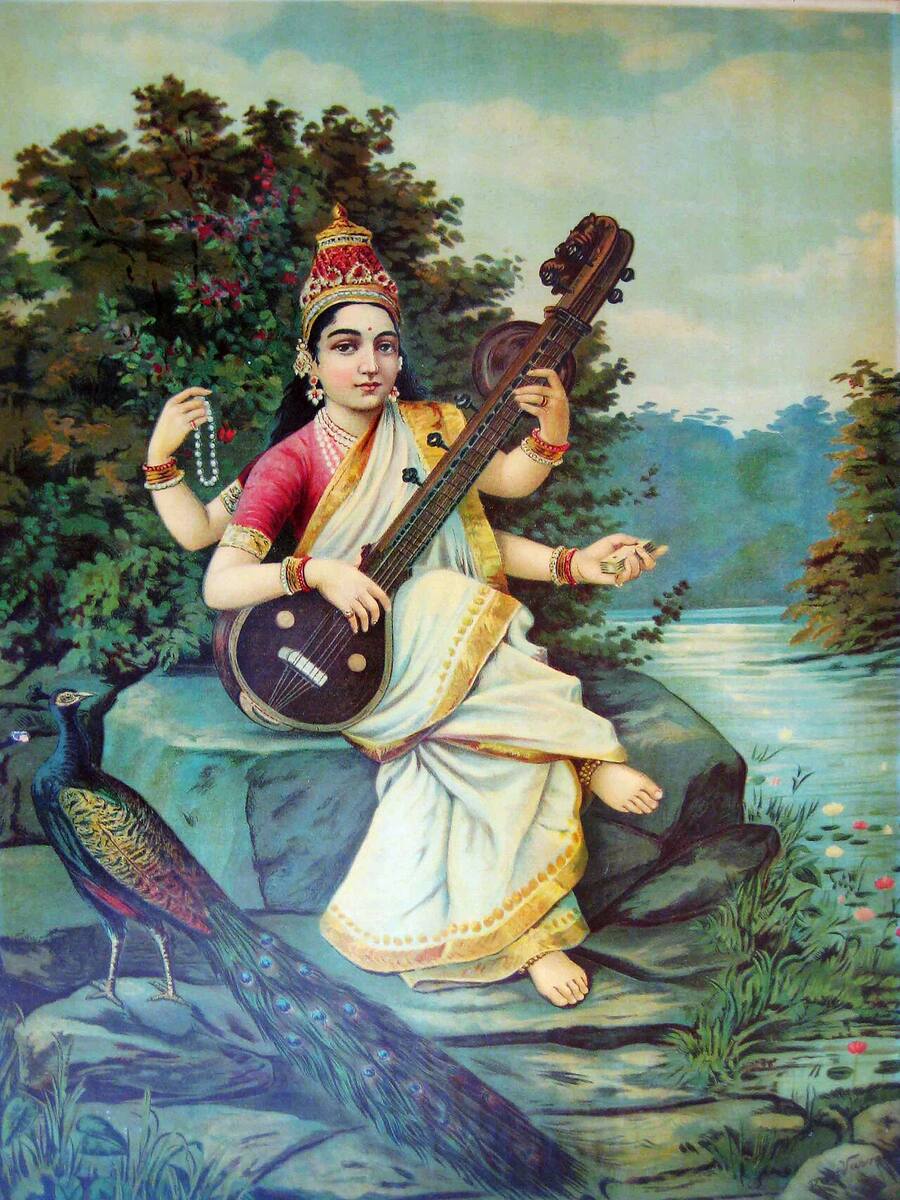
Saraswati is the goddess of knowledge, music, language, and the arts — the oldest goddess still worshipped in India, first praised in the Rig Veda as a mighty river. As the rivers of the Vedic world shaped its civilization, Saraswati flowed from being a sacred river into being the very current of inspiration: the flow of speech, of melody, of insight.
She is the consort of Brahma the creator, and the tradition says creation itself would be mute without her — Brahma makes the world, but Saraswati gives it meaning, language, and song. Students pray to her before examinations; musicians touch their instruments to their foreheads in her name; the first spring festival of Vasant Panchami is hers, when children traditionally write their first letters.
For anyone who sings Kirtan, Saraswati is the patron standing behind the practice itself. Every mantra is made of sacred sound (vak), and Saraswati is that sound. Indian classical musicians — whose ragas and instruments shaped kirtan music profoundly — have honored her as the source of their art for centuries.
In Traditional Art
Saraswati is depicted dressed in pure white, seated on a white lotus or a swan, serene and luminous. Her four hands hold the veena (the classical stringed instrument she is never without), a book of the Vedas, and a crystal mala — music, knowledge, and meditation in one image. Unlike the warrior goddesses she carries no weapon at all.
In Kirtan
Saraswati mantras — like "Om Aim Saraswatyai Namaha" — are chanted for clarity of speech, learning, and musical inspiration, and many kirtan singers invoke her before performing. In a practice built entirely of sacred sound, she is the goddess of the medium itself: to chant well is already to honor Saraswati.
Mantras Sung to Saraswati
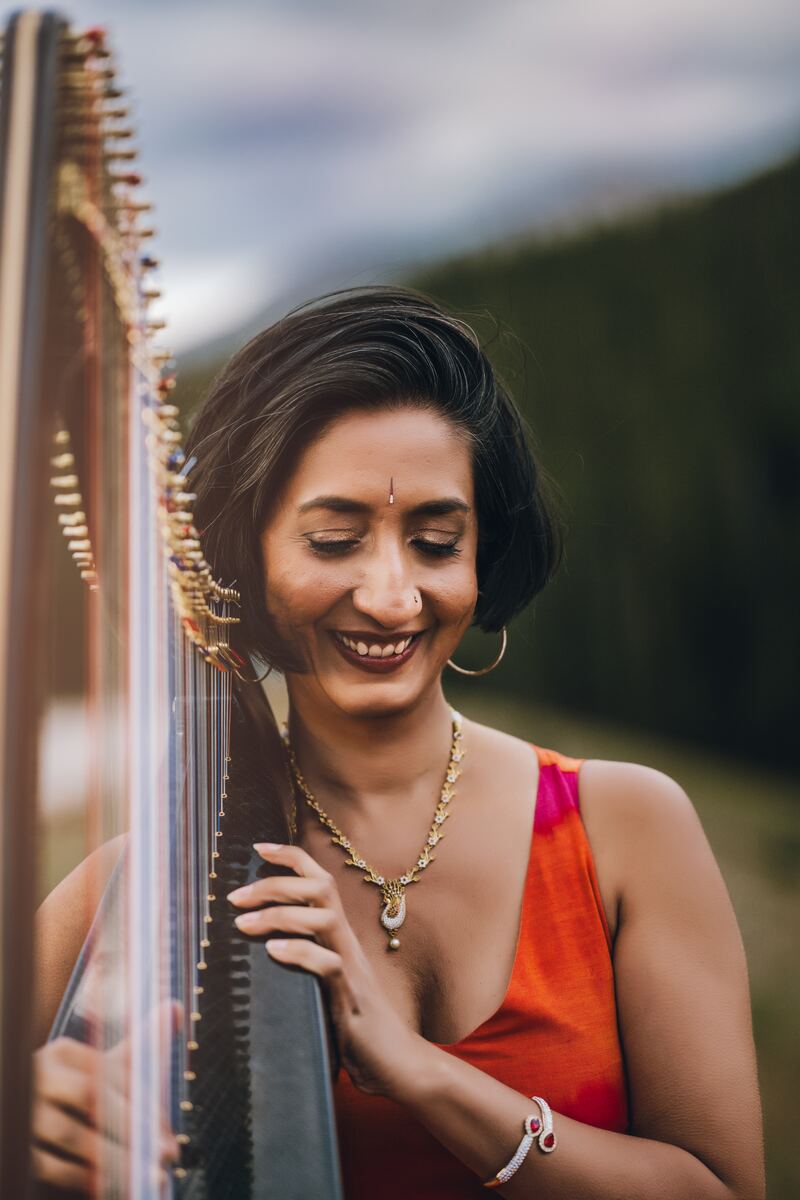
Artists Who Chant to Saraswati
Saints & Pioneers of This Devotion
Traditions That Chant to Saraswati
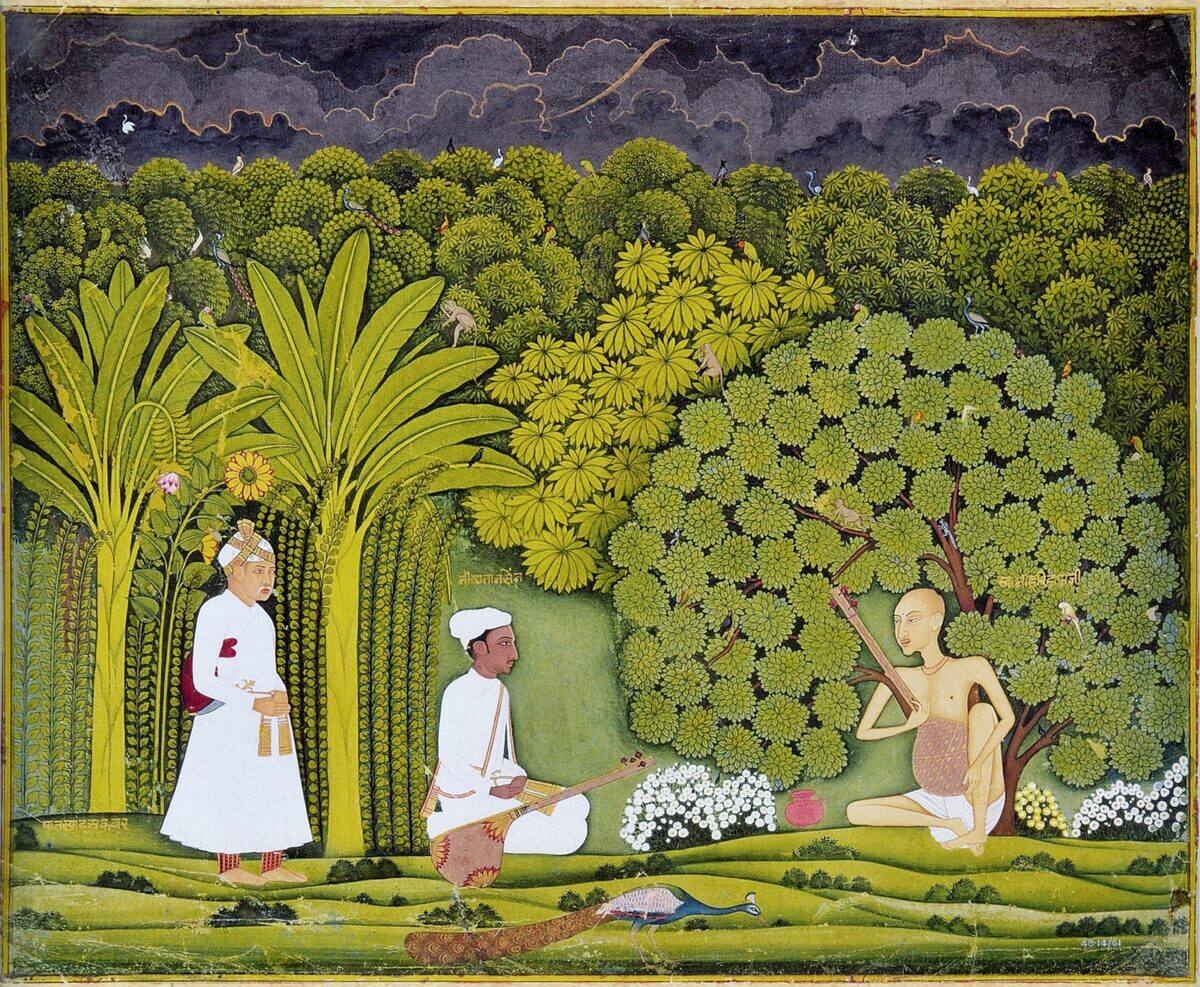
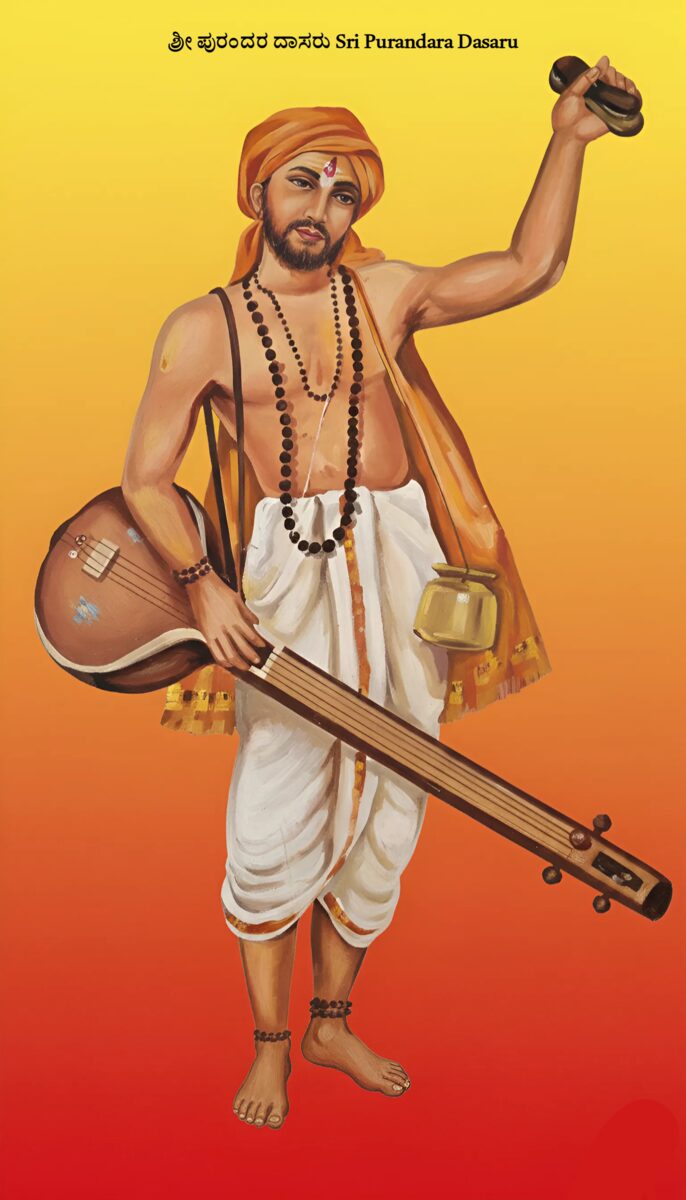
South Indian & Carnatic Devotional Singing
The South Indian stream — Alvar poetry, Haridasa song, and the great Carnatic composers who made devotion an art form.
North Indian Bhakti Kirtan
The Hindustani stream — sant poets, Ram and Krishna bhajans, and the harmonium-and-tabla sound that shaped Western chant.