
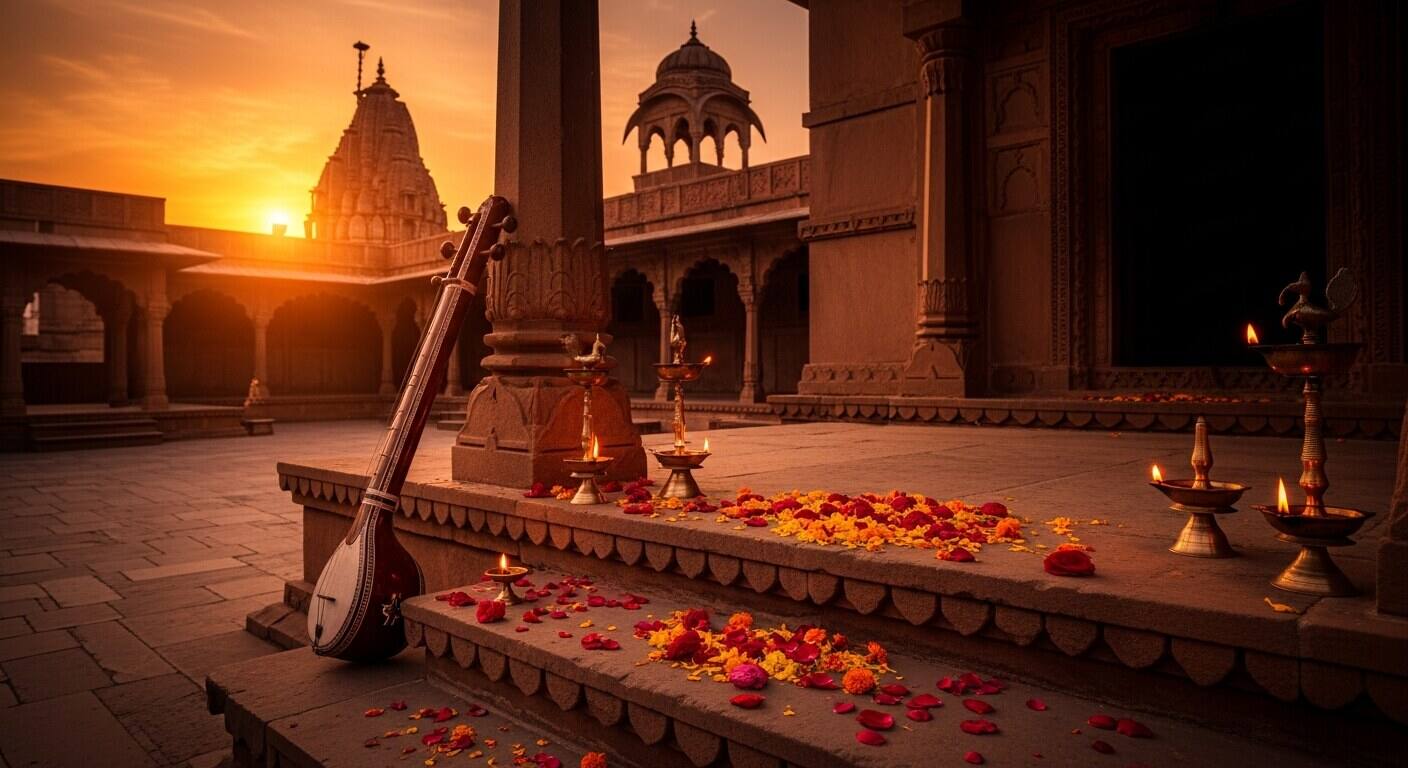
Mirabai: The Princess Who Sang Her Way to Freedom
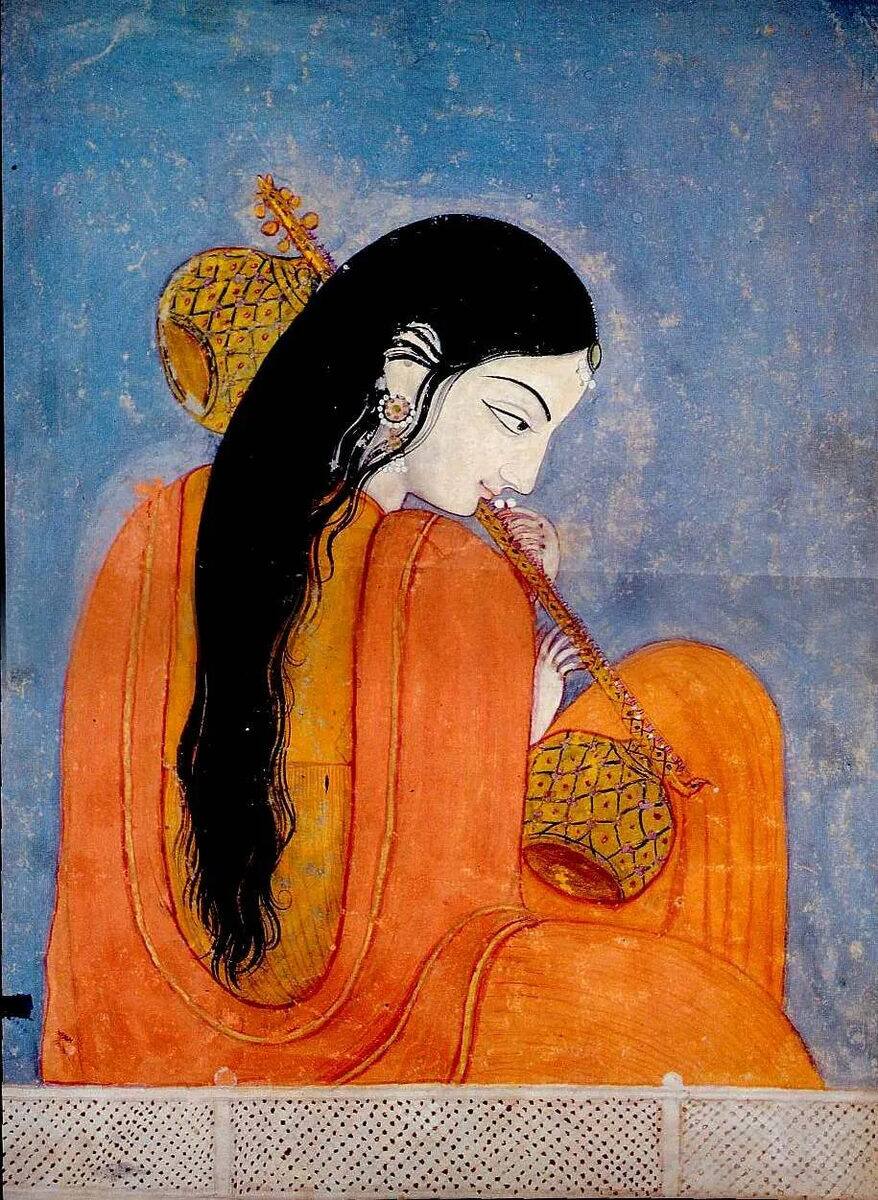
Mirabai was born around the turn of the sixteenth century into a Rathore Rajput royal family and raised in Merta, in what is now Rajasthan. From childhood she regarded Krishna — whom she called Giridhar Gopal, "the cowherd who lifted the mountain" — as her true beloved. Married into the powerful ruling family of Mewar, she was expected to live the sealed life of a Rajput noblewoman.
She refused. Widowed young, Mirabai turned entirely toward her Lord — singing and dancing in public temples, keeping the company of wandering saints, and composing bhajans of aching, fearless intimacy with the divine. Legends tell of the royal family's attempts to silence her, even with poison; her songs answer that no cup could touch one who had already drunk the nectar of the Name.
Mirabai belongs to the great flowering of the Bhakti movement, alongside poet-saints like Surdas, Tulsidas, and Kabir — a wave of singers who carried devotion out of Sanskrit ritual and into the language and music of ordinary people. Hundreds of padas (devotional songs) are attributed to her, passed down through five centuries of oral tradition, and her refrain "mere to Giridhar Gopal, dusro na koi" — "mine is Giridhar Gopal; there is no other" — remains one of Bhakti's defining declarations.
Her voice echoes through modern Kirtan wherever Krishna's names are sung — in chants like Govinda Jaya Jaya and Radhe Govinda — and her name itself has become shorthand for whole-hearted devotion: the duo Mirabai Ceiba chose it in her honor. For anyone who has ever felt that a song could be truer than safety, Mirabai is the tradition's great reminder that devotion is a form of courage.
Terms in the Glossary
Words from this page, explained in our A–Z reference.
Join the Kirtans.com Community
Receive occasional updates — thoughtfully curated devotional music, upcoming gatherings, artist announcements, new resources, and inspiration to support your Bhakti practice.
From This Article
Continue Reading
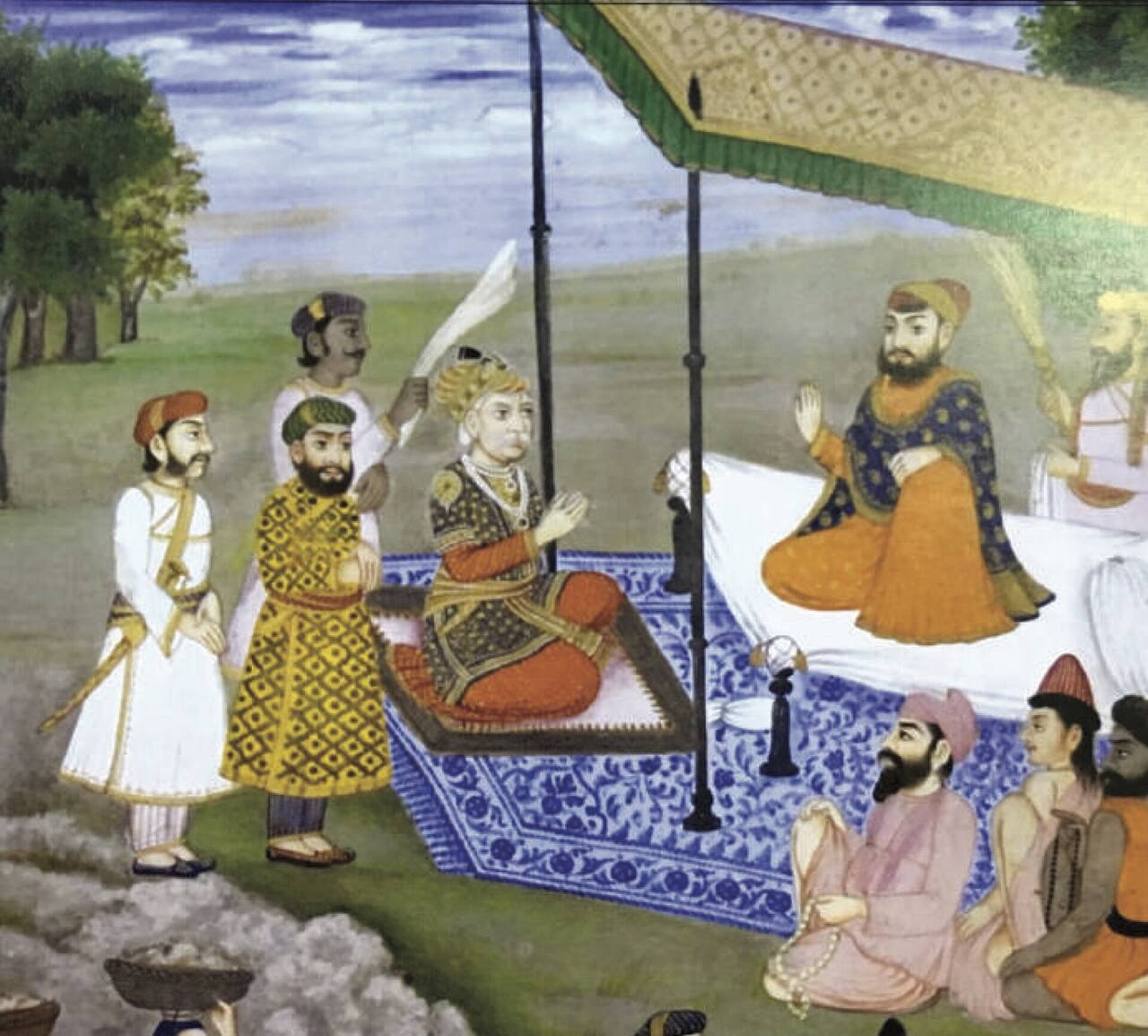
Guru Amar Das and the Song of Bliss
Converted at sixty-two by an overheard hymn, the third Sikh Guru made the free kitchen the tradition's front door — even an emperor sat on the floor to eat — and composed the Anand Sahib, the Song of Bliss that still closes every Sikh service in the world.
Guru Angad and the Alphabet Built for Song
The second Sikh Guru gave sacred song a script of its own. By standardizing Gurmukhi and collecting Guru Nanak's hymns in it, Guru Angad made sure the melodies would never lose their words — every Gurmukhi chant sung in the West today is written in his letters.
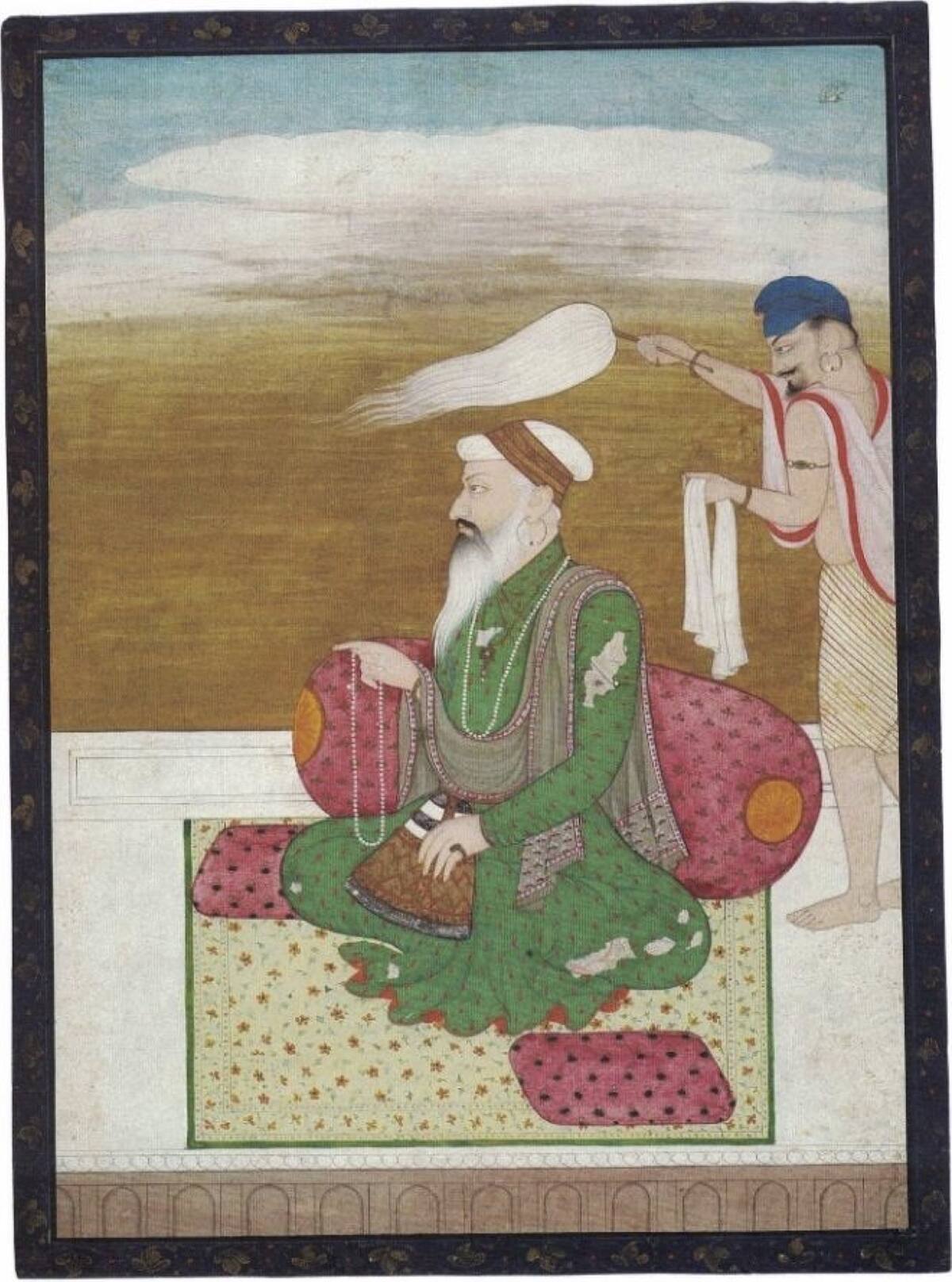
Guru Ram Das and the City of Nectar
An orphan who sold boiled chickpeas became the fourth Sikh Guru, founded Amritsar around a pool of nectar, and wrote the wedding hymns Sikh couples still circle to. Four centuries later, a chant bearing his name is sung in yoga studios around the world.