Radha is the cowherd girl of Vrindavan whose love for Krishna became the tradition's highest ideal of devotion. She appears only glancingly in the earliest scriptures, but by the time of Jayadeva's twelfth-century Sanskrit poem the Gita Govinda, she had become the center of an entire theology: Radha is not simply Krishna's beloved — she is the divine energy of love itself (hladini shakti), the part of God that loves God.
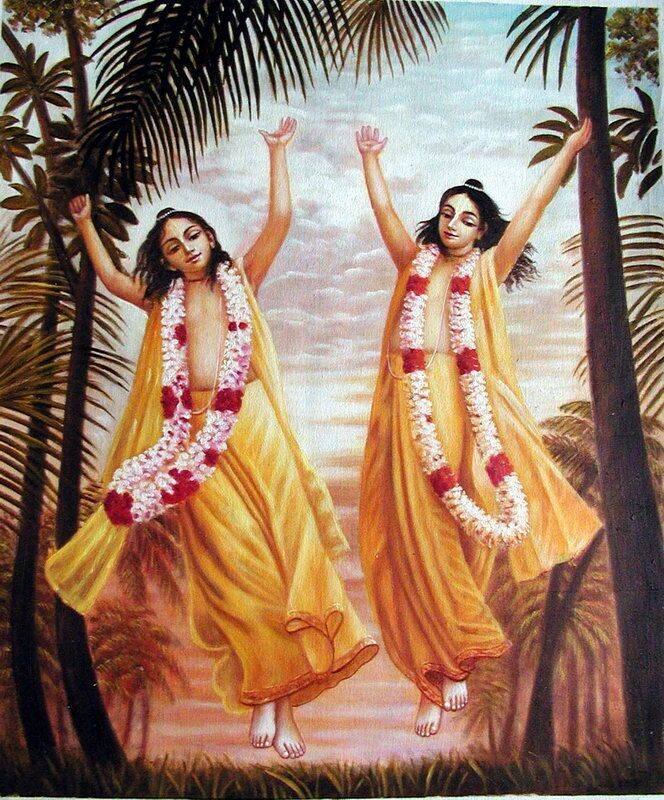
Gaudiya Vaishnava teachers went further still. In their understanding, Radha's love is greater than Krishna's own, because she loves without any thought of herself. Chaitanya Mahaprabhu was himself understood by his followers to be Krishna experiencing the world through Radha's heart — golden-skinned, weeping Krishna's name in the streets of Bengal.
For practitioners, Radha is the model of what a chanting heart aspires to: complete, self-forgetful absorption in the Divine. That is why her name is so often sung first — "Radhe Govinda," "Radhe Shyam" — the tradition's way of saying that love comes before the beloved.
In Traditional Art
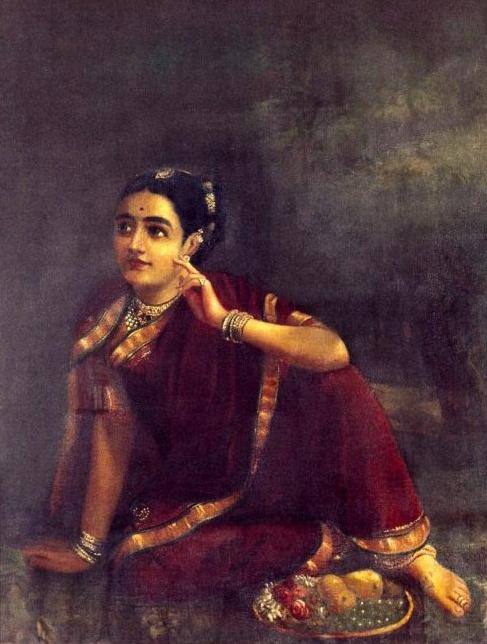
Radha is shown as a radiant golden-complexioned young woman in beautiful dress, almost always at Krishna's left side, sometimes with her friends (sakhis) in attendance. Painters loved the scenes of her waiting for Krishna in the forest groves of Vrindavan — longing is her classic mood in traditional art.
In Kirtan
In Gaudiya lineages the maha-mantra's word "Hare" is itself understood as a call to Radha — so every Hare Krishna kirtan already sings to her. Chants like "Radhe Govinda," "Jaya Radha Madhava," and the widely loved "Radhe Radhe" refrains put her name at the center. Singers often say Radha's name carries the mood of Kirtan: not petition, but pure affection.
Mantras Sung to Radha
Radhe Govinda
"A call to the divine love of Radha and Krishna"
Jaya Radha Madhava
"A tender Gaudiya bhajan adoring Krishna as Radha's beloved, at play in the groves of Vrindavan"
Shri Radhe
"Calling the name of Radha, the embodiment of pure devotion"
Jai Jai Radha Raman Hari Bol
"Glory to Radha Raman — sing the names of Hari!"