

Guru Arjan and the Scripture Built of Song
In 1604, in a newly built temple at the center of a pool of still water in Amritsar, a book was installed with the honors due a king. It was not a throne or an idol but an anthology of songs — 974 hymns by Guru Nanak, the poetry of the three Gurus after him, and the verses of Hindu and Muslim saints like Kabir and Ravidas, all arranged not by author or subject but by raga, the melodic frame each hymn is meant to be sung in. The man who compiled it, built the temple that housed it, and bowed to it on its first morning was Guru Arjan, the fifth Sikh Guru. Two years later he became the tradition's first martyr. Between those two facts lies one of the most consequential lives in the history of sacred song.
Arjan was born in 1563, the youngest son of Guru Ram Das, the fourth Guru, who founded the city that became Amritsar and whose name is still sung across the world in the chant Guru Ram Das — his life is told in Guru Ram Das and the City of Nectar. From childhood Arjan was steeped in a tradition that was already, above everything else, musical: Nanak had taught by singing with the Muslim rabab player Bhai Mardana at his side, Guru Angad had standardized the Gurmukhi script the hymns are written in, and Guru Amar Das had composed the Anand Sahib, the "Song of Bliss" — stories told in full in Guru Angad and the Alphabet Built for Song and Guru Amar Das and the Song of Bliss. When Arjan became Guru in 1581, at eighteen, he inherited four generations of sung poetry — and the question of what to do with it.
His first great answer was architectural. He completed the Harmandir Sahib — the Golden Temple — in the middle of the sacred pool his father had excavated, and gave it four doors, one facing each direction, a built statement that the singing inside was open to every caste and every faith. To this day the Harmandir Sahib is perhaps the most continuously musical building on earth: trained ragi musicians sing shabads there from before dawn until late into the night, every single day, as they have for four centuries.
His second answer became the scripture itself. Impostors and rivals had begun circulating their own verses under the Gurus' names, so Arjan resolved to fix the canon. Working with the scholar Bhai Gurdas as his scribe, he gathered, authenticated, and arranged the entire inheritance — and added more of his own poetry than any other contributor: over two thousand hymns, including the Sukhmani Sahib, the "Psalm of Peace," a long meditation on the peace that comes from remembrance of Naam, the Divine Name. One of its opening invocations is chanted today in yoga studios across the West as Aad Guray Nameh — a protective mantra whose words are Guru Arjan's own. The finished volume, the Adi Granth, opens with Nanak's Mool Mantar and then unfolds through thirty-one ragas, so that the scripture's very table of contents is a map of melody. There is no other major world scripture organized this way. For the Sikh tradition, how a hymn is to be sung is part of what it means — kirtan is not decoration on the teaching; it is the teaching's native form.
The compilation was also an act of radical inclusion. Alongside the Gurus, Arjan enshrined the songs of Kabir the weaver, Ravidas the leatherworker, the Sufi Sheikh Farid, and other saints whom the social order of the day ranked as low or other — placing them, literally, on the same pages as the Gurus and in the same ragas. A gathering built of song had room for every voice that sang truly.
Greatness drew imperial attention. In 1606 the new Mughal emperor Jahangir, wary of the Guru's growing influence and angered by accusations that Arjan had blessed a rebellious prince, ordered him tortured. Tradition holds that he was made to sit on a heated iron plate under the summer sun of Lahore while hot sand was poured over him, and that through it he kept repeating one of his own lines: tera bhana meetha lage — "Sweet is Your will." He was the first of the Gurus to die for the tradition; his grandson Guru Tegh Bahadur would be the second, and his great-great-grandson Guru Gobind Singh would one day complete the scripture Arjan began and enthrone it as the eternal Guru. Song and sacrifice run through this lineage together, and both begin, in their fullest form, with Arjan.
Every time Gurmukhi chant sounds in a Western hall, it stands on his editorial work. When Snatam Kaur or Jai-Jagdeesh sings lines of Gurbani, when GuruGanesha Singh builds an evening around Aad Guray Nameh, or when White Sun carries shabad-based chant onto Grammy stages, the words they are singing reach them through the book Guru Arjan assembled — authenticated by his scholarship, ordered by his ragas, and sealed, finally, with his life. He is the reason the Sikh tradition's holiest place is not a relic or a tomb but a building full of music, with four open doors.
The Sikh Kirtan Lineage · Part 5 of 7
Terms in the Glossary
Words from this page, explained in our A–Z reference.
Join the Kirtans.com Community
Receive occasional updates — thoughtfully curated devotional music, upcoming gatherings, artist announcements, new resources, and inspiration to support your Bhakti practice.
From This Article
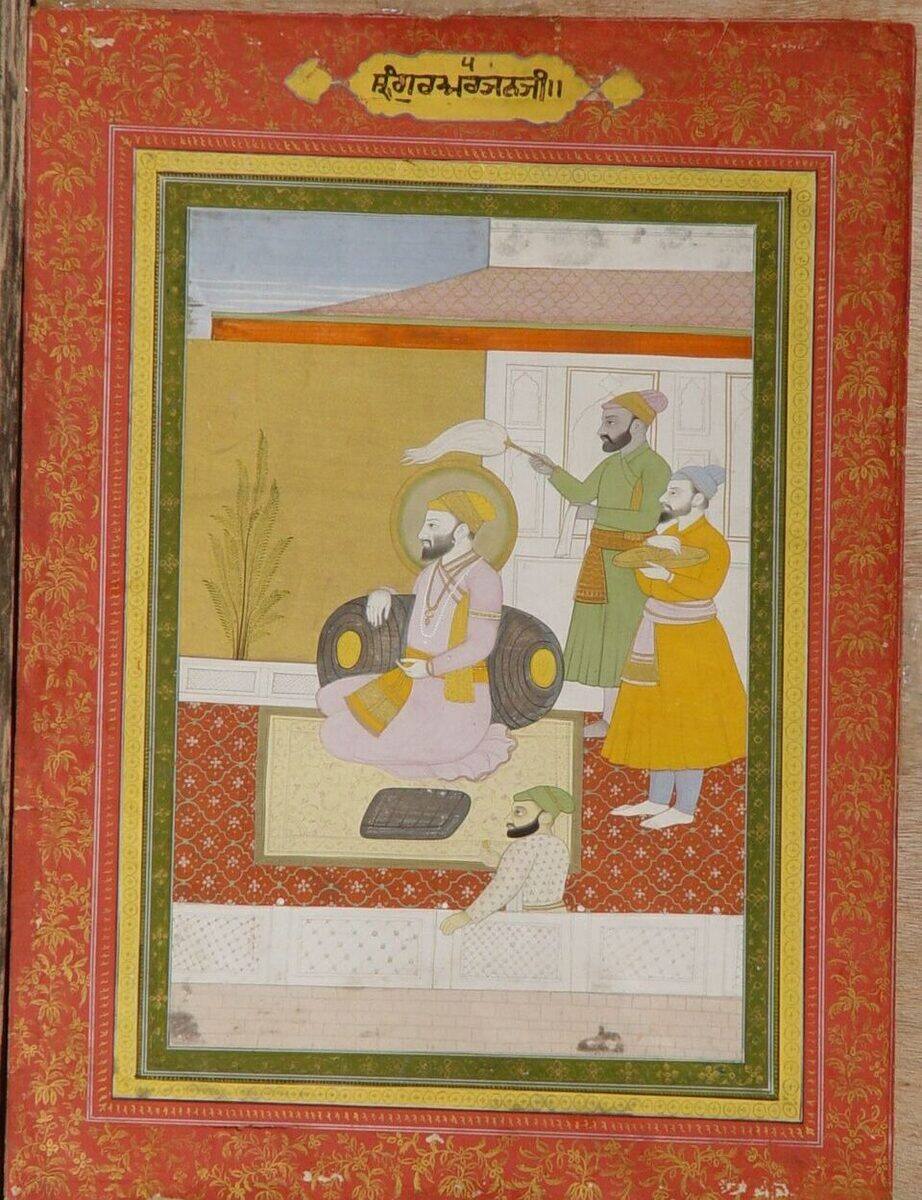
Continue Reading
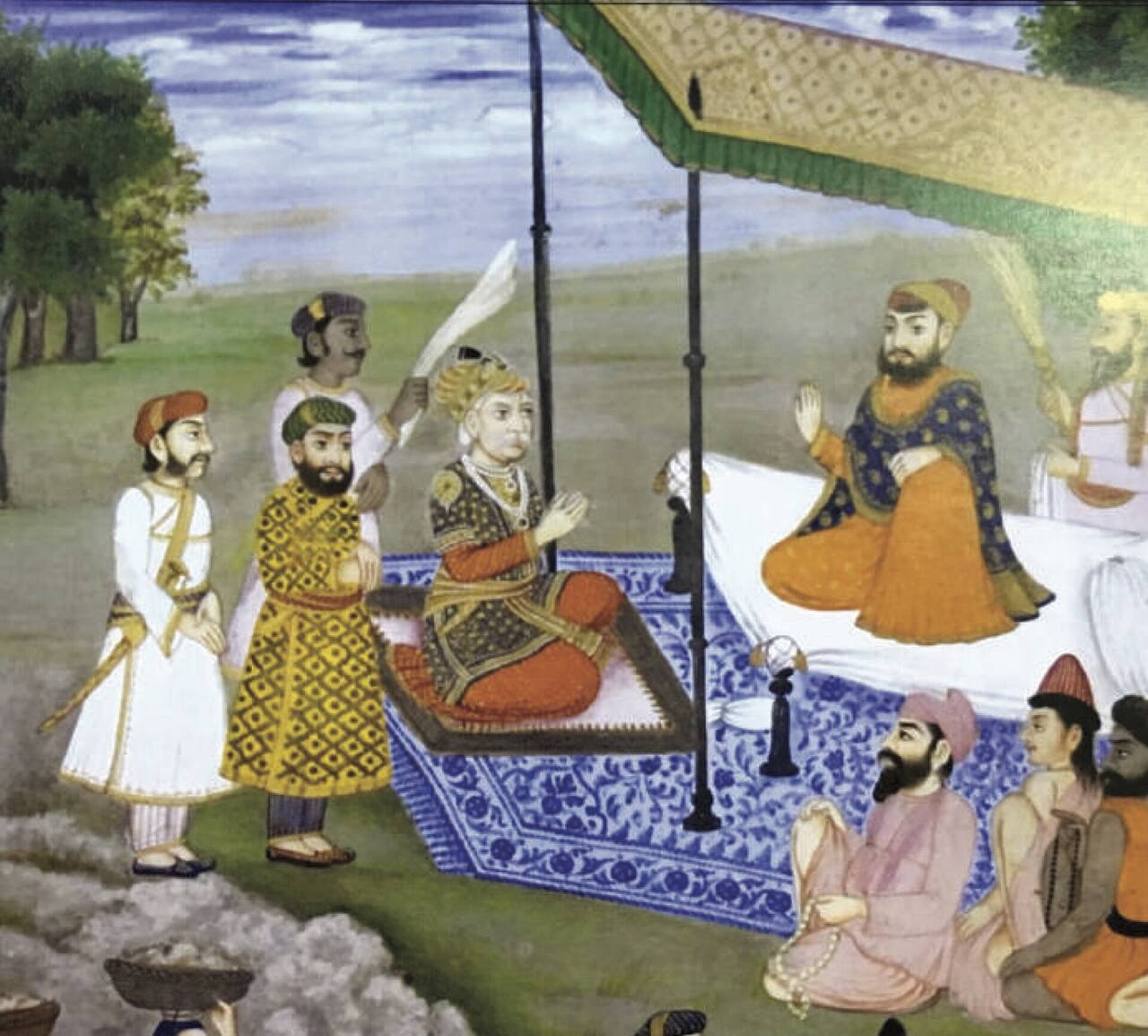
Guru Amar Das and the Song of Bliss
Converted at sixty-two by an overheard hymn, the third Sikh Guru made the free kitchen the tradition's front door — even an emperor sat on the floor to eat — and composed the Anand Sahib, the Song of Bliss that still closes every Sikh service in the world.
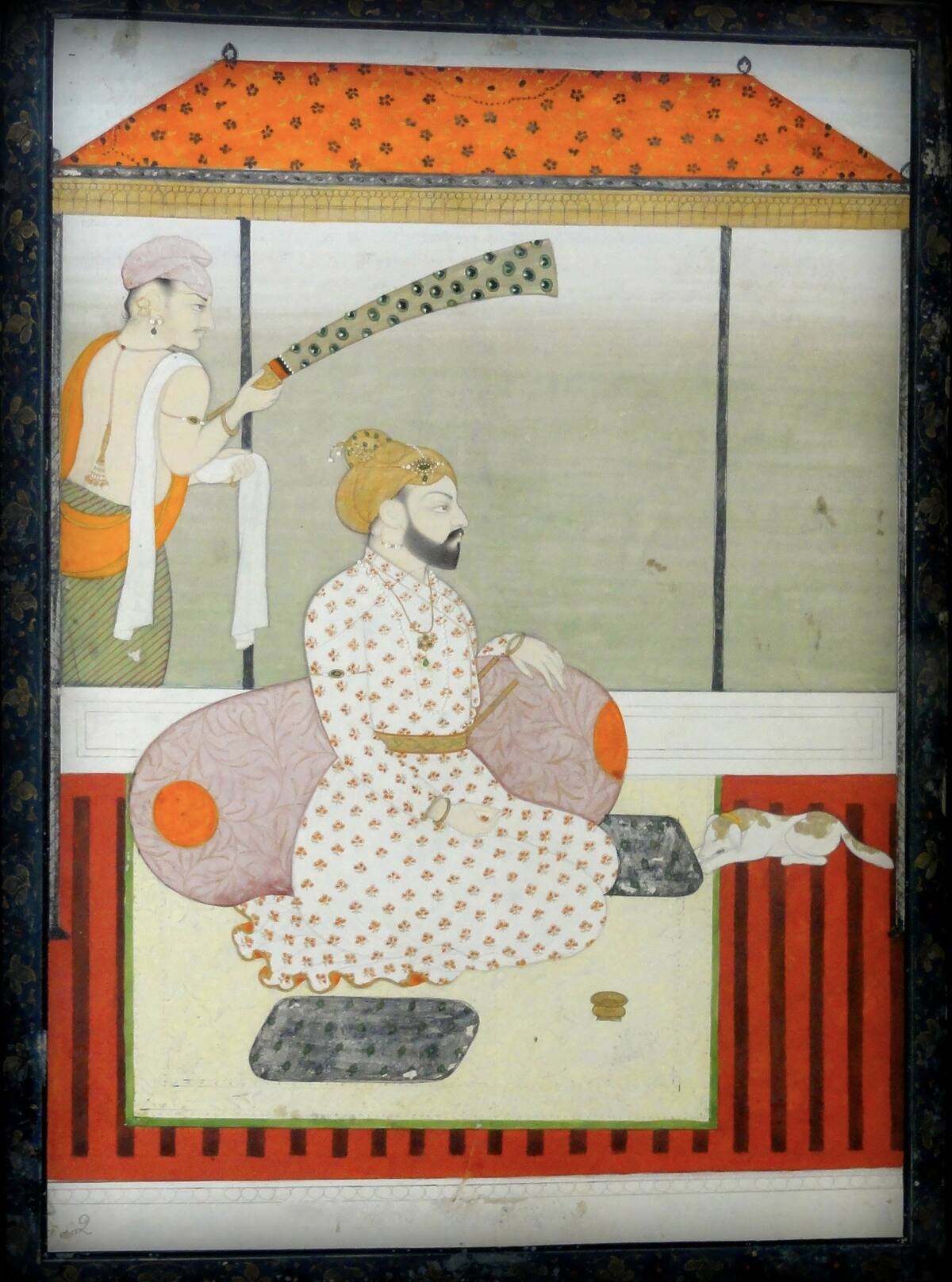
Guru Angad and the Alphabet Built for Song
The second Sikh Guru gave sacred song a script of its own. By standardizing Gurmukhi and collecting Guru Nanak's hymns in it, Guru Angad made sure the melodies would never lose their words — every Gurmukhi chant sung in the West today is written in his letters.
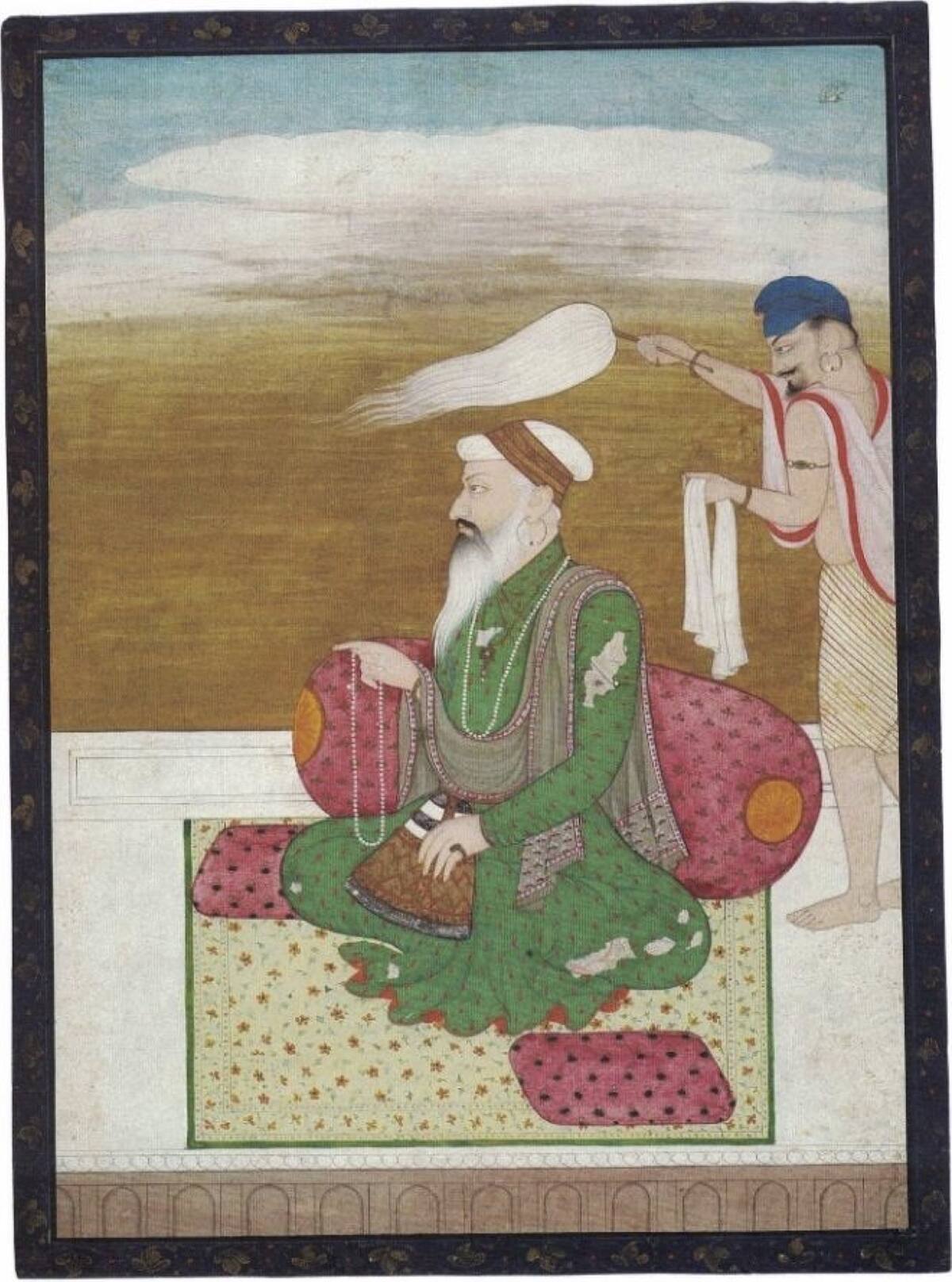
Guru Ram Das and the City of Nectar
An orphan who sold boiled chickpeas became the fourth Sikh Guru, founded Amritsar around a pool of nectar, and wrote the wedding hymns Sikh couples still circle to. Four centuries later, a chant bearing his name is sung in yoga studios around the world.