
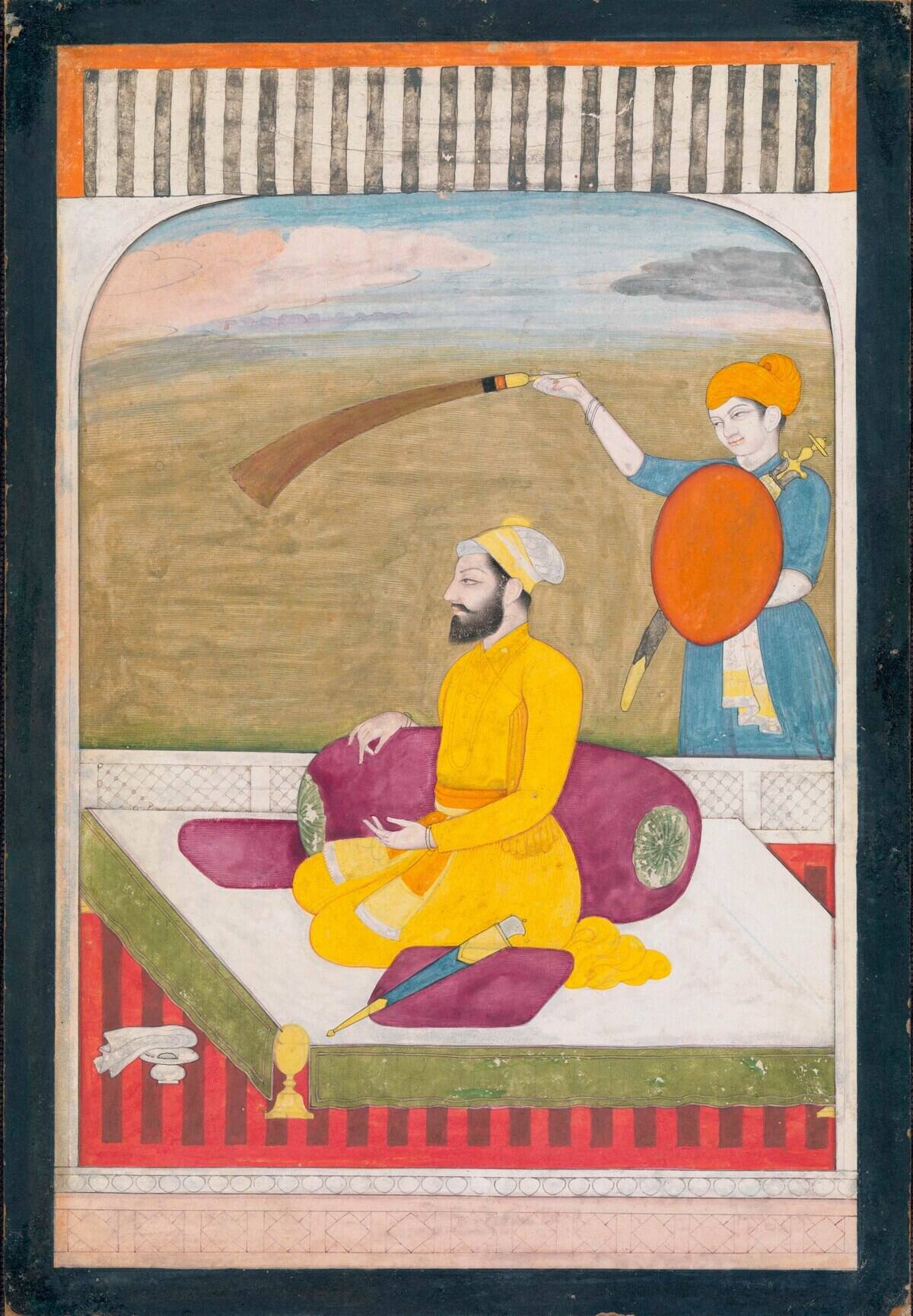
Guru Tegh Bahadur and the Song That Would Not Be Silenced
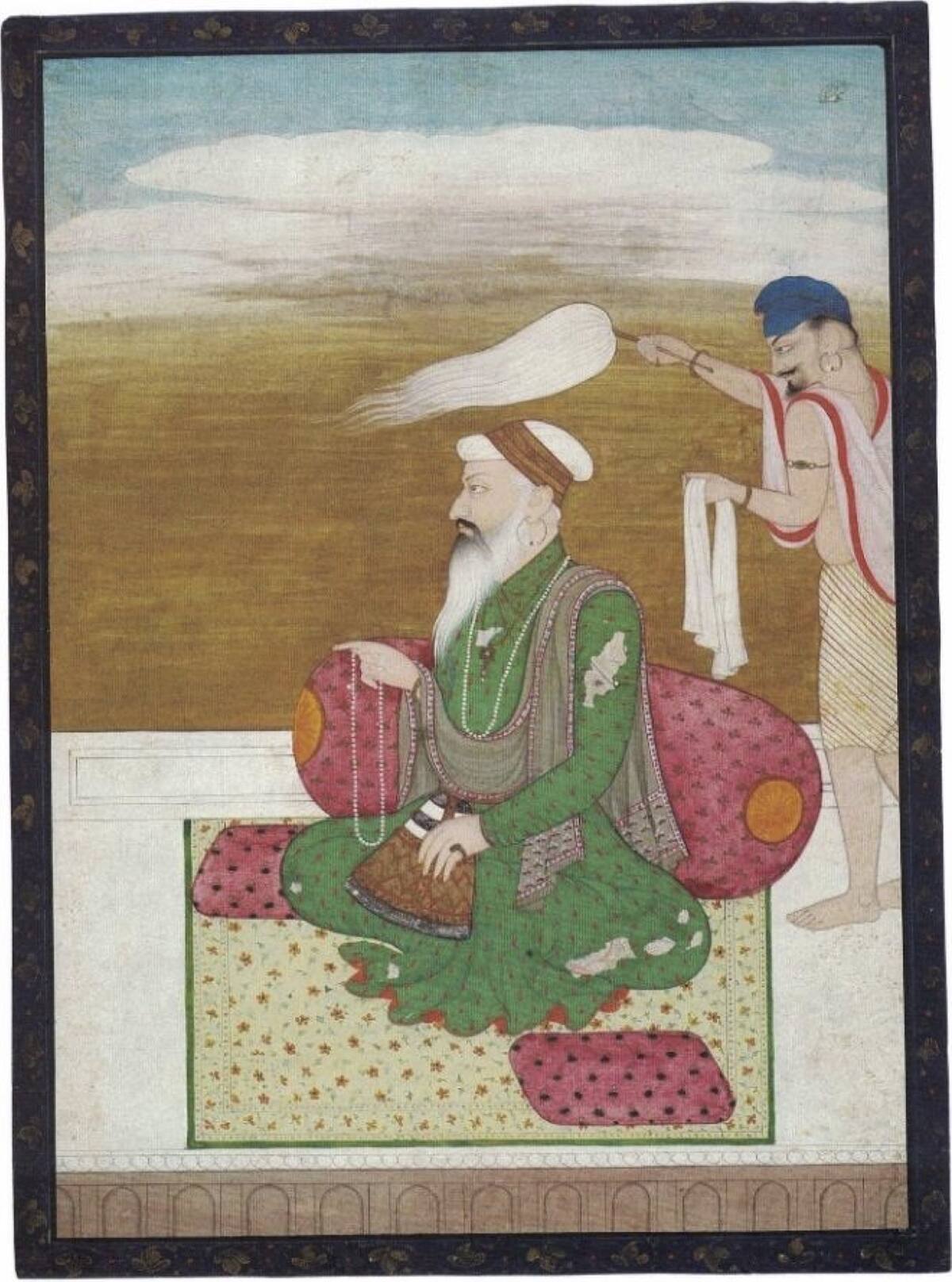
On a November morning in 1675, in the open square of Chandni Chowk in Delhi, the ninth Sikh Guru was publicly beheaded on the order of the emperor Aurangzeb. His crime was refusing to convert — and refusing to abandon a group of Kashmiri Hindu Pandits who had come to him for protection when they faced forced conversion themselves. Guru Tegh Bahadur did not die for his own religion. He died for someone else's right to practice theirs. Sikhs remember him as Hind di Chadar — the shield of India — and the spot where he fell is now Gurdwara Sis Ganj Sahib, a gurdwara where his hymns are still sung every day, on the very ground where the empire tried to silence them.
That is the paradox at the heart of his story: the man remembered for the most dramatic act of resistance in Sikh history was, for most of his life, a quiet contemplative — and a poet whose songs are still part of the living kirtan tradition, in India and now in the West.
Tegh Bahadur was born in Amritsar in 1621, the youngest son of the sixth Guru, Hargobind. He was raised in a tradition that was already a century old and already built on music. Guru Nanak, the founder, had traveled across South Asia singing his teachings with the Muslim rabab player Bhai Mardana at his side — the first Sikh kirtan was a friendship between a mystic and a musician, carried on the strings of the rabab. Each Guru after Nanak received the poetry of his predecessors and added his own: Guru Angad standardized the Gurmukhi script the hymns are written in; Guru Amar Das composed the Anand Sahib, the "Song of Bliss" that still closes Sikh services; Guru Ram Das built the city that became Amritsar and gave the tradition some of its most beloved wedding and devotional hymns; and Guru Arjan gathered it all — five generations of sung poetry, plus the words of Hindu and Muslim saints — into the Adi Granth, one of the only scriptures on earth organized not by topic but by raga, the melodic frame each hymn is meant to be sung in. The three middle Gurus of that lineage each have their own story here: Guru Angad and the Alphabet Built for Song, Guru Amar Das and the Song of Bliss, and Guru Ram Das and the City of Nectar.
Guru Arjan was also the tradition's first martyr, tortured to death in 1606 for refusing the same imperial demand that would later be made of his grandson. Song and sacrifice run through this lineage together.
After his father's death, Tegh Bahadur withdrew to the village of Bakala and spent roughly two decades in near-silent meditation — long daily immersion in simran, the meditative remembrance of the Divine Name, or Naam. When the eighth Guru died young in 1664, dozens of impostors set themselves up in Bakala claiming the succession. The story goes that a wealthy trader named Makhan Shah, who had promised the Guru five hundred gold coins if his ship survived a storm, tested each claimant by offering two. Only the quiet meditator called him out for shorting the pledge — and Makhan Shah climbed to a rooftop shouting "Guru ladho re!" — "I have found the Guru!"
What followed was not retreat but motion. Tegh Bahadur founded the town of Anandpur in the Himalayan foothills — later the great staging ground of Sikh history — and set out on years of travel through the Punjab, across the Gangetic plain, and as far east as Bengal and Assam, teaching, singing, digging wells, and organizing communities of practice the way Nanak had done a century and a half earlier.
And he wrote. His hymns — 59 shabads and 57 saloks, composed in fifteen ragas — were added to the scripture by his son, making him the last contributor among the Gurus to the Gurbani, the body of sung scripture at the heart of Sikh practice. His poetic voice is unmistakable: spare, tender, and unflinching about impermanence. Again and again he returns to one theme — the world passes, fear binds us, and only the remembrance of the Divine Name frees the heart. One of his most quoted lines praises the one who "frightens no one, and is afraid of no one." He wrote it as spiritual instruction. In 1675, he lived it literally.
His son, Guru Gobind Singh — nine years old when his father's severed head was carried home to Anandpur by a devoted Sikh who slipped it out of Delhi under cover of a storm — grew up to transform the community, founding the Khalsa in 1699. It was Guru Gobind Singh who compiled the final form of the Guru Granth Sahib, adding his father's hymns, and who declared that after him the scripture itself — the sung word — would be the eternal Guru. No human successor. A book of songs. To this day, the saloks of Guru Tegh Bahadur are recited near the close of the Guru Granth Sahib, so his voice is, in a very real sense, the last word of Sikh scripture.
That decision — enthroning sung poetry as the living teacher — is why kirtan is not an accessory to Sikh worship but its very center, performed daily by trained ragi musicians in gurdwaras from Amritsar to California. And it is why the Western mantra-music scene, when it found Gurmukhi chant through teachers in the Sikh Dharma community, inherited something with three and a half centuries of unbroken song behind it. When Snatam Kaur sings Wahe Guru, when Simrit sets Gurbani lines over modern production, when Mirabai Ceiba or Nirinjan Kaur carry chants like Ong Namo Guru Dev Namo or the Mool Mantar into Western halls, they are drawing on the tradition Tegh Bahadur wrote into — and died defending the freedom to practice.
His story gives every one of those chants a particular weight. Sacred song, in the Sikh lineage, is not an escape from the world. It is what one keeps singing when the world demands silence — and the freedom to sing it was purchased, once, at the highest possible price.
The Sikh Kirtan Lineage · Part 6 of 7
Terms in the Glossary
Words from this page, explained in our A–Z reference.
Join the Kirtans.com Community
Receive occasional updates — thoughtfully curated devotional music, upcoming gatherings, artist announcements, new resources, and inspiration to support your Bhakti practice.
From This Article
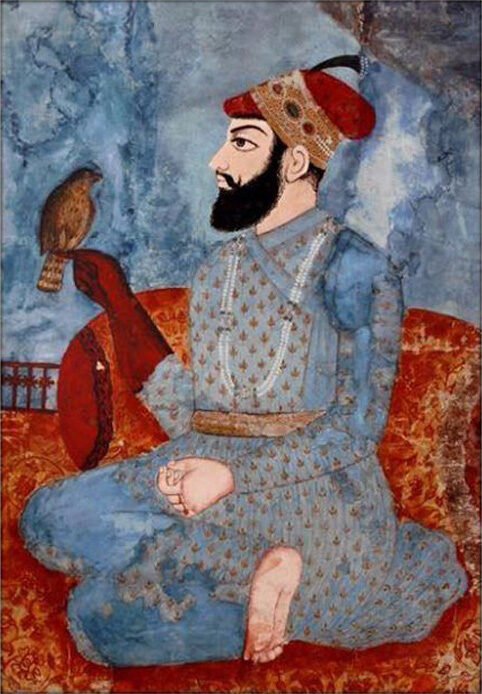
Continue Reading
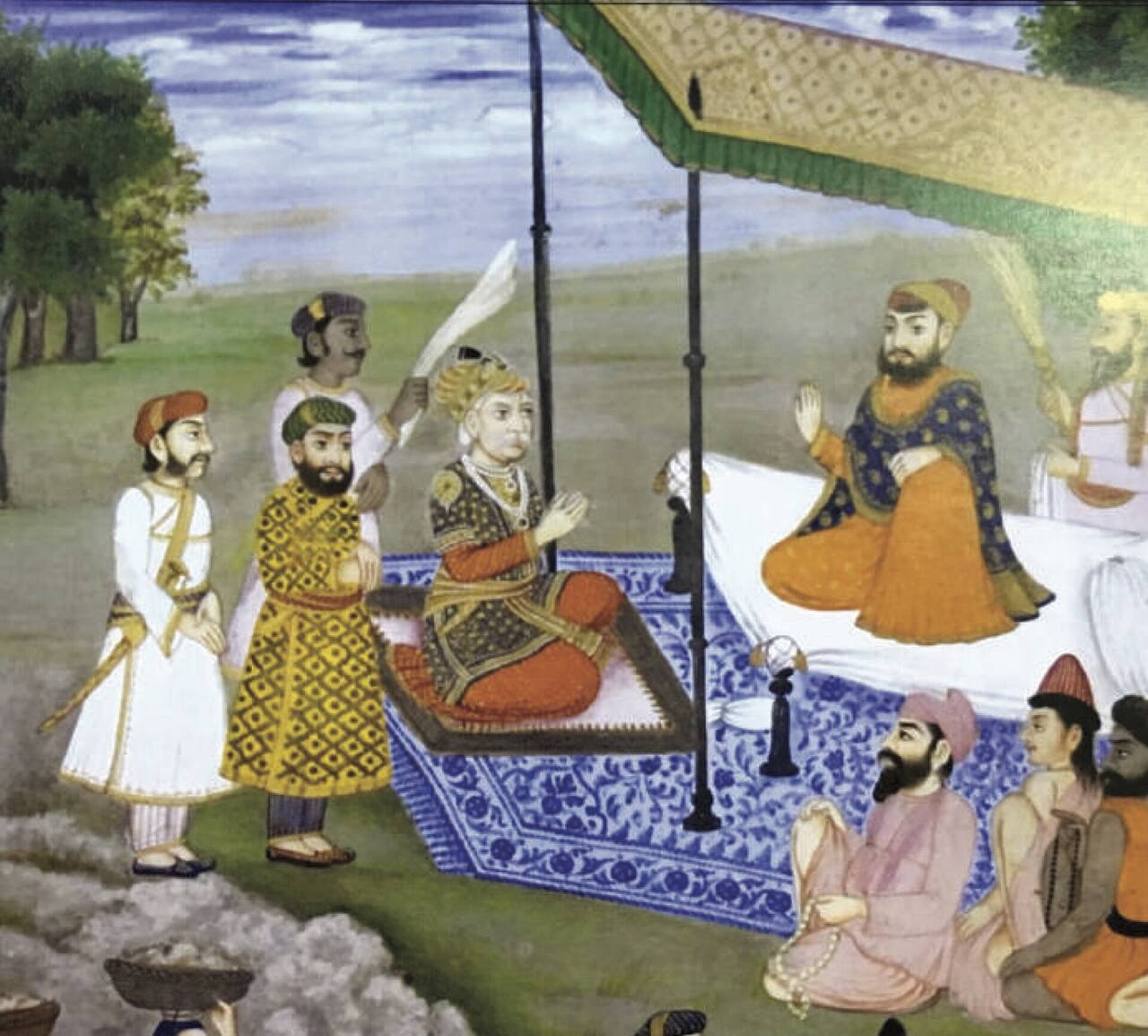
Guru Amar Das and the Song of Bliss
Converted at sixty-two by an overheard hymn, the third Sikh Guru made the free kitchen the tradition's front door — even an emperor sat on the floor to eat — and composed the Anand Sahib, the Song of Bliss that still closes every Sikh service in the world.
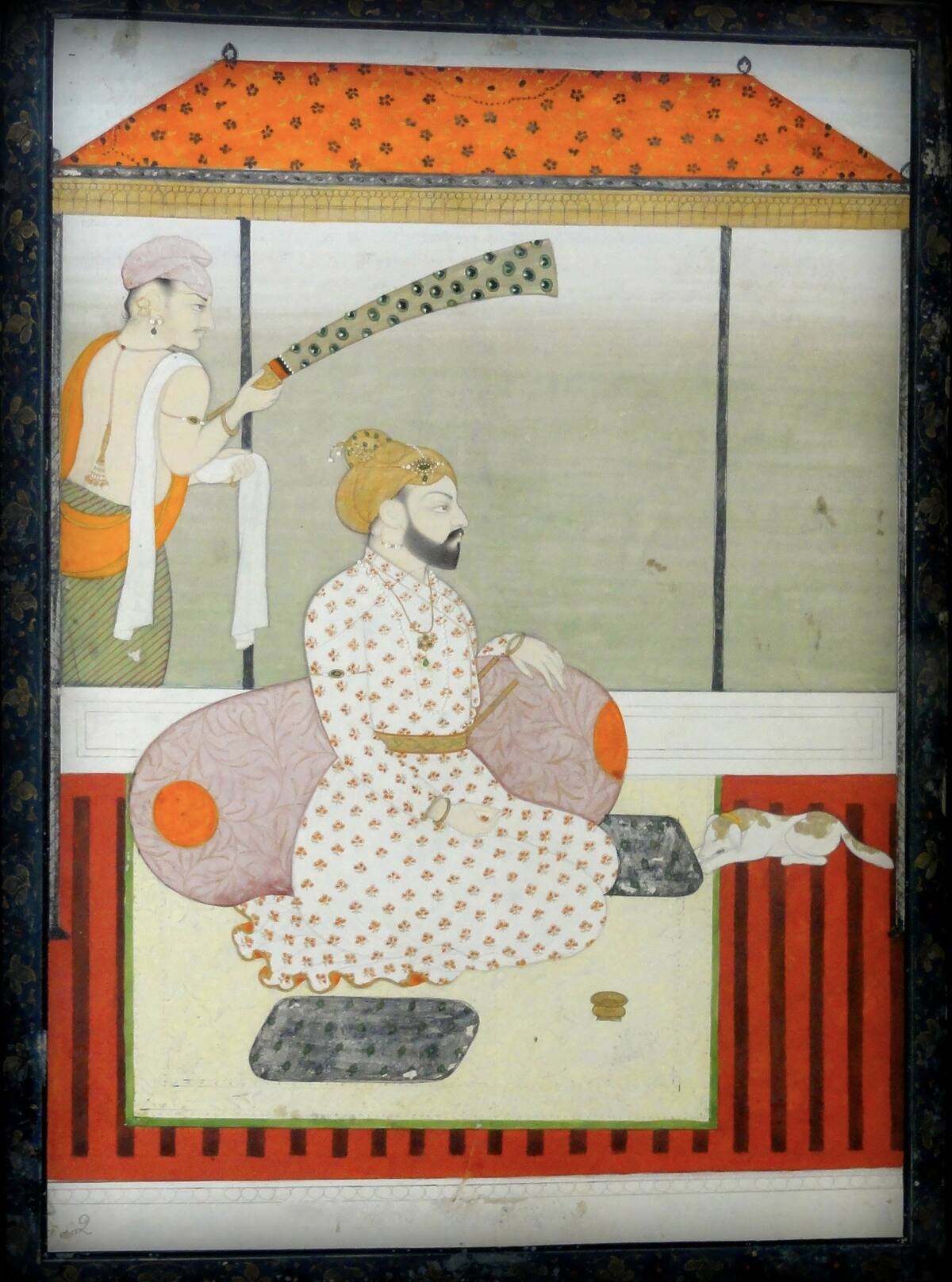
Guru Angad and the Alphabet Built for Song
The second Sikh Guru gave sacred song a script of its own. By standardizing Gurmukhi and collecting Guru Nanak's hymns in it, Guru Angad made sure the melodies would never lose their words — every Gurmukhi chant sung in the West today is written in his letters.
Guru Ram Das and the City of Nectar
An orphan who sold boiled chickpeas became the fourth Sikh Guru, founded Amritsar around a pool of nectar, and wrote the wedding hymns Sikh couples still circle to. Four centuries later, a chant bearing his name is sung in yoga studios around the world.