
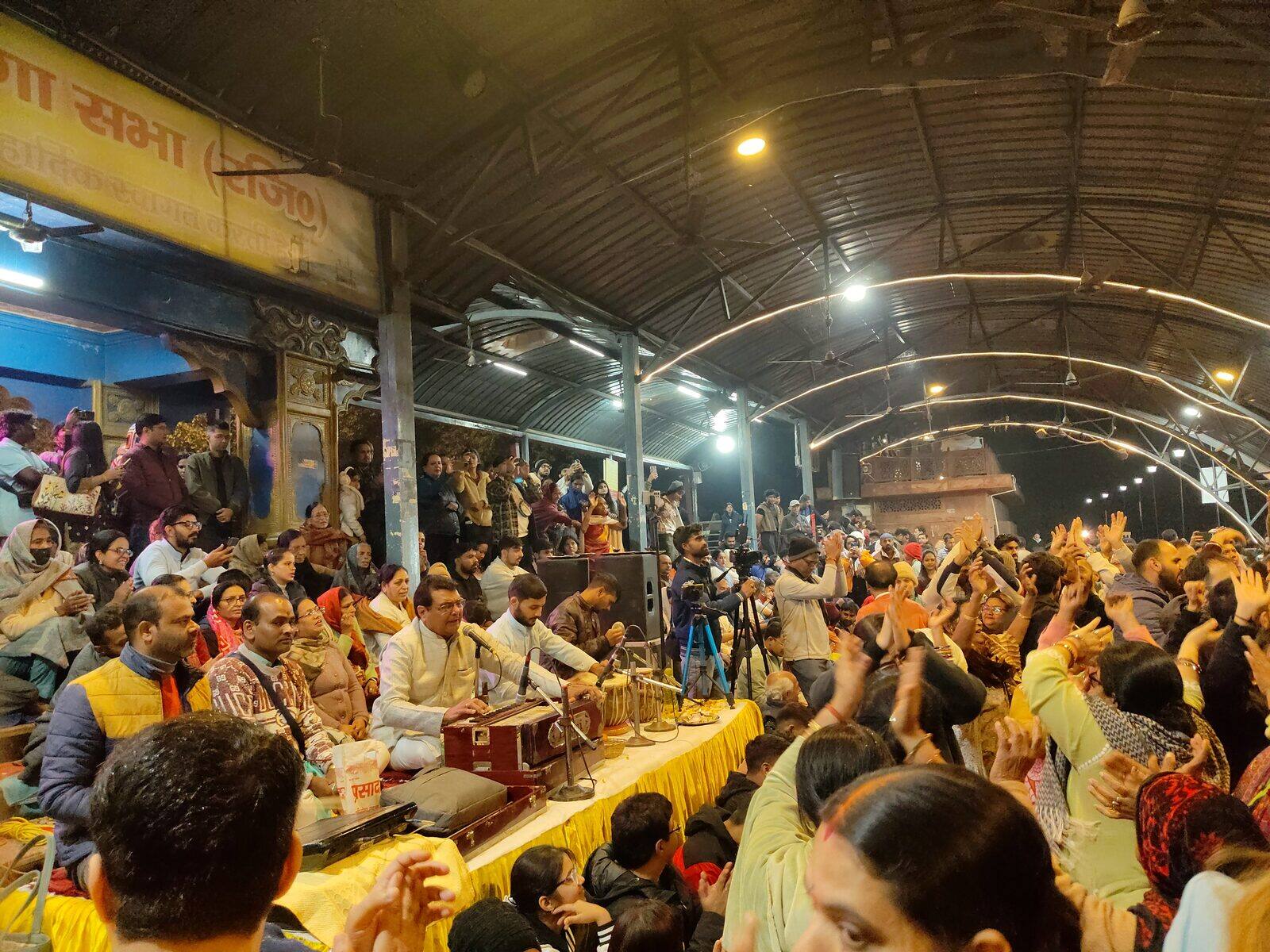
What Is a Bhajan? Inside India's Tradition of Devotional Song
The word bhajan comes from the Sanskrit root bhaj — to share in, to belong to, to adore. A bhajan is a devotional song: a melody carrying a poem of love for the Divine, sung in the everyday language of the singer. Where a mantra distills devotion into a few sacred syllables and kirtan unfolds as call-and-response between a leader and a room, the bhajan tells — it has verses, a story, a heart poured out in words. It is the song you sing to God when you have something to say.
The bhajan as we know it was born in the great flowering of the Bhakti movement, roughly the 12th to the 17th centuries, when a wave of poet-saints across India carried devotion out of Sanskrit ritual and into the mother tongues of ordinary people. Mirabai sang her fearless love for Krishna in Rajasthani; Surdas poured out his visions of Krishna's childhood in Braj Bhasha; Tulsidas retold the whole story of Rama in Awadhi; Narsinh Mehta gave Gujarat "Vaishnava Jana To," the bhajan Gandhi would carry onto the world stage. Their songs took the form scholars call the pada — a refrain the whole gathering can hold onto, verses that carry the poem forward, and the poet's own name sealed into the final line like a signature.
Within this river run two great currents. Saguna bhajans sing to the Divine with form — Krishna's flute, Rama's bow, the Mother's embrace — and most of the beloved repertoire belongs here. Nirguna bhajans, the songs of Sant poets like Kabir and Ravidas, address a formless Beloved beyond every image: songs of the alone speaking to the Alone. The same voice can carry both in a single evening, and part of the bhajan's depth is the conversation between them.
Every region grew its own devotional song-form alongside the pada. In Maharashtra, the Varkari saints Namdev and Tukaram sang the abhang — the "unbroken" song to Vitthal of Pandharpur, still carried by millions of pilgrims on the annual wari. In the south, the Carnatic tradition wove devotion into the concert kriti, from the sankirtanas of Annamacharya to the Rama-soaked compositions of Tyagaraja. In the Braj country of Krishna's childhood, the temples of the Pushtimarg — the Path of Grace founded by Vallabhacharya — raised devotional song into haveli sangeet, music offered to Krishna through every watch of the day, while in the groves of Vrindavan the renunciant Swami Haridas sang his dhrupad songs for God alone. And everywhere there is the dhun — the simplest form of all, a divine name riding an endlessly repeatable melody, the meeting point where bhajan dissolves into kirtan.
So how exactly does a bhajan differ from kirtan? Think of it as the difference between a song and a conversation. A bhajan is usually led by one voice carrying verses the room may not know, with the gathering joining on the refrain; kirtan is built from the ground up for everyone to sing, its short mantric phrases traded back and forth until leader and room become one voice. A bhajan says something about the Divine — tells a story, makes a plea, describes a vision; kirtan repeats the Name itself until words fall away. In practice the two flow into each other constantly — a bhajan's refrain can open out into a chant, and many kirtan evenings close with a quiet bhajan — which is why we treat them as two moods of one devotion rather than two separate worlds. For a side-by-side look, see The Difference Between Kirtan, Mantra, and Bhajan.
The modern era gave the bhajan new wings. At the turn of the 20th century, Vishnu Digambar Paluskar carried devotional song onto the public concert stage, founded India's first publicly supported music school, and sang the Ram dhun "Raghupati Raghava Raja Ram" into the heart of the freedom movement. A generation later, M.S. Subbulakshmi — the first musician awarded the Bharat Ratna — sang Mira bhajans for Gandhi, performed at the United Nations, and made recordings of sacred song that still open the day in millions of homes. And from the late 1970s, Anup Jalota, the "Bhajan Samrat," proved the bhajan could fill the largest halls on its own — an entire evening of nothing but devotional song.
In the Western kirtan world, the bhajan is a quieter but constant presence. Chant leaders often fold a bhajan into an evening of kirtan — a verse of Mirabai between rounds of the maha-mantra, "Vaishnava Jana To" as a closing prayer. Artists like Karnamrita Dasi, trained in Indian classical singing, move fluidly between the two forms, and the melodies of the great bhajan repertoire surface again and again in Western chant settings, often uncredited and unnoticed — the old songs still doing their work.
If kirtan is your doorway into this world, the bhajan is the library behind the door: eight centuries of poets who found words for what the heart wants to say to the Divine, and melodies that carry those words home. Start with one voice — Mira, Surdas, Kabir — and one song, and listen for what the repetition of a chant leaves unsaid. That is the bhajan's territory.
Terms in the Glossary
Words from this page, explained in our A–Z reference.
Join the Kirtans.com Community
Receive occasional updates — thoughtfully curated devotional music, upcoming gatherings, artist announcements, new resources, and inspiration to support your Bhakti practice.
Continue Reading
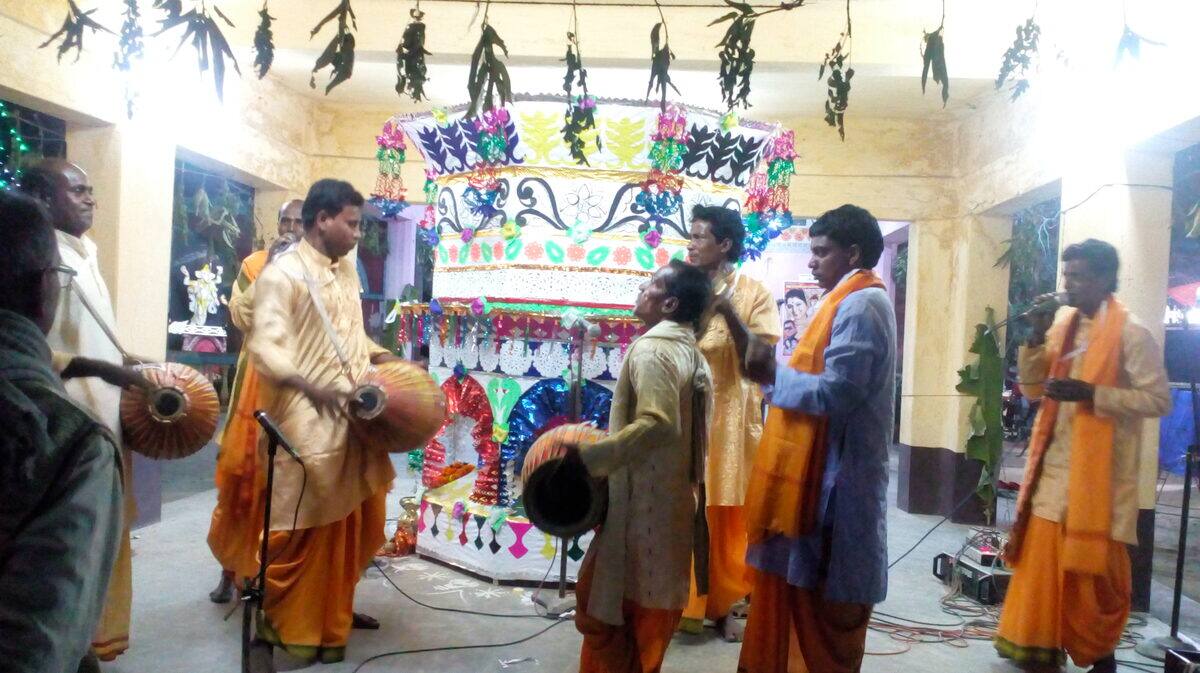
Regional Traditions of Kirtan: One Practice, Many Living Streams
The Kirtan you hear in a Western yoga studio is one branch of a much older tree. Four great regional streams — North Indian Bhakti, South Indian Carnatic song, Bengali Gaudiya Vaishnava sankirtan, and Sikh Gurbani Kirtan — each shaped the practice in its own way, and each is still very much alive.
The Difference Between Kirtan, Mantra, and Bhajan
Sacred sound comes in many forms. Kirtan, mantra, and bhajan are related practices — but each has its own character, context, and approach. Understanding the differences can enrich your exploration.
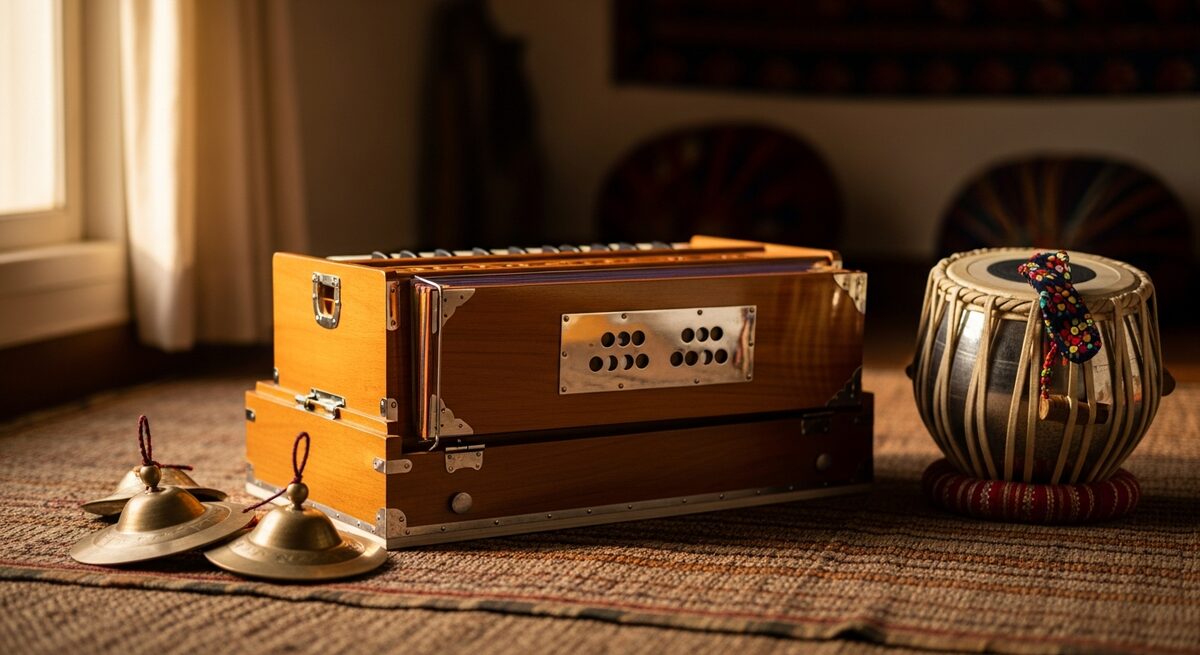
Kirtan Instruments: Harmonium, Tabla, Kartals, and More
The instruments of Kirtan are not mere accompaniments — each one carries its own tradition, its own sound-world, and its own way of supporting the chant. Here's an introduction to the core instruments of the Kirtan ensemble.