
Regional Traditions of Kirtan: One Practice, Many Living Streams
Ask where Kirtan comes from and you will get four true answers. The call-and-response chanting that fills Western yoga studios and festival tents is not a single tradition transplanted whole — it is the meeting point of several great regional streams of Indian devotional music, each with its own saints, languages, instruments, and sound. Knowing them changes how you hear every chant.
This overview introduces the four streams featured in our tradition guides. Each has its own in-depth page, linked below, with the artists, mantras, pioneers, and glossary terms that belong to it.
The North Indian (Hindustani) Bhakti stream
This is the stream most Westerners unknowingly picture when they hear the word Kirtan: a leader behind a harmonium, tabla keeping the rhythm cycle, a room singing the names of Ram and Krishna back in call-and-response. It flows from the medieval sant poets — Mirabai, Tulsidas, Kabir — who sang in the languages ordinary people spoke, and it reached the West directly through the devotees of Neem Karoli Baba, among them Krishna Das and Jai Uttal. Chants like Sri Ram Jai Ram and the Hanuman Chalisa carry its heart.
Explore the full guide: North Indian Bhakti Kirtan
The South Indian (Carnatic) stream
South India holds the oldest continuous tradition of sung devotion in the subcontinent. The Tamil Alvars — among them the girl-saint Andal — were singing ecstatic poetry to Vishnu a thousand years before the northern Bhakti movement, and composer-saints like Purandara Dasa and Tyagaraja turned devotion into a formal musical art. Here the concert stage and the shrine have never been far apart: the Carnatic kriti is simultaneously high art and prayer, built on raga and tala yet addressed to God — a union M. S. Subbulakshmi carried all the way to the United Nations.
Explore the full guide: South Indian & Carnatic Devotional Singing
The Gaudiya Vaishnava (Bengal) stream
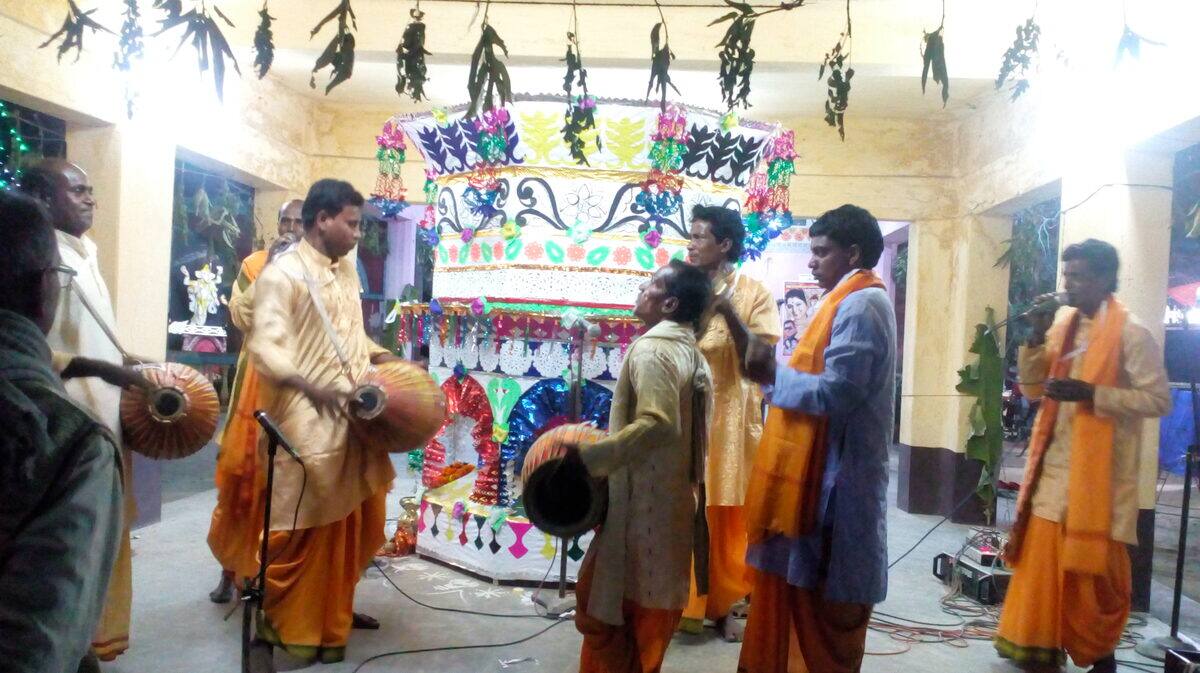
Five hundred years ago Chaitanya Mahaprabhu took chanting out of the temple and into the streets of Bengal, teaching that congregational singing of the holy names — sankirtana — is the simplest spiritual path for this age. His movement gave the world the Hare Krishna maha-mantra, the rolling rhythms of the clay mridanga drum, and — after Srila Prabhupada sailed to New York in 1965 — the global ISKCON kirtan culture carried on today by artists like Jahnavi Harrison and Gaura Vani.
Explore the full guide: Gaudiya Vaishnava & ISKCON Kirtan
The Sikh (Gurbani) stream
In the Sikh tradition, kirtan is not an accessory to worship — it is worship. Guru Nanak traveled for decades singing his revelations while Bhai Mardana played the rabab, and the hymns of the Gurus — Gurbani — are still sung daily in ragas in gurdwaras worldwide. This stream reached the West by its own road: the Kundalini yoga community wove Gurmukhi chants like Ong Namo Guru Dev Namo and Sat Nam into daily practice, and voices like Snatam Kaur and Simrit made them beloved far beyond it.
Explore the full guide: Sikh Gurbani Kirtan
One practice, many voices
These four streams differ in language, instrument, and idiom — Braj bhajan and Sanskrit maha-mantra, Tamil hymn and Gurmukhi shabad — yet they agree on the essential point: that singing the sacred names, together, out loud, is itself the practice. The Western Kirtan gathering is where these rivers now meet; when you chant along, you are joining all of them at once.
Terms in the Glossary
Words from this page, explained in our A–Z reference.
Join the Kirtans.com Community
Receive occasional updates — thoughtfully curated devotional music, upcoming gatherings, artist announcements, new resources, and inspiration to support your Bhakti practice.
Continue Reading
What Is a Bhajan? Inside India's Tradition of Devotional Song
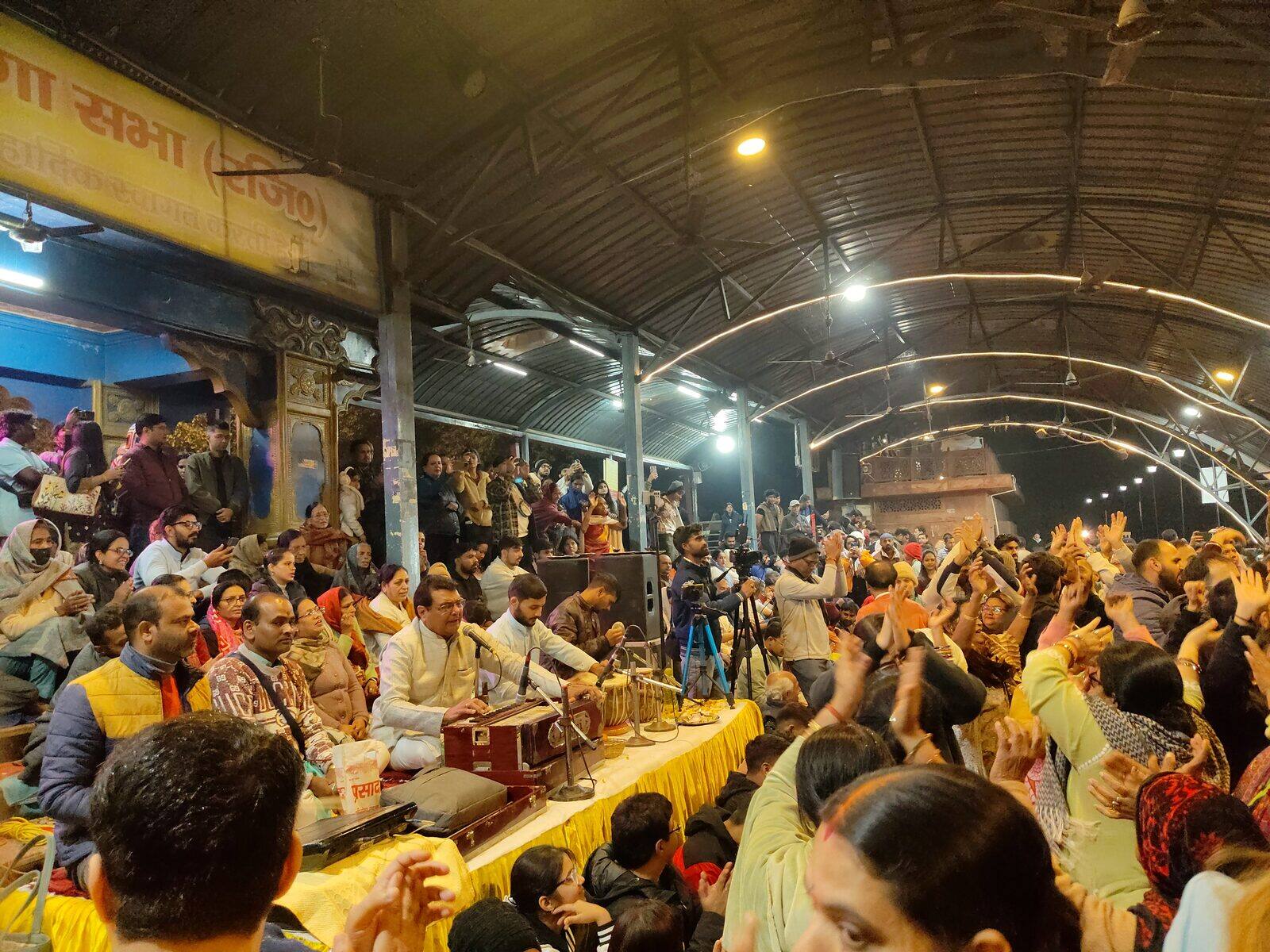
Before there were kirtan halls, there were bhajans — intimate devotional songs poured out by poet-saints in the languages of the people. Here is the story of the bhajan: where it came from, how it works, how it differs from kirtan, and the voices that carried it from temple courtyards to the world stage.

The Difference Between Kirtan, Mantra, and Bhajan
Sacred sound comes in many forms. Kirtan, mantra, and bhajan are related practices — but each has its own character, context, and approach. Understanding the differences can enrich your exploration.
Kirtan Instruments: Harmonium, Tabla, Kartals, and More
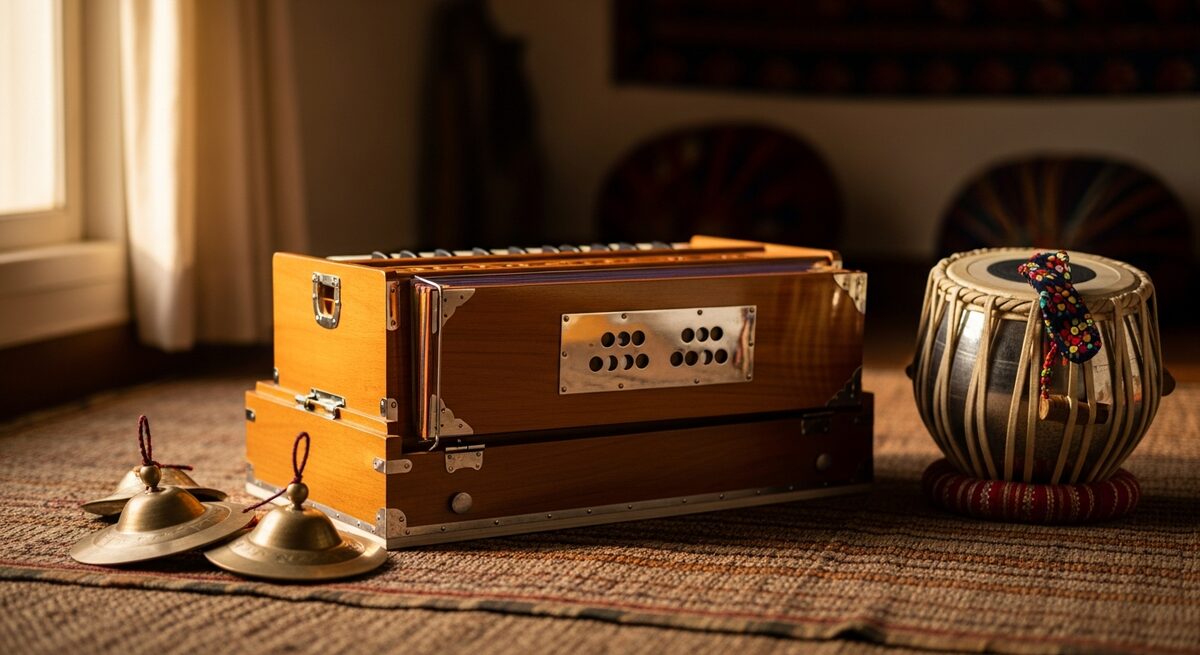
The instruments of Kirtan are not mere accompaniments — each one carries its own tradition, its own sound-world, and its own way of supporting the chant. Here's an introduction to the core instruments of the Kirtan ensemble.